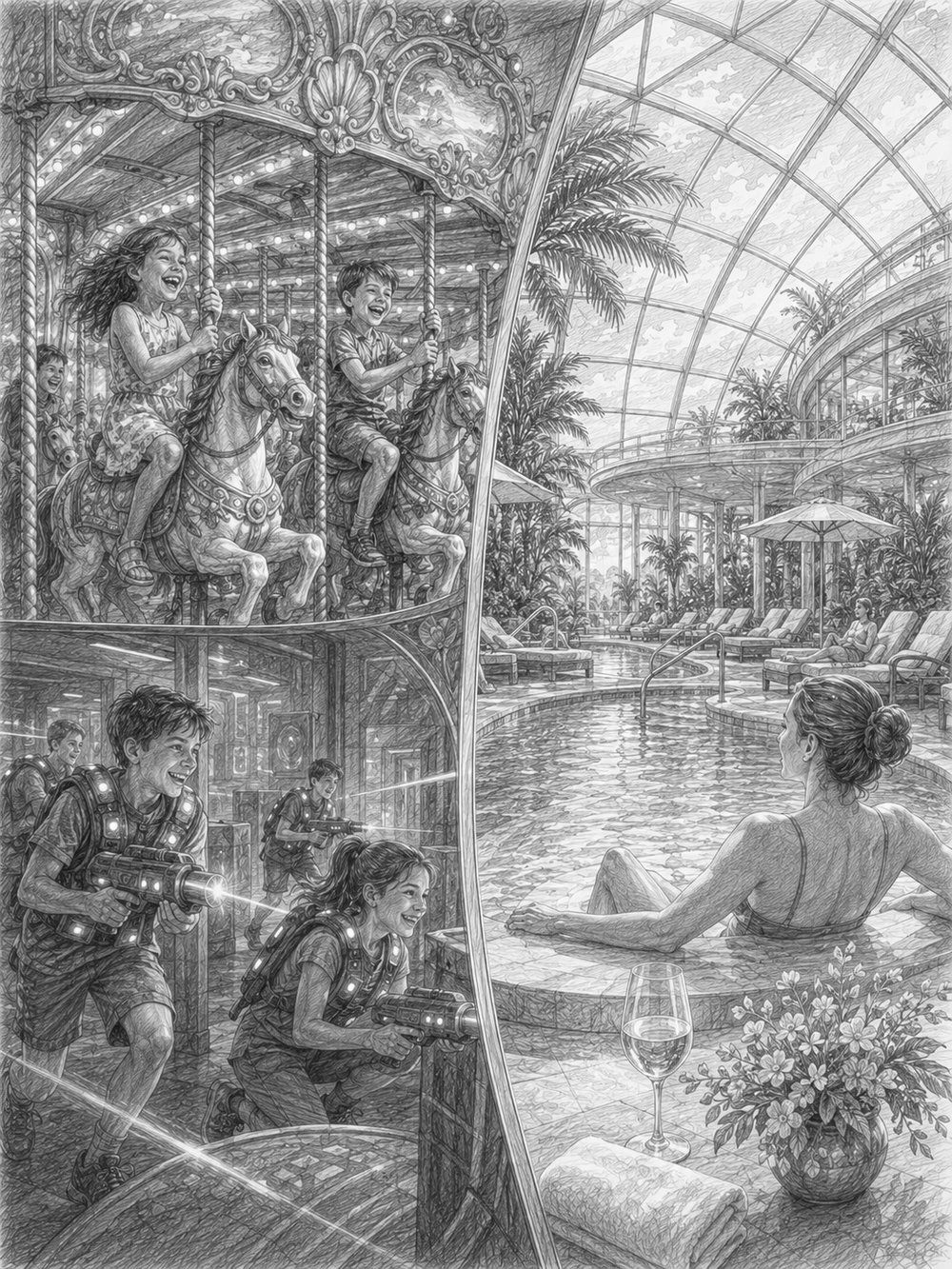
Is Symphony of the Seas a good ship for a family cruise? Yes — she is arguably the best family ship in Royal Caribbean’s Oasis class, built to keep everyone from toddlers to teenagers happy while still giving parents room to breathe. She carries the showpiece Ultimate Family Suite with its own in-cabin slide, an escape room, “Battle for Planet Z” laser tag, Splashaway Bay for little ones, a full Adventure Ocean youth program, and enough thrills to fill a week. This Symphony of the Seas family cruise guide walks through the best cabins for families, what each age group does all day, the pools and thrills you can share, dining that survives picky eaters, how grown-ups grab a quiet hour, and the logistics — packing and keeping track of kids — that make a big ship feel manageable.
Everything in this article and far more, deck by deck, in The Ultimate Guide to Sailing on Symphony of the Seas.
Get the book →Why Symphony is the ultimate family Oasis ship
Symphony of the Seas debuted as the largest cruise ship in the world, and though newer ships have since claimed that title, she was designed around families. At roughly 228,000 gross tons across about 18 guest decks, she carries more than 5,500 guests — up to around 6,700 when full — across seven distinct neighborhoods. That size is the point: the ship can dedicate whole zones to children without crowding out the couples and grandparents traveling with them. Royal Caribbean marketed her for years as the ultimate family Oasis ship, and the hardware backs up the slogan.
Three features anchor that reputation. The Ultimate Family Suite is a two-story loft with a slide connecting its floors, a LEGO wall, an in-suite game room, a cinema-style space, and a wraparound balcony that sleeps up to eight. “Battle for Planet Z” turns a room into a glow-in-the-dark laser tag arena where kids and parents face off in teams. And the escape room, themed around a submarine and observatory puzzle, gives older children and teens a shared challenge with nothing to do with screens. No single one makes a family cruise, but together they mean a sea day never leaves you short of options.
The neighborhoods matter for families too. The Boardwalk at the stern is the designated family zone, home to a hand-carved carousel and the open-air AquaTheater. Central Park, a garden with more than 20,000 live plants, is the calm counterweight where adults can slip away for a quiet meal. Between them sit the Royal Promenade, the Pool and Sports Zone, the Vitality Spa and Fitness area, Entertainment Place, and the Youth Zone. Learning this map early is the single biggest thing you can do to make the ship feel smaller. For a broader orientation, the Symphony of the Seas cruise guide is a useful companion to this family-focused breakdown.
The best cabins for families
Where you sleep shapes the whole trip when you are traveling with children. Standard interior and balcony staterooms are comfortable for two, but families of four or more quickly feel the squeeze at bedtime, in the bathroom queue, and when someone naps while others want the lights on. Symphony gives you several ways to solve that, from budget-friendly to genuinely lavish.
Family Ocean View Balconies
For most families the sweet spot is a family-sized Ocean View Balcony. These rooms give you more square footage than a standard balcony, sleeping arrangements for the whole group, and a private outdoor space with natural light. A midship balcony is the pick if anyone is prone to seasickness, because it sits over the ship’s center of gravity for the steadiest ride and shortens the walk to elevators and the pool deck. Natural light also helps small children keep a normal sleep rhythm, something an interior cabin’s total darkness can throw off.
Connecting rooms
If you have older children or teens who want a measure of independence, two connecting staterooms with an interior door often beat one big cabin. The parents get their own bathroom and a door they can close, the kids get their own space, and you keep everyone under one roof without paying suite prices. Connecting rooms book up fast, especially over school holidays, so this is the arrangement to reserve early. When you compare specific rooms, the best cabins on Symphony of the Seas guide goes deck by deck on which category suits which kind of traveler.
The Ultimate Family Suite
At the top of the range sits the Ultimate Family Suite. The two-story layout with its floor-to-floor slide, LEGO wall, dedicated game room, private movie space, and eight-guest capacity is a genuine holiday-maker for the right family — the kind of room children remember for years. It is expensive and sells out far in advance, so treat it as a special-occasion splurge. If it is beyond budget, remember that its best features — the slide, the games, the theater — all have free ship-wide equivalents.
Whichever category you choose, check the deck plan first. Cabins directly under the pool deck can pick up early-morning deck-chair scraping, rooms above or below the AquaTheater and Boardwalk catch show noise, staterooms beside elevator banks get foot traffic, and far-forward high-deck cabins feel the most motion. A few minutes with the deck plan spares you a week of avoidable frustration.
| Cabin type | Best for | Trade-off |
|---|---|---|
| Interior / Virtual Balcony | Budget-focused families, older kids | No real light; can disrupt toddler sleep |
| Family Ocean View Balcony (midship) | Most families, motion-sensitive travelers | Costs more than a standard balcony |
| Two connecting rooms | Teens who want space; two bathrooms | Book very early; limited availability |
| Ultimate Family Suite | Special-occasion splurge, big groups | Premium price; sells out far ahead |
Kids and teens by age
The reason Symphony works across a whole family is that she gives each age group a home base of its own. Knowing what your children will gravitate toward helps you plan days that don’t dissolve into “I’m bored” by mid-morning.
Toddlers and little ones
Splashaway Bay is the aqua park built for the youngest cruisers — a shallow splash zone with gentle slides, water cannons, and tipping buckets, all sized for small bodies. You will return to it again and again on sea days, and it lets toddlers burn energy safely while you stay within arm’s reach. Swim diapers where required and a change of clothes on hand make a real difference. The carousel on the Boardwalk is another reliable win for this age, a hand-crafted ride that feels like a slice of an old-fashioned fairground at sea.
School-age children
Adventure Ocean is the flagship youth program, and it is genuinely good. Staffed by trained counselors and split into age-appropriate groups, it runs structured play, games, crafts, science activities, and themed sessions throughout the day and evening. Many parents are surprised by how eagerly children ask to go back. This is also the age that discovers the ship’s shared thrills — the laser tag arena, the escape room, the water features — so a day tends to alternate between youth-program time and family adventures. Building in that rhythm keeps everyone from getting overtired.

Teenagers
Teens get dedicated teen-only spaces — lounge areas and organized activities designed to give them independence within the safe bounds of the ship. In practice, teenagers rotate between those spaces, the FlowRider surf simulators, the sports zone, and the pools, often forming friend groups within the first day or two. The freedom to roam a self-contained floating town is exactly what makes a cruise appealing at that age, and Symphony’s size means there is always somewhere new to drift to. Setting a couple of daily check-in points keeps that independence from becoming a worry.
Thrills and pools the whole family can share
Beyond the age-specific zones, Symphony’s headline attractions are the ones the family does together. Height and swimming-ability requirements apply to some, so check the details in the app, but there is something here for nearly every mix of ages.
- The Ultimate Abyss — a ten-story dry slide, the tallest slide at sea, spiraling down from the top deck near the Boardwalk. It is a rush older kids and brave adults line up for again and again.
- The Perfect Storm — a trio of waterslides that twist off the top deck, the wet counterpart to the Abyss and a magnet for anyone tall enough to ride.
- Two FlowRider surf simulators — stand-up or boogie-board surfing on a wave of moving water, with staff coaching first-timers. Having two means shorter lines than single-simulator ships.
- The rock-climbing wall and zip line — a climbing wall for all abilities and a zip line that runs high over the Boardwalk, both supervised and beginner-friendly.
- The AquaTheater and ice rink — the open-air AquaTheater stages high-diving shows at the stern, while the indoor ice rink hosts skating sessions and a skating production.
For calmer water time, the main pools and hot tubs cover the middle ground between Splashaway Bay and the top-deck slides. A workable sea-day plan is to anchor the morning at whichever pool suits your youngest, then send older kids and teens to the slides and FlowRiders while the little ones nap. For more ship-wide shortcuts and etiquette around these attractions, the Royal Caribbean Symphony of the Seas tips guide is worth a read before you sail.
Family dining that actually works
Feeding a family on a cruise is easier than at home because so much is included, but a little strategy keeps mealtimes calm. Your fare covers a generous set of venues you can lean on entirely.
The Main Dining Room is the sit-down heart of the ship, with a rotating menu, children’s options, and waiters who quickly learn your kids’ preferences over a week. The Windjammer buffet is the pressure-free choice when children are hungry now — everyone builds their own plate, fussy eaters find something familiar, and no one has to sit still. Café Promenade offers grab-and-go sandwiches around the clock, Park Café is known for made-to-order salads and roast beef sandwiches, and Sorrento’s serves pizza by the slice — a reliable fallback for tired, picky children. Between those five included venues you can eat well all week without opening your wallet again.
To mark a special night, the specialty restaurants carry an extra charge but add variety: Jamie’s Italian, Chops Grille for steak, Izumi for Japanese, Hooked Seafood, the upscale 150 Central Park, Playmakers sports bar, El Loco Fresh for casual Mexican, and Johnny Rockets for burgers and shakes kids adore. The Bionic Bar, where robot arms mix drinks, is pure entertainment for children even without ordering. Kids’ menus at the included venues arrive quickly, so if you book a specialty restaurant, consider a night the youngest are most likely to sit still — or split the group and let one parent take the little ones to the buffet.
Grown-up escapes while the kids are busy
A family cruise that only serves the children wears parents out. Symphony’s real advantage is that while the youth program has your kids, the ship gives adults places to genuinely relax — and using the youth program without guilt is the key to a holiday everyone enjoys.
The adults-only Solarium is the grown-up sanctuary: a quieter pool and lounging area, generally reserved for guests sixteen and up, where you can read undisturbed by cannonballs. The Vitality Spa offers treatments and a thermal area for a booked hour of calm, and the fitness center draws early risers before the family stirs. Central Park costs nothing — a garden of live plants where you can sit with a coffee, and where the quieter restaurants make an ideal adults’ dinner if grandparents cover the kids. Even a single hour in one of these spaces resets a parent for the afternoon.
The trick is to schedule it. Drop the children at Adventure Ocean or a teen session, agree a pickup time, and actually go do the thing rather than hovering nearby. The youth staff are experienced, the check-in procedures are strict, and the whole system exists so parents can have exactly this time. If you have never sailed this ship, the first-time cruise on Symphony of the Seas guide covers how the youth-program sign-up works on day one so you don’t lose the first afternoon figuring it out.
Planning your family days
Symphony currently sails seven-night Caribbean voyages, and the mix of sea days and port days shapes how you plan. Her home port has shifted over the years — she has sailed from Miami and Cape Liberty and has been moving toward Galveston, Texas — so always confirm your departure port and the exact ports for your sailing in the Royal Caribbean app. A typical week might include a Western Caribbean run with stops such as Perfect Day at CocoCay, Nassau, Falmouth in Jamaica, and Labadee in Haiti, or a Gulf-based itinerary calling at Cozumel, Costa Maya, and Roatan; Eastern runs visit ports such as CocoCay, San Juan, St. Thomas, and St. Maarten.
The rhythm that works with kids is to treat sea days as ship-attraction days — slides, the youth program, laser tag, the escape room, the pools — and port days as shorter, gentler outings. Perfect Day at CocoCay is the standout family port, with included beaches, the Oasis Lagoon pool, freshwater areas, and a tram, plus paid extras like the Thrill Waterpark; it is easy to spend a whole relaxed day there. In Labadee, Royal Caribbean’s private peninsula, families get beaches, a zip line, an alpine coaster, and water sports in a controlled setting. Ports like Nassau (Atlantis and Paradise Island), Cozumel (reef snorkeling and beach clubs), Roatan (West Bay Beach), and San Juan (Old San Juan and El Morro) reward advance planning — book excursions early, and for young children favor half-day options over full-day expeditions. The Symphony of the Seas ports and excursions guide breaks down what suits families at each stop.
Use the app as your command center. It holds the daily schedule, deck maps, dining reservations, show bookings, and your digital boarding pass. Reserve the big-ticket shows — the Broadway production, the AquaTheater show, and the ice-skating show — early in the week, because family-friendly slots fill first. Note that there is no free ship-wide Wi-Fi, so coordinating by phone during the day needs a paid internet plan.
What to pack for kids
A few deliberate packing choices smooth out the week with children on board. The onboard shops carry essentials at a premium, so bringing your own saves both money and mid-cruise scrambles.
- Multiple swimsuits per child and swim diapers where required — the water zones are the center of gravity for young kids, and wet suits rarely dry between sessions.
- Reef-safe sunscreen in quantity, plus rash guards and hats for the tropical sun on deck and in port.
- A lightweight sweater or jacket for each child — indoor venues, the ice rink, and evening dining rooms run cool.
- Water shoes for the splash zones and rocky beaches, and a small daypack for port excursions.
- A few familiar comfort items and quiet activities for downtime — a favorite toy, a book, headphones for teens.
- A power strip or multi-USB charger (check the line’s current rules on surge protectors) since cabins have limited outlets and a family has many devices.
- Any medications, including motion-sickness remedies, in your carry-on rather than checked luggage, which can arrive at the cabin hours after boarding.
Pack a small bag for embarkation day with swimsuits, sunscreen, and essentials, because your main luggage may not reach the cabin until the afternoon — and the pools and Splashaway Bay are open from the moment you board. Getting the kids straight into the water while you wait for bags is the classic strong start.
Keeping track of kids on a big ship
With more than 5,500 guests and roughly 18 decks, Symphony is a small town, and the most common parental worry is simply keeping tabs on everyone. The good news is that the ship is designed with this in mind, and a few habits make it a non-issue.
Start by teaching children the neighborhood names and a couple of unmistakable landmarks — the carousel, the Royal Promenade, the pool deck — so a lost child has a reference point and can tell a crew member where they were headed. Agree on a single daily meeting spot and time as a fallback. Every crew member can help, and the SeaPass card each guest carries identifies them and their cabin. For younger children, the Adventure Ocean sign-in system is strict: staff only release a child to an authorized adult, exactly the reassurance you want.
For staying in touch during the day, the Royal Caribbean app’s messaging feature works over the ship’s network — the simplest way to coordinate with teens who have their own phones, though you should confirm whether it needs a paid plan. Set expectations with older kids about checking the app at agreed times, keep the youngest out of any water zone without a designated adult watching, and decide in advance which parent is “on” so supervision never falls through the cracks. Agreeing on it before you board turns a potential source of stress into a smooth week. For more day-to-day advice, the what to expect on Symphony of the Seas guide fills in the routines around boarding, muster, and daily life aboard.
Get the complete Symphony of the Seas playbook
Turn all of this into a stress-free week with “The Ultimate Guide to Sailing on Symphony of the Seas,” part of the Ultimate Ship Guides series by Leo Sotropa. Every chapter gives you clear action steps — from booking the right family cabin to building day-by-day plans that keep kids and parents equally happy.
Frequently asked questions
Is Symphony of the Seas good for toddlers and babies?
Yes. Splashaway Bay is a shallow splash park built specifically for the youngest cruisers, the carousel is a gentle favorite, and the main pools give calm water time. Bring swim diapers where required and plenty of swimsuits, and confirm any age or potty-training rules for the water zones and youth program in the Royal Caribbean app before you sail.
What is the best cabin for a family on Symphony?
For most families a midship family-sized Ocean View Balcony offers the best balance of space, light, and a steady ride. Teens who want independence often do better in two connecting rooms, which also gives you a second bathroom. The Ultimate Family Suite, with its in-cabin slide and game room, is the splurge option and sells out far in advance.
How does the Adventure Ocean kids’ program work?
Adventure Ocean groups children by age and runs counselor-led play, crafts, games, and themed activities throughout the day and evening. There is a strict sign-in and sign-out system, so staff only release your child to an authorized adult. Sign up early on the first day so you don’t lose the opening afternoon, and confirm the current age bands and any hours in the app.
Are there height or age limits on the slides and FlowRiders?
Some attractions — including the Ultimate Abyss, The Perfect Storm waterslides, and the FlowRider surf simulators — have height, weight, or swimming-ability requirements, and the AquaTheater high-dive show has its own safety rules. These can vary, so check the specific requirements for each attraction in the app rather than assuming, especially for children on the cusp of a height limit.
Can I eat as a family without paying extra?
Absolutely. The Main Dining Room, the Windjammer buffet, Café Promenade, Park Café, and Sorrento’s pizza are all included in your fare and cover every meal of the day, with kids’ menus and familiar options for fussy eaters. The specialty restaurants like Chops Grille, Jamie’s Italian, and Johnny Rockets carry an extra charge and are optional treats.
How do I keep track of my kids on such a big ship?
Teach children the neighborhood names and a landmark or two, set a daily meeting spot and time, and use the Royal Caribbean app’s messaging feature to stay in touch with older kids — confirm whether it needs a paid plan for your sailing. Every crew member can help a lost child, and each guest’s SeaPass card identifies them and their cabin.
Which ports are best for families?
Perfect Day at CocoCay is the easiest family day, with included beaches, the Oasis Lagoon pool, and a tram, plus paid extras like the Thrill Waterpark. Labadee offers beaches, a zip line, and an alpine coaster on a private peninsula. For young children, choose half-day excursions over full-day trips, and always confirm your ship’s actual ports and departure port for your specific sailing in the app.
Ready for the whole ship in one place? It is all in The Ultimate Guide to Sailing on Symphony of the Seas.
Get the book →
Meet Leo: The Heartbeat Behind ‘A Country A Month’
Journeying through the pages of A Country A Month, you might often feel the rhythm of a storyteller’s heartbeat, pulsating through each line, each image, and each adventure shared. That heartbeat belongs to none other than our remarkable website editor, Leo.
With a lens in one hand and a pen in the other, Leo seamlessly marries his passions for photography and writing. His eye captures moments that words can barely describe, yet his eloquence brings those images to life, transcending borders and connecting us all through shared stories. An avid traveler, every country he’s visited has added another chapter to his expansive tale, and through our platform, he generously shares these chapters with us.