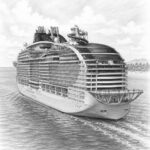
What actually makes an MSC Mediterranean cruise go smoothly? The short answer: decide a few things before you board and the rest of the week takes care of itself. On MSC World Asia, the newest ship in MSC Cruises’ flagship World Class, the guests who look relaxed are not lucky. They picked the right Experience, booked the busy things early, learned the ship’s rhythm, and planned their long Mediterranean port days instead of improvising them. This guide gathers the habits regulars rely on, from booking to the moment you step off in Civitavecchia for Rome.
Everything in this article and far more, deck by deck, in The Ultimate Guide to Sailing on MSC World Asia.
Get the book →Before you sail: the decisions that shape your whole week
Most of a good MSC cruise is decided weeks before you pack. Three choices matter more than anything you can arrange once you are aboard: which Experience you book, which extras you reserve in advance, and whether you set up the MSC for Me app before you leave home. Get those right and you skip most of the friction that trips up first-timers.
Pick the right Experience
This is the single most MSC-specific thing to understand, and it confuses almost every newcomer. On MSC you do not just book a cabin. You book a cabin and an “Experience,” which is a bundle of inclusions and flexibility layered on top of the room. The same physical balcony cabin can be sold under different Experiences at different prices, and the Experience quietly determines how your week feels.
- Bella is the entry Experience with the lowest fare. MSC assigns the exact location of your cabin, so you take what you are given. It is fine if price is everything and you are not fussy about where you sleep.
- Fantastica lets you choose your cabin and your dining time, adds room-service breakfast and extra loyalty points, and gives you more flexibility. For most guests this is the value sweet spot.
- Aurea is the premium tier: the best-located cabins, priority boarding, thermal spa access, and often a drinks package. If you want a smoother, less hands-on trip, this is where it starts.
- Yacht Club is the private ship-within-a-ship. Suites come with a 24-hour butler and concierge, a private restaurant, lounge and bar, a private pool and sun deck, and premium all-inclusive drinks. World Asia has the biggest MSC Yacht Club yet.
Exact inclusions change by sailing and promotion, so confirm the current details before you commit. The point to internalize is that the cheapest fare and the cheapest Experience are not always the best value once you add back the things you actually wanted. If you were going to buy a drinks package and spa access anyway, an Aurea fare can be cheaper than a Bella fare plus those extras bought separately. Do the math on the whole package, not the headline number. Our full breakdown of the tiers in the MSC World Asia Experiences guide walks through where each one pays off.
Book dining, spa and excursions early
The specialty restaurants, the thermal spa, and the marquee shore excursions are the things that sell out first. On a ship carrying more than 5,000 guests, “walk up and see” is a strategy that mostly ends in disappointment on sea days and port evenings. Book the ones you care about before you sail.
- Reserve the immersive Pan-Asian restaurant and the specialty venues (the sushi and teppanyaki spot, the steakhouse, the taqueria) for the nights you know you will want a proper sit-down meal. Teppanyaki in particular has limited seatings.
- If your Experience does not already include the thermal spa, buy a pass early. Passes are capped and the good time slots go quickly on sea days.
- Book the big-ticket excursions, especially anything going into Rome, as soon as they open. The most popular tours fill months out.
- Leave a couple of ports unbooked on purpose if you like to go independent, but decide that deliberately.
Download MSC for Me before you leave home
The MSC for Me app runs your day on board: deck plans, the daily schedule, restaurant bookings, your account balance, show times, and messaging with your travel party. Download it and log in before you leave home, while you still have easy Wi-Fi. Once you are aboard, the app itself is generally usable on the ship’s network, but setting it up in a port with a weak signal is a needless headache. Confirm your itinerary and any pre-booked times in the app the moment you board, because that is where the latest, most accurate schedule lives.
Choosing and booking your cabin
Cabin choice is where a little homework pays off every single night. MSC World Asia offers the full range: Interior, Ocean View, Balcony, the smart-value Infinite Ocean View, premium Aurea cabins, and the widest spread of MSC Yacht Club suites yet, from interior suites up to owner’s suites. Remember that the cabin and the Experience are chosen together, and that a Bella fare hands the exact location to MSC.
- Best value: an Interior or Infinite Ocean View booked on a Fantastica fare, so you keep the right to choose your location. The Infinite Ocean View gives you light and a sense of the sea without paying for a full balcony.
- Best all-round: a midship Balcony on the mid-decks. You get space, natural light, and the steadiest ride when the sea picks up.
- If you want the smoothest possible trip: stay midship and mid-deck, and avoid the extreme forward, high-deck rooms where motion is felt most.
Just as useful is knowing which rooms to avoid. Pull up the deck plan before you confirm and check what sits directly above and below your cabin.
- Cabins directly under the pool deck or the aquapark, where scraping deck chairs and foot traffic start early.
- Rooms over or under the theater and the World Promenade nightlife, which stay lively late into the evening.
- Forward, high-deck rooms if anyone in your party is prone to motion sickness.
- Any obstructed-view cabin, or an unintended connecting room, where the connecting door lets sound through.
A few minutes with the deck plan is the cheapest upgrade you will ever make. For room-by-room detail, see our best cabins on MSC World Asia guide maps out the quiet zones and the ones to skip.
Running a Mediterranean port day well
MSC World Asia currently sails a seven-night Western Mediterranean loop, typically calling at Barcelona, Marseille, Genoa, Rome via Civitavecchia, Messina for Taormina in Sicily, and Valletta in Malta. Several of these double as embarkation ports, so always confirm where you board and the exact ports for your specific week in the app. Mediterranean port days are long and the good ones start early. The single biggest mistake is treating a port morning like a lazy sea-day morning.
- Have a plan for each port before the night before. Know your top two or three sights and roughly how you will reach them.
- Eat an early breakfast and be ready to leave the ship near the start of the window, not near the end. The first tour buses and the first trains beat the mid-morning crowds.
- Carry the ship’s all-aboard time written down and set an alarm well before it. The gangway closes on schedule and the ship does not wait.
- Bring water, sun protection, and comfortable shoes. European old towns are cobbled and hot in the season.
Rome from Civitavecchia: plan this one carefully
Rome is the marquee call and also the trickiest. The cruise port is Civitavecchia, roughly a 1.5-hour transfer from central Rome by train or road. That distance changes everything: your effective time in the city is the port day minus three hours of travel, plus a safety buffer. Treat Rome as a long, early, tightly planned day or you will spend it commuting.
- Start at first light. Be among the earliest off the ship. An extra half hour in the morning is worth two in the afternoon when everything is crowded and warm.
- Pick a lane and stick to it. The Colosseum and Roman Forum sit together on one side of the center; the Vatican and St. Peter’s on the other. Trying to do both plus the Trevi Fountain in one port day is how people end up seeing traffic instead of Rome.
- Pre-book timed entries. The Colosseum and the Vatican use timed tickets. Book them in advance so you are not standing in a line that eats your short day.
The real decision is ship excursion versus independent, and both are valid.
- Ship excursion: the ship guarantees it will wait for its own tours if they run late, transfers are handled, and you get a guide. You pay more and move at the group’s pace, but the peace of mind on a distant port like Rome is real.
- Independent (train or private transfer): more flexibility, often cheaper, and you set your own pace. The trade-off is that if you are delayed, the ship leaves without you. Build in a generous buffer and aim to be back at the port well before all-aboard.
If Rome is the reason you booked this itinerary, it is worth reading up in depth first. Our dedicated Rome from Civitavecchia guide lays out the timing, the transfer options, and the realistic one-day routes.
Dining like a regular
Experienced MSC guests treat dining as something to manage, not just something that happens. The included main dining rooms and the buffet feed everyone well, and the specialty venues are where the ship shows off, at an extra cost. World Asia has an immersive Pan-Asian restaurant and a street-food counter unique to this ship, plus the MSC specialty lineup: a sushi and teppanyaki spot, a steakhouse, and a taqueria.
- Use the buffet strategically. Go a little before or after the rush rather than at the peak, and you will find seats and shorter lines.
- Save your specialty dinners for sea days or for evenings after a light port lunch, when you actually have the appetite and the time to linger.
- On a port day, eat a real breakfast on board before you leave. It is included, it is faster than finding food ashore first thing, and it saves money.
- Tell your waiter about dietary needs on the first night. The main dining team can plan ahead far better than a specialty venue can on the spot.
- If you booked a fixed dining time, arrive close to it. The kitchen and service run on that rhythm, and showing up at the edges of the window is slower.
Saving money without cutting the fun
The onboard extras are where a cruise budget quietly balloons. The two biggest levers are the drinks package and how you think about gratuities and Wi-Fi.
Do the drinks package math
A drinks package is only a saving if you actually drink enough to clear its price. Be honest about your habits before you buy.
- Estimate a normal day: how many coffees, soft drinks, glasses of wine, cocktails, or beers you and your travel party genuinely have. Add a bottle of water or two.
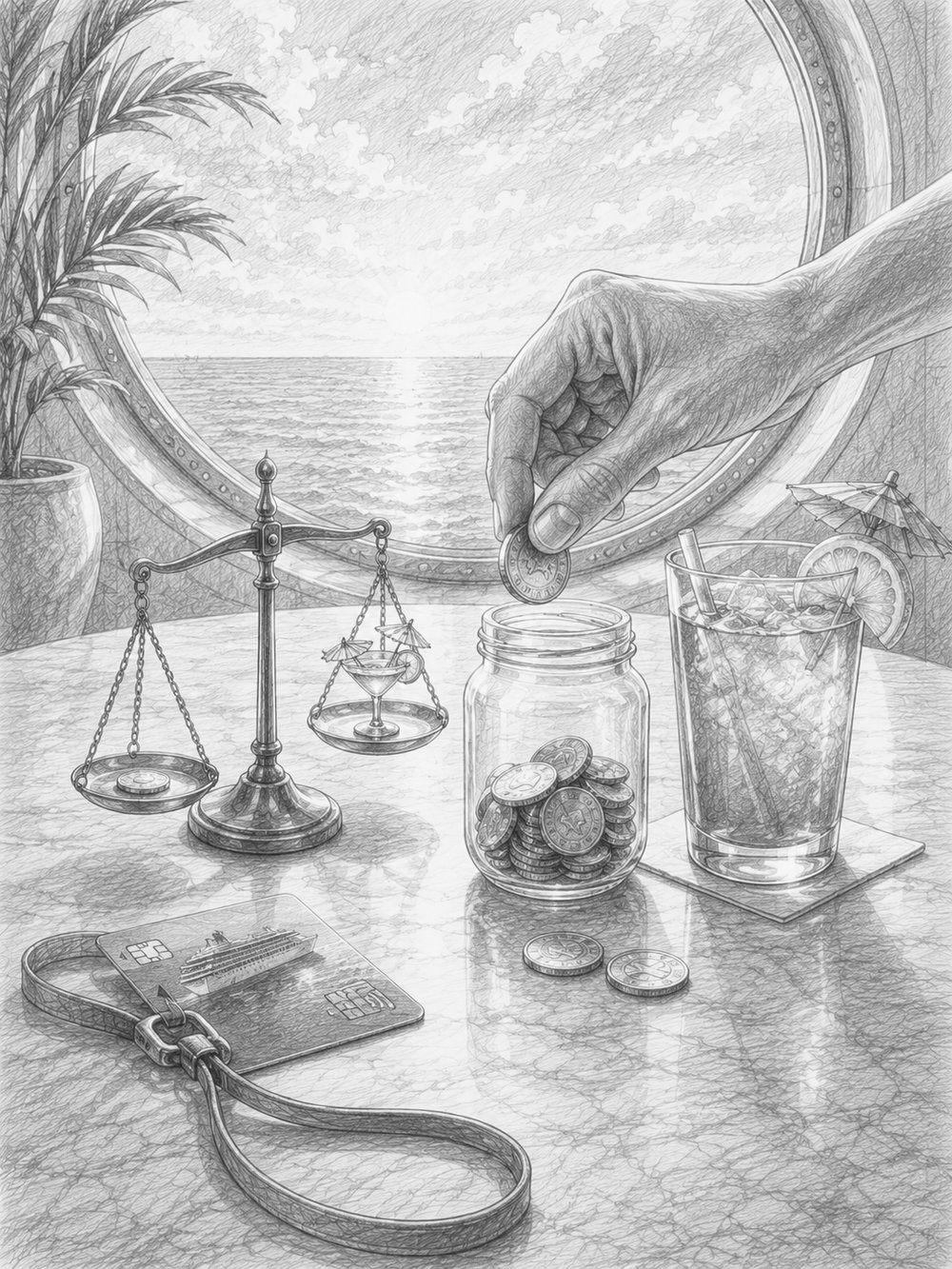
- Multiply the package’s daily price by the number of days and compare it to that honest estimate. Packages are usually priced per day for the whole voyage, so a couple of quiet port evenings ashore can tip the balance against buying.
- Remember the port days. On days you are off the ship exploring Rome or Barcelona, you are not drinking on board, which lowers the value of an all-inclusive package.
- Check whether your Experience already bundles a package. Aurea and Yacht Club often include one, so buying it again is money wasted. Confirm what is included before you add anything.
- If you mostly want coffee and soft drinks rather than alcohol, look at the lighter, cheaper package tiers instead of the premium one.
Gratuities, Wi-Fi and the small stuff
Daily gratuities are added automatically to your onboard account. Budget for them from the start rather than being surprised at the end, and factor them into any comparison you make between MSC and another line. Wi-Fi is a paid plan, so decide up front whether you need it. If you only want to message family, the ship’s own app messaging often covers that without a full internet package. And keep an eye on your account balance in the app through the week; catching a mistaken charge on day three is far easier than untangling it at disembarkation.
Beating the lines on the thrills and shows
The signature attractions draw crowds at predictable times, and the fix is almost always timing. World Asia’s headline thrills are the Spiral @ Tree of Life, a record-length multi-deck dry slide on the World Promenade, and the Cliffhanger, an over-water swing ride cantilevered off the side of the ship. Add the aquapark and the cantilevered Zen whirlpools over the sea, and there is plenty competing for the same afternoon hours.
- Ride the Spiral and the Cliffhanger on a port morning or during dinner. When most of the ship is ashore or eating, the queues shrink to almost nothing. Mid-afternoon sea-day peak is the worst time.
- Hit the aquapark early or late. The middle of a sunny sea day is its busiest window.
- For the theater, arrive early and know the schedule. Popular productions fill up. Check show times in the app and turn up with time to spare for the seats you want, especially if there is only one performance.
- Use the app to spread yourself out. When one district is packed, another is usually quiet. The Galleria atrium, the Clubhouse, and the World Promenade rarely peak at the same moment.
A few more habits regulars swear by
Beyond the big decisions, seasoned MSC guests carry a handful of small habits that smooth out the week.
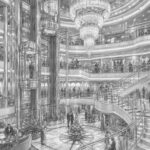
- Learn the seven districts on day one. World Asia is laid out as seven districts, from the World Promenade main street and the glass-elevator Galleria atrium to the Family District, the new Clubhouse, the adults-only Zen area, and the Yacht Club. A quick self-guided walk the first afternoon saves you getting lost all week.
- Pack a small day bag for ports. Water, sunscreen, a layer, a portable charger, and any pre-booked tickets. You will be out for hours.
- Keep some cash in euros. Small cafes, market stalls, and public transport in Mediterranean ports do not all take cards.
- Carry your cruise card everywhere. It is your room key, your payment, and your ship ID for re-boarding. Losing it mid-port day is a hassle.
- Set an alarm for all-aboard, every port. The one time you assume you will remember is the time you cut it close.
- Check the schedule each evening for the next day. Knowing the plan before you sleep beats scrambling at breakfast.
Common mistakes newcomers make on MSC
If you have cruised other lines, a few MSC-specific things catch people out. Knowing them in advance is half the battle.
- Ignoring the Experience system. Booking a bare Bella fare and then paying separately for everything you wanted can cost more than a higher Experience that bundled it. Compare the whole package.
- Assuming everything is included. Specialty restaurants, most drinks, Wi-Fi, and many activities cost extra. Read what your fare actually covers so there are no surprises on the bill.
- Under-planning Rome. Treating Civitavecchia like a short hop into town, forgetting the 1.5-hour transfer each way, is the classic error. Plan Rome as a long, early day.
- Booking nothing in advance. The best dining times, spa slots, and excursions sell out. “We’ll sort it on board” leaves you with the leftovers.
- Cutting port timing too fine. Independent travelers who miss the all-aboard get left behind at their own expense. Build in a buffer, especially far from the port like in Rome.
- Skipping the app setup. Not downloading MSC for Me before boarding means fumbling with schedules and bookings on a weak signal when you should be enjoying the ship.
None of these are hard to avoid. They just require deciding a little earlier than instinct suggests. For the whole week in detail, see our what to expect on MSC World Asia guide.
Get the complete MSC World Asia playbook
Want every one of these tips expanded with step-by-step detail? “The Ultimate Guide to Sailing on MSC World Asia,” part of the Ultimate Ship Guides series by Leo Sotropa, turns each chapter into clear action steps so you board knowing exactly what to book, when to go ashore, and how to spend your week like a regular.
Frequently asked questions
What is the most important MSC Mediterranean cruise tip for a first-timer?
Understand the Experience system before you book. On MSC you choose a cabin and an Experience (Bella, Fantastica, Aurea, or Yacht Club) together, and that bundle decides your inclusions and flexibility. Comparing the whole package rather than the headline fare is what saves both money and frustration.
Should I book a ship excursion or go independent for Rome?
Both work. A ship excursion handles transfers and, importantly, the ship waits for its own tours if they run late, which matters given Civitavecchia is about 1.5 hours from central Rome. Going independent by train or private transfer is often cheaper and more flexible, but if you are delayed the ship leaves without you, so build in a generous time buffer.
Is the drinks package worth it on MSC World Asia?
Only if you drink enough to clear its price. Estimate your honest daily consumption, multiply the package’s daily rate across the voyage, and remember that port days spent ashore lower its value. Also check whether your Experience already includes one, since Aurea and Yacht Club often do. Confirm current pricing in the MSC for Me app.
How do I avoid long lines for the Spiral slide and the Cliffhanger?
Ride them when the ship is quiet: a port morning when most guests are ashore, or during the dinner hour. The worst time is the middle of a sunny sea day. Use the MSC for Me app to check what is busy and shift to a quieter district when needed.
Which cabin should I choose on MSC World Asia?
For value, an Interior or Infinite Ocean View on a Fantastica fare, so you keep the right to pick your location. For the best all-round experience, a midship Balcony on the mid-decks gives space, light, and the steadiest ride. Check the deck plan and avoid rooms under the pool deck or over the nightlife.
Are gratuities and Wi-Fi included on MSC?
No. Daily gratuities are added automatically to your onboard account, so budget for them from the start. Wi-Fi is a separate paid plan. If you only need to message your travel party, the ship’s own app messaging often covers that without buying a full internet package.
How early should I book dining and excursions?
As early as they open. On a ship carrying more than 5,000 guests, the best specialty dining times, thermal spa slots, and the popular Rome excursions sell out well in advance. Reserve the ones you care about before you sail and leave a port or two open only if you deliberately want to go independent.
Ready for the whole ship in one place? It is all in The Ultimate Guide to Sailing on MSC World Asia.
Get the book →
Meet Leo: The Heartbeat Behind ‘A Country A Month’
Journeying through the pages of A Country A Month, you might often feel the rhythm of a storyteller’s heartbeat, pulsating through each line, each image, and each adventure shared. That heartbeat belongs to none other than our remarkable website editor, Leo.
With a lens in one hand and a pen in the other, Leo seamlessly marries his passions for photography and writing. His eye captures moments that words can barely describe, yet his eloquence brings those images to life, transcending borders and connecting us all through shared stories. An avid traveler, every country he’s visited has added another chapter to his expansive tale, and through our platform, he generously shares these chapters with us.