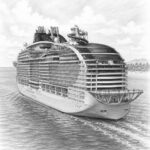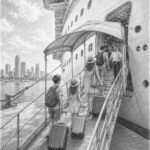
Can you actually see Rome in a single day from an MSC World Asia cruise? Yes, but only if you accept one hard fact first: the cruise port is Civitavecchia, and it sits roughly 1.5 hours from central Rome. The name on your itinerary says Rome, yet the ship docks in a working port town more than 70 kilometers up the coast. This MSC World Asia Rome Civitavecchia guide is about closing that gap sensibly. Get the transport right, pick two or three landmarks instead of ten, and build in an honest buffer for the return, and you can stand inside the Colosseum, look up at St. Peter’s, and toss a coin into the Trevi Fountain before the ship sails. Try to do everything, and you will spend the day anxious and rushed. Here is how to plan the day so Rome feels like a highlight, not a sprint.
Everything in this article and far more, deck by deck, in The Ultimate Guide to Sailing on MSC World Asia.
Get the book →The geography: why Civitavecchia is not Rome
The single most important thing to understand is the distance. Civitavecchia is the maritime gateway for Rome, but it is its own town on the Tyrrhenian coast, and central Rome lies about 70 to 80 kilometers to the southeast. However you cover that ground, plan for around 1.5 hours each way, and treat that as a floor rather than a guarantee. Traffic on the roads into Rome, a delayed train, or a long walk from the drop-off to the first sight can all add minutes that compound.
That transit reality shapes every other decision. If MSC World Asia is in port for a typical long Mediterranean day, subtract roughly three hours of round-trip travel and the all-aboard buffer at the end, and what remains is your actual sightseeing window. It is generous enough for a meaningful day, but not open-ended. This is why people who wander off in Civitavecchia with no plan end up frustrated: they underestimate how much of the day the road eats. Knowing the number up front lets you plan around it.
Almost nobody sails a Western Mediterranean week to see Civitavecchia. Rome is the marquee call on this itinerary, and the port is simply the door you walk through to reach it. Frame the day that way and the logistics fall into place.
Three ways to reach Rome, and the honest trade-offs
You have three realistic options for getting from the ship to the city: an MSC ship excursion, the train, or a private transfer or driver. Each one solves a different problem, and each one costs you something. There is no single right answer, only the answer that fits how you travel and how much stress you are willing to trade for money.
The MSC ship excursion
Booking Rome as an MSC shore excursion is the lowest-anxiety choice, and its single biggest advantage has nothing to do with sightseeing: the ship will not leave without a guest who is on one of its own tours. If your excursion coach is stuck in Roman traffic, the ship waits. That guarantee alone is worth a great deal to nervous first-timers, and it is the reason many choose the ship option for a distant call like Rome.
The trade-offs are the usual ones. Excursions move at the pace of the group, which means you wait for the slowest person and follow a fixed route with limited time at each stop. They cost more than doing it yourself. And you sacrifice spontaneity: if you fall in love with a piazza, you cannot linger, because the coach is leaving. For guests who want structure, transport handled door to door, and the security of the return guarantee, that is a fair deal. Confirm exactly what each MSC Rome tour includes in the MSC for Me app, since some cover the Colosseum, some the Vatican, and some a panoramic overview with limited entries.
The train
The train is the budget hero and the independent traveler’s default. Civitavecchia has a rail station with frequent regional services to Rome, and the fare is a fraction of any other option. If you are comfortable navigating a station and finding your way around a big city on foot and by metro, the train gives you total freedom at the lowest price.
The honest cons matter here. The station in Civitavecchia is not at the cruise terminal gate; you will need a shuttle, taxi, or walk to reach it, which eats time on both ends. Regional trains also vary in speed, so check whether you are boarding a faster or slower service. Most important, the ship does not wait for the train, so a cancelled or delayed return service is entirely your risk. The train rewards travelers who leave a comfortable margin; it punishes those who cut the return too fine.
A private transfer or driver
A private transfer sits between the two: door-to-door comfort like the excursion, but flexibility close to the train. A pre-booked driver meets you near the port, takes you into Rome, and either waits or returns at an agreed time, often with the option to build a custom route. For a family or small group splitting the cost, it can be surprisingly reasonable per person, and it removes the station hassle entirely.
The catch is the same one that haunts every independent choice: the ship will not wait for a private driver any more than it waits for a train. A reputable transfer company that knows cruise schedules will pad the return generously and understands that a missed all-aboard is a disaster, but you are trusting a third party rather than the cruise line. Book a driver with strong reviews specifically from cruise passengers, agree the return time in writing, and keep it conservative. Done well, this is the most comfortable independent option; done carelessly, it carries the same risk as the train.
| Option | Best for | Main advantage | Main risk |
|---|---|---|---|
| MSC ship excursion | First-timers, nervous planners | Ship waits if the tour runs late | Higher cost, group pace |
| Train | Independent, budget travelers | Cheapest, total freedom | Ship will not wait; station transfer needed |
| Private transfer | Families, small groups | Door-to-door, custom route | Ship will not wait; depends on operator |
Prioritize: pick two or three, not ten
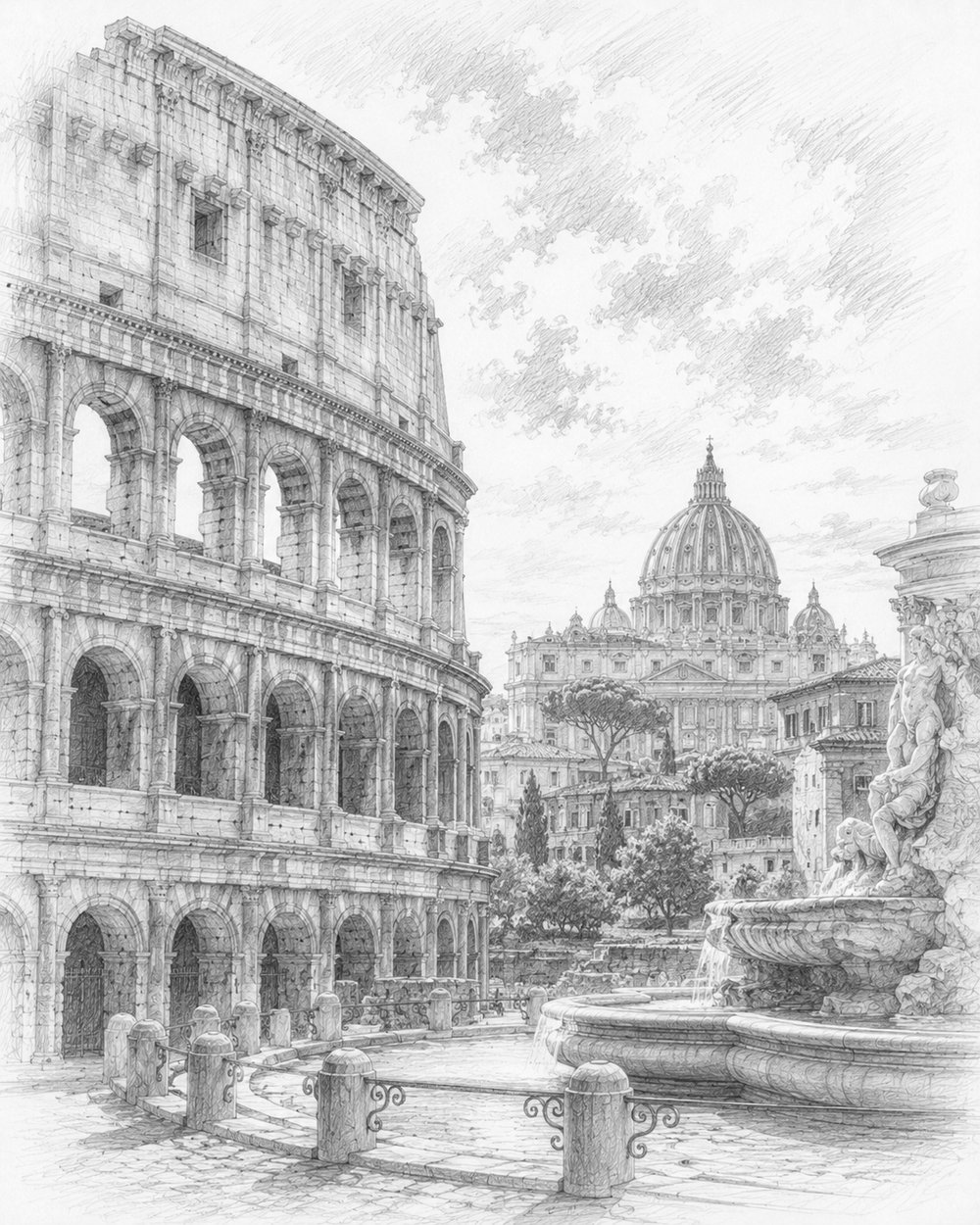
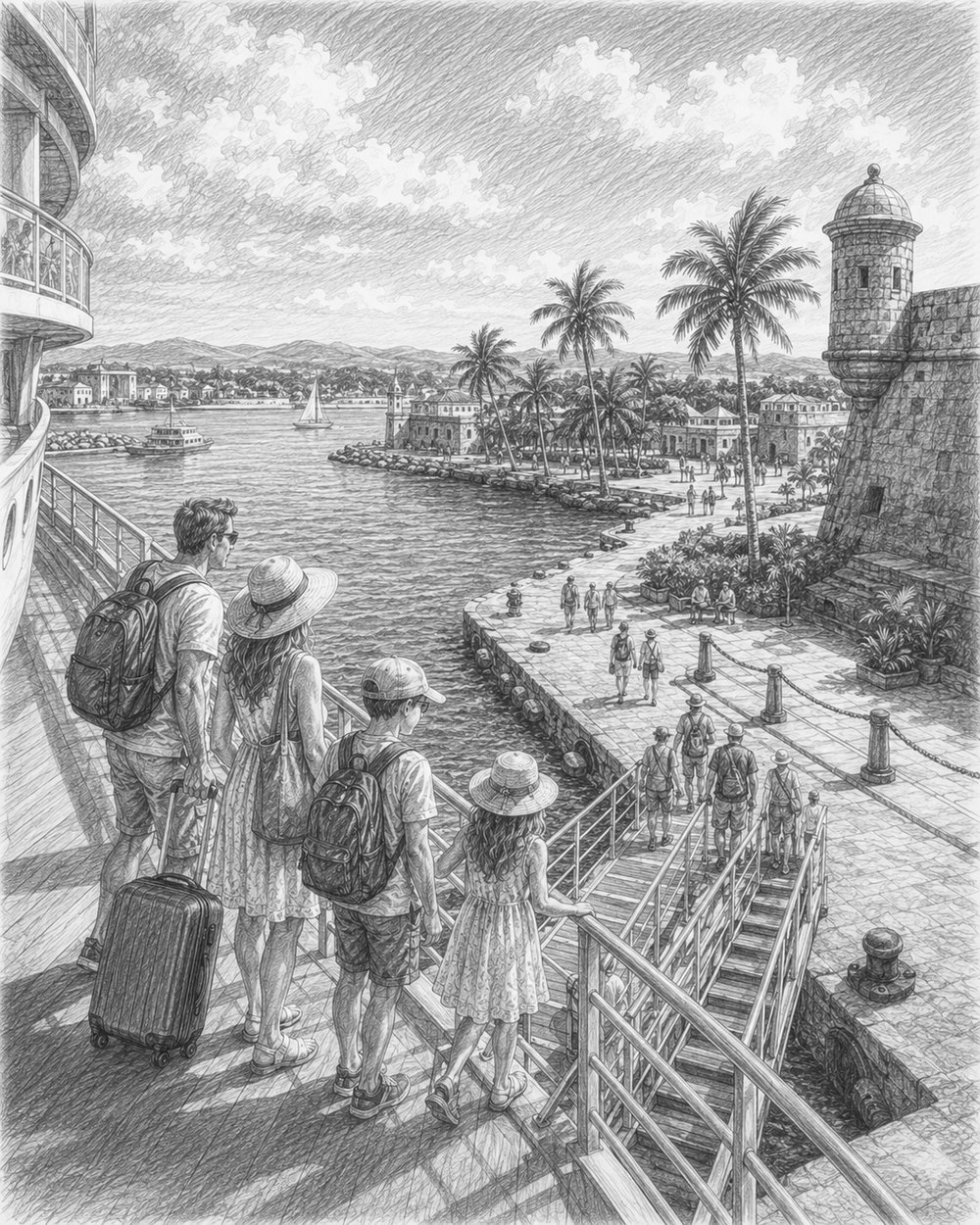
Rome has more world-class sights than any city has a right to, and the classic port-day mistake is trying to see all of them. You cannot. Once you accept the transit math, the day realistically holds two major sights done properly, or three if they are close together and you move with intent. Chasing a longer list means seeing everything from the outside and nothing from the inside, which is the opposite of a good day. The three anchors most people build around are the Colosseum with the Roman Forum, the Vatican with St. Peter’s, and the Trevi Fountain.
The Colosseum and the Roman Forum
The Colosseum is the image that defines Rome, and standing inside the arena is genuinely worth the effort. It sits right beside the Roman Forum and Palatine Hill, and the three are usually visited together on a single combined ticket. This is the great efficiency of a Rome day: one area, one ticket, three of the most important ancient sites on the planet, all within a short walk of each other. If you only anchor on one thing, this cluster gives you the most history per hour.
Because it is so popular, the Colosseum is where independent travelers most often lose an hour to the entry line. Timed-entry tickets are essential, and you should book the earliest slot that works with your arrival time so the visit does not push everything else late. Give yourself time to wander the Forum afterward; walking the same paving stones that ran through the heart of the ancient city is the part people remember most.
The Vatican and St. Peter’s
The Vatican is the other great anchor, and it is really two experiences: the Vatican Museums, which end at the Sistine Chapel, and St. Peter’s Basilica. Both are extraordinary, and both draw enormous crowds. St. Peter’s Square and the basilica are free to enter, though the security line can be long; the museums are ticketed and are where the famous, unmoving queues form. Realistically, doing the museums, the Sistine Chapel, and the basilica properly is close to a half-day in itself, so many cruise visitors treat the Vatican as their single primary anchor and pair it only with a quick outdoor sight rather than trying to add the Colosseum on the same day.
Note that the Vatican sits on the opposite side of the historic center from the Colosseum. On a compressed port day, doing both interiors in full is possible but aggressive, and it leaves little room for anything to go wrong. Many travelers have a better day choosing one interior masterpiece to do slowly, then enjoying the streets and squares in between.
The Trevi Fountain and the walkable center
The Trevi Fountain is the easy win of a Rome day: it costs nothing, it never closes, and it sits in the walkable heart of the historic center. It photographs beautifully and takes only as long as you want to give it. This is the sight to slot between your two big anchors, or to use as a gentle finale before you head back. The streets connecting these central landmarks are themselves a pleasure, full of fountains, churches, and gelato, and walking them is one of the best free things Rome offers.
Timing and the all-aboard buffer
This is the section that saves cruises. Every port day has an all-aboard time, usually stated as roughly half an hour before the ship’s departure, and if you are not back aboard by then, the ship can and will sail without you. Because Rome is so far from the port, the buffer here is more important than at any other stop on the Western Mediterranean week. Missing the all-aboard in Barcelona is a bad afternoon; missing it in Rome, 1.5 hours up the coast, is a genuine crisis.
Build your day backward from the all-aboard time, not forward from breakfast. Take the departure time from the MSC for Me app, subtract the all-aboard margin, then a full 1.5 to 2 hours of return travel, then an extra cushion for Roman traffic. Whatever moment that leaves is when you must be leaving central Rome, no exceptions. Set an alarm, and when it goes, you go, even if you are mid-gelato at the Trevi Fountain.
One more timing detail people forget: ship time. MSC ships run on a set onboard time that does not always match the local clock in port, especially around daylight-saving changes or when an itinerary crosses habits. Always confirm whether the ship is on local time and set your phone accordingly, because being an hour off on all-aboard day in Rome is exactly how people get left behind. Check it in the app the night before and again in the morning.
- Note the ship’s departure and all-aboard times from the MSC for Me app.
- Confirm whether the ship runs on ship time or local time.
- Subtract 1.5 to 2 hours for the return, then add a traffic cushion.
- Set an alarm for your “leave Rome now” moment and obey it.
- Keep the ship’s port agent phone number saved in case something goes wrong.
Vatican tips and skip-the-line strategy
Lines are the enemy of a port day, and Rome is a city of lines. The fix is boring but decisive: book timed-entry, skip-the-line tickets in advance for anything you plan to enter. For the Colosseum and the Vatican Museums, walk-up entry on a cruise day can mean losing one to two hours of your precious window standing in the sun. A pre-booked timed ticket turns that into a short walk to a priority entrance.
For the Vatican specifically, a few habits help. Book the earliest museum entry you can reach, because the crowds build through the day. Remember the dress code: shoulders and knees must be covered to enter St. Peter’s and the Sistine Chapel, so dress accordingly or carry a light layer, or you may be turned away at the door. Understand the layout, too, because the walk through the museums to the Sistine Chapel is long and one-directional, and there is a lot of ground to cover before you reach the famous ceiling. Guided tours often include priority entry and can be worth it purely for the time saved, though they add cost.
Whatever you book, buy from official channels or well-reviewed operators, and keep the tickets screenshotted in case of a dead signal. A skip-the-line ticket you cannot open at the gate is not skipping any line.
Rome independently or with the ship?
The honest answer depends entirely on you. Choose the ship excursion if this is your first cruise, if the idea of a foreign train and a self-timed return makes you anxious, or if you simply want the day handled and the return guaranteed. The premium you pay buys peace of mind, and for a distant call like Rome that peace of mind is real value. If you want a gentle introduction to how MSC handles shore days, our broader collection of MSC World Asia tips is a good starting point, and first-timers may also want our guide to your first cruise on MSC World Asia.
Choose independent travel, by train or private transfer, if you are confident, want your own pace, and would rather spend the excursion premium on tickets, food, and freedom. Independent Rome is cheaper and richer if you plan tightly and respect the buffer. The dividing line is not really about money; it is about how you handle risk. Both approaches can produce a wonderful day. The wrong choice is the unplanned one: walking off in Civitavecchia with no ticket, no return plan, and no buffer.
The rest of the Western Mediterranean week
Rome is the marquee call, but MSC World Asia’s seven-night Western Mediterranean loop is stacked with other strong port days, and several of these ports double as embarkation points, so always confirm where you board and the exact order of calls for your week. Beyond Civitavecchia, the itinerary typically threads together Barcelona, Marseille, Genoa, Messina or Taormina in Sicily, and Valletta in Malta.
- Barcelona, Spain: the Sagrada Família, Park Güell, the Gothic Quarter, and Gaudí architecture along La Rambla.
- Marseille, France: Notre-Dame de la Garde above the Vieux-Port, and a gateway to Aix-en-Provence.
- Genoa, Italy: a historic old town and aquarium, and the jumping-off point for the Cinque Terre and Portofino.
- Messina and Taormina, Sicily: clifftop Taormina with its ancient Greek theatre, in the shadow of Mount Etna.
- Valletta, Malta: St. John’s Co-Cathedral, the Grand Harbour, and the walled old city of Mdina nearby.
Like Rome, some of these calls put the headline sight at a distance from the pier, so the same discipline applies everywhere: start early, know your all-aboard time, and pick a couple of things to do well. The good news is that MSC World Asia herself is a destination on the sea days in between, with her seven-district design, the record-length Spiral @ Tree of Life dry slide on the World Promenade, and the over-water Cliffhanger swing ride. To understand how the districts and dining fit together, see our overview of what to expect on MSC World Asia, and if you are still choosing a fare, our guide to the MSC Experiences explains how Bella, Fantastica, Aurea, and the Yacht Club change your week.
Get the complete MSC World Asia playbook
Turn one great port day into a great whole cruise with “The Ultimate Guide to Sailing on MSC World Asia,” part of the Ultimate Ship Guides series by Leo Sotropa. Every chapter gives you clear action steps, from planning Rome to picking the right cabin and Experience, so nothing about your week is left to chance.
Frequently asked questions
How far is Civitavecchia from Rome?
Central Rome is roughly 70 to 80 kilometers from the cruise port of Civitavecchia, which works out to about 1.5 hours of travel each way by train or road. Traffic on the approach into Rome can stretch that, so plan for around three hours of round-trip transit and treat 1.5 hours as a minimum rather than a promise.
Can I see Rome in one day from the ship?
Yes, but only two major sights done properly, or three if they are close together. After subtracting the round-trip travel and the all-aboard buffer, you have enough time for a meaningful day but not for a long checklist. Pick your anchors, such as the Colosseum area or the Vatican, and enjoy them rather than racing between everything.
Should I book Rome through MSC or go independently?
Book the MSC excursion if you want the ship to wait for you should the tour run late, which is real reassurance for a distant call like Rome. Go independent by train or private transfer if you are a confident traveler who wants to save money and set your own pace. Independent is cheaper and more flexible, but the ship will not wait, so your return timing is your own risk.
What time do I need to be back at the ship?
Check the all-aboard time in the MSC for Me app; it is usually about half an hour before departure. Work backward from it: subtract 1.5 to 2 hours for the return trip and add a traffic cushion on top. The moment that calculation gives you is when you must leave central Rome, and you should set an alarm for it and obey it.
What is ship time and why does it matter in Rome?
Ship time is the onboard clock MSC sets for the sailing, which does not always match the local time in port. Because Rome is so far from Civitavecchia, being even an hour off on all-aboard day can cause you to miss the ship. Always confirm in the app whether the vessel is on ship time or local time and set your phone to match.
Do I need skip-the-line tickets for the Colosseum and Vatican?
Yes. On a cruise day, walk-up lines at the Colosseum and the Vatican Museums can cost you one to two hours you cannot spare. Book timed-entry, skip-the-line tickets in advance from official channels or reputable operators, keep them saved on your phone, and remember the Vatican dress code covering shoulders and knees.
Is it worth choosing a good cabin for a port-heavy itinerary like this?
It is, because on a week with long, early port days you want to sleep and recover well between them. A midship balcony on the mid-decks gives space, light, and the steadiest ride, while an Interior or Infinite Ocean View on a Fantastica fare lets you choose your location for less. Our guide to the best cabins on MSC World Asia walks through the trade-offs.
Ready for the whole ship in one place? It is all in The Ultimate Guide to Sailing on MSC World Asia.
Get the book →
Meet Leo: The Heartbeat Behind ‘A Country A Month’
Journeying through the pages of A Country A Month, you might often feel the rhythm of a storyteller’s heartbeat, pulsating through each line, each image, and each adventure shared. That heartbeat belongs to none other than our remarkable website editor, Leo.
With a lens in one hand and a pen in the other, Leo seamlessly marries his passions for photography and writing. His eye captures moments that words can barely describe, yet his eloquence brings those images to life, transcending borders and connecting us all through shared stories. An avid traveler, every country he’s visited has added another chapter to his expansive tale, and through our platform, he generously shares these chapters with us.