Which ports actually matter on a Celebrity Xcel Western Mediterranean sailing, and how do you get from the pier to the sights worth crossing an ocean for? The short answer: Barcelona and Rome are the two bookend cities, and both reward extra days on land before or after the cruise. Between them, Xcel currently threads a run of ports where the marquee attraction is sometimes an hour inland — Florence and Pisa from Livorno, Rome itself from Civitavecchia — so the difference between a great day and a stressful one comes down to how you plan the transfer, whether you booked timed tickets, and how honestly you judge what fits before all-aboard. This guide walks the itinerary port by port, in the Barcelona-to-Rome direction, with a realistic one-day plan for each.
Everything in this article and far more, deck by deck, in The Ultimate Guide to Sailing on Celebrity Xcel.
Get the book →Celebrity Xcel is the newest Edge-Class ship, the fifth in the series, and her marquee season is the Western Mediterranean — round-trip from Barcelona and, on other dates, from Civitavecchia for Rome. Voyages typically run seven to eleven nights, with the longer sailings reaching further east. The exact port list changes by departure, so treat the sequence below as the shape of a typical run rather than a fixed schedule, and confirm your own dates and call times in the Celebrity app. What does not change is the logic of the region: two big cities that deserve their own airtime, and a string of ports in between that each ask a single clear question — beach, old town, or inland masterpiece?
Why frame it Barcelona to Rome
The two ends of this itinerary are not just embarkation logistics. Barcelona and Rome are among the great cities of Europe, and each holds more than a cruise call can absorb. Barcelona wants the Sagrada Família, the Gothic Quarter, La Boqueria, and Park Güell — that is already two full days if you want to see them without sprinting. Rome wants the Colosseum, the Vatican, and the Forum, and even locals will tell you that is a two-day list at minimum. Both cities are also excellent to arrive into early or linger in afterward, with real airports, good trains, and enough to fill an extra night or three.
So the smart move is to build the trip around those bookends. Fly into Barcelona a day or two before you board and treat the city as a proper stop, not a scramble to the terminal. If your voyage ends near Rome, or calls at Civitavecchia mid-cruise, plan to give the capital a dedicated push. Everything in between — Palma, Provence, the French Riviera, Florence and Pisa, Naples, Ajaccio — becomes a series of one-day decisions, each easier once you have accepted that the two cities at the ends carry the real weight. If you want the fuller picture of how the whole route hangs together, the Celebrity Xcel Western Mediterranean overview lays out the season in more detail.
Barcelona: the embarkation city worth extra days
Barcelona is where most Western Mediterranean sailings begin, and it is the port I most urge you not to rush. The cruise terminals sit at the foot of the city, a short taxi ride from the Gothic Quarter, so even a half-day on either side of embarkation is usable — but a half-day does not do Barcelona justice.
The one thing to book ahead
Gaudí’s Sagrada Família is the single attraction here that most demands a timed ticket. Entry is by slot, the slots sell out, and turning up hoping to walk in usually ends in a photo from the sidewalk rather than an hour inside the nave. Book your entry time in advance and build the rest of the day around it. If you want to climb a tower, that is a separate add-on with its own time — decide before you go, because you cannot bolt it on at the door.
A realistic two-day plan
Day one, start in the Gothic Quarter early, when the stone lanes are quiet, then walk to La Boqueria off La Rambla for a mid-morning graze — go before noon, before the best stalls sell through. Spend the afternoon at Park Güell (also timed-entry for the monumental zone, so book it) for Gaudí’s mosaics and the view back over the city to the sea. Day two, give the morning to the Sagrada Família on your booked slot, then let the afternoon go loose — the Picasso Museum, the beach at Barceloneta, or tapas and a long lunch. If you only have embarkation day, do the Sagrada Família and the Gothic Quarter and accept that the rest is a reason to come back.
Getting to the ship from the city is straightforward by taxi; the terminals are close, and the walk from the ship into the ports below is what varies most from stop to stop. For a broader sense of what boarding day feels like and what to do first, the first-time Celebrity Cruises on Xcel guide is a useful companion.
Palma de Mallorca: the easy walk-in port
After Barcelona, Palma is a relief — one of the easiest ports on the whole itinerary. The ship docks close enough that the old town is a manageable walk or a very short taxi, and the centerpiece, La Seu cathedral, rises straight off the waterfront so you can see where you are heading from the deck.
The one-day plan writes itself. Walk in toward La Seu, tour the cathedral (its scale and the light through the great rose window are the point), then lose an hour or two in the old town’s lanes behind it — courtyards, small squares, cafés, and shops that reward wandering. Because the port is so forgiving, Palma is a good day to slow down: a leisurely lunch, a coffee in a plaza, an unhurried stroll back. Palma delivers beach time too, but the old town and cathedral are the heart of the call.
Marseille and Provence: city or countryside
Marseille asks you to choose. You can stay in the city and center your day on the Old Port — the harbor, the markets, the fish stalls, the funicular up to the basilica for the view — or treat Marseille as a gateway and head into Provence. Both are good; they are just different trips.
If you choose Provence, the classic day trips are Aix-en-Provence with its elegant streets and fountains, Arles with its Roman arena and Van Gogh associations, and, in season, the lavender country inland. These are real distances, so lean on an organized tour or a pre-arranged driver rather than improvising — the math of getting out, seeing something properly, and getting back before all-aboard is tighter than it looks. If you choose the city, the Old Port is walkable and full. My honest steer: first-timers who want the postcard should do Provence with a booked tour; anyone who prefers a slower day will enjoy Marseille on foot.
Cannes and the French Riviera: a tender port
Here is the practical detail that shapes the whole day: on the French Riviera, Xcel typically anchors offshore and tenders guests ashore rather than docking. Tendering means you go in by the ship’s boats, which adds time on both ends and makes your day a little shorter than the port hours suggest. Plan for that. If you have a booked excursion, the ship generally prioritizes those tenders; if you are on your own, go ashore earlier rather than later and give yourself a comfortable cushion to get back.
Once ashore at Cannes, the Croisette — the seafront promenade with its beaches and grand hotels — is right there for a stroll. But the Riviera’s real gift is how many good places sit within reach. Antibes has its old town and market; Èze is a medieval village perched high above the sea; Monaco is a short hop for the harbor, casino, and palace; and Nice, with its old town and the Promenade des Anglais, is a favorite for a reason. You cannot do all of these in one tendered day, so pick one direction — Èze plus Monaco, or simply a half-day in Nice. Whatever you choose, remember the tender adds friction — do not cut your return tight.
Florence and Pisa from Livorno: the inland masterpiece
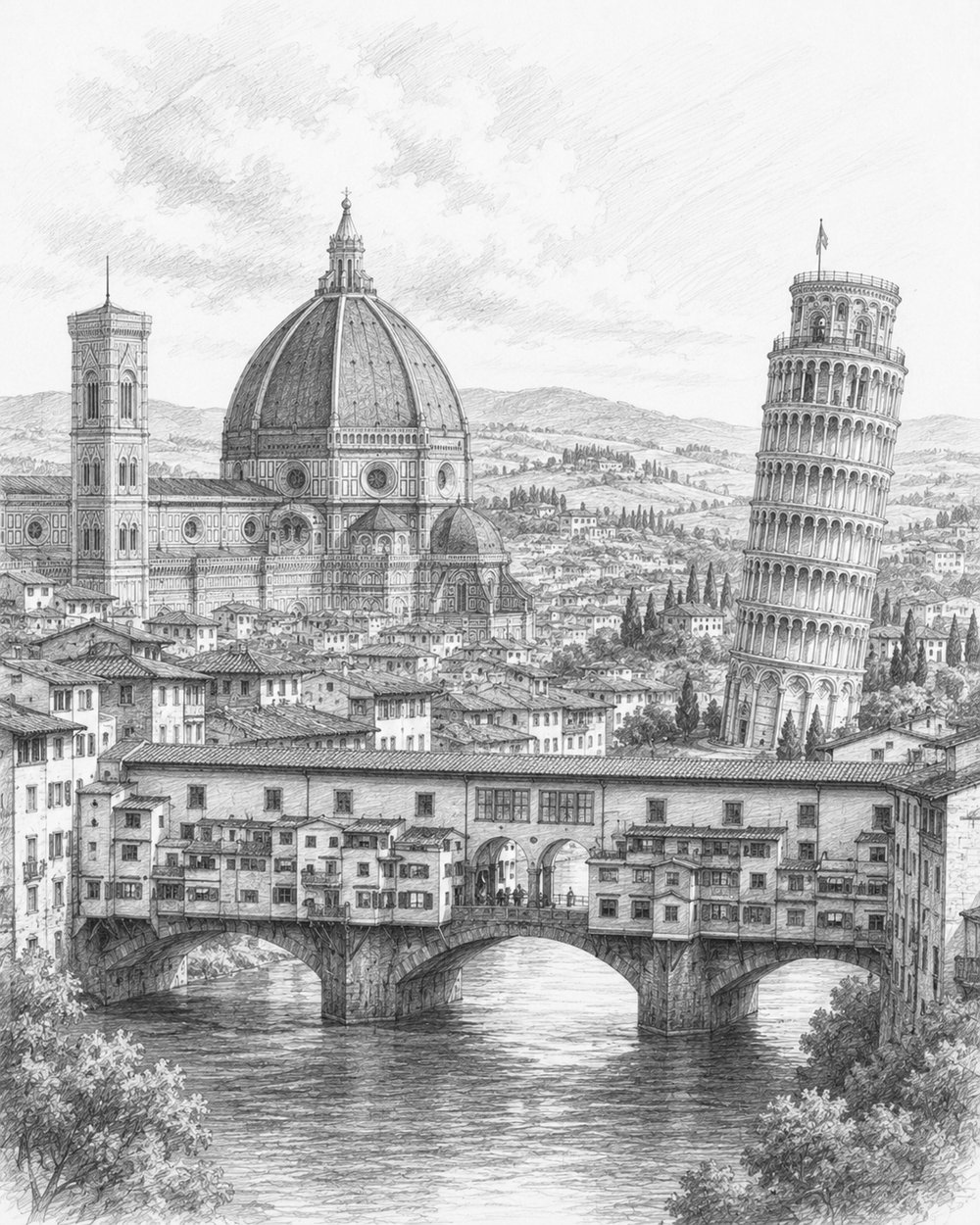
This is the first of the two ports where the famous sight is not at the pier. The ship docks at Livorno, a working port, and Florence — the Renaissance city everyone is here for — is roughly an hour and a half inland. Pisa, with its Leaning Tower, is closer. You will spend real time in transit, which changes how you should plan.
How to get to Florence
You have three broad options. A ship’s excursion is safest for timing, because the ship waits for its own tours if they run late. A private driver or small-group tour gives you flexibility and door-to-door transfer. The train is cheaper, but Livorno’s station is not at the port, so you add a transfer to reach it and you are then responsible for making it back — a real consideration when all-aboard is fixed and the ship does not wait for independent travelers. For most people, cost and peace of mind favor an organized tour here.
Book the Uffizi, and pick your pace
If you want the Uffizi Gallery, book a timed entry in advance — the walk-up line can swallow your entire day, and on a cruise call you have no day to spare. A realistic Florence plan: reach the city by late morning, see the Duomo and the Baptistery doors, walk to the Piazza della Signoria, do your booked Uffizi slot or the Accademia for the David (also timed — pick one gallery, not both), then cross the Ponte Vecchio and have a proper Tuscan lunch before the drive back. Some itineraries let you pair a quick Pisa photo stop with a shorter Florence visit, but understand you are then sampling Florence, not seeing it. My advice: choose Florence and go deep, or choose Pisa if the Leaning Tower is a lifelong must — trying to do both well in one day usually shortchanges the one that mattered.
Rome from Civitavecchia: the biggest day
Rome is the other inland giant, and it is the most demanding day on the itinerary. The port is Civitavecchia, and the city is over an hour away. That transfer, plus the sheer size of Rome’s must-see list, means this is the day to be most disciplined about what you attempt.
Getting from Civitavecchia to Rome
The same three-way choice applies as at Livorno, and the stakes are higher because the distance is real. A ship’s transfer or full excursion buys you the guarantee that the ship accounts for its own tours. A private driver is the most comfortable and flexible. The train runs from Civitavecchia to central Rome and is genuinely good value, but the station is a walk or short shuttle from the cruise pier, the journey takes over an hour each way, and you own the risk of delays on the return. If you take the train, build in a generous buffer and know the schedule of the trains before your all-aboard.
Pick two, and book the Vatican ahead
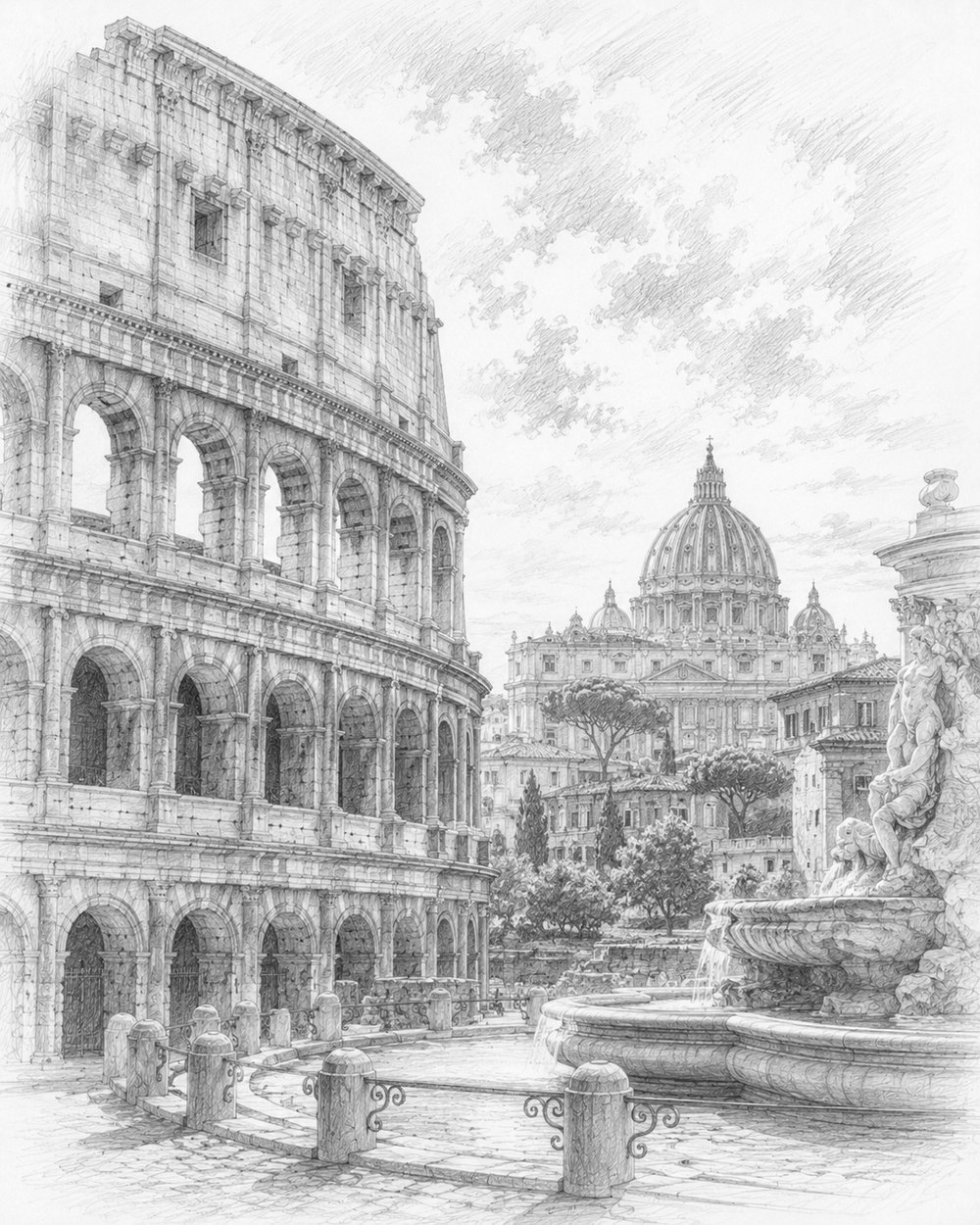
You will not see all of Rome in a port day, and pretending otherwise is how people end up exhausted and rushed. Pick two anchors. The most common pairing is the Colosseum and Forum together — they are adjacent — plus the Vatican, which must be booked ahead because the Sistine Chapel and museums run on timed entry and the walk-up lines are punishing. A workable one-day plan: morning at the Vatican on your booked slot, a taxi across the city, an afternoon at the Colosseum and Forum on a booked entry, and whatever minutes remain thrown at the Pantheon or the Trevi Fountain on the way back to your transfer. Then leave. The temptation to squeeze in one more thing is exactly what makes people miss the bus. Because Rome is so much, this is another port that argues for arriving early or staying on afterward.
Naples: history, islands, and the best food in Italy
Naples has almost too many good options, and unusually, the ship docks right in the city, so you are not fighting a long transfer. That makes Naples one of the more flexible days — but it also means choosing among genuinely great options.
The three headline day trips are Pompeii, the ruined Roman city under Vesuvius and one of the most vivid archaeological sites on earth; Capri, the island of cliffs and the Blue Grotto, reached by ferry; and the Amalfi Coast, the run of pastel towns along a dramatic shoreline, stunning but heavy on winding-road time. You can realistically do one well. Pompeii is the most efficient and least weather-dependent, Capri the most magical if the sea cooperates, Amalfi the most beautiful drive and the most time-hungry. And if you skip all three and stay in Naples for the historic center and a proper pizza — arguably the best food in Italy is right here — no one should tell you that was a wasted day. This is a port where a clear single choice beats an ambitious plan.
Ajaccio, Corsica: the quiet one people fall for
Ajaccio is the port nobody expects to love and many do. Corsica’s main town is calmer than the Italian mainland stops, and the pace is the appeal. It is Napoleon’s birthplace, and the old town wears that history lightly — visit the house where he was born, wander the streets, sit on a square without feeling herded.
The one-day plan is gentle by design. Walk into the old town from the port, take in the Napoleonic sights and the market, then give the rest of the day to the beaches and the light. This is a good port to do less, deliberately — a swim, a long lunch, a slow return. After the intensity of Rome and Naples, Ajaccio is the day the itinerary lets you breathe. If you are still deciding whether this whole route is for you, the Celebrity Xcel cruise guide covers the ship and the experience end to end.
Port-day habits that save the whole trip
A few rules apply across every stop on this itinerary, and internalizing them is worth more than any single tip about a single city.
- Know your all-aboard time, not just the “departure” time. The ship leaves after all-aboard, which is usually thirty minutes to an hour earlier. Independent travelers who miss it are on their own to catch the ship at the next port.
- Book timed tickets before you sail: the Sagrada Família in Barcelona, the Uffizi in Florence, the Vatican in Rome, and Park Güell’s monument zone. These sell out and cannot be improvised on the day.
- On inland ports — Livorno for Florence, Civitavecchia for Rome — weigh the train’s savings against the fact that the ship waits for its own tours but not for you. When in doubt, book the transfer.
- On the French Riviera, remember it is a tender port. Go ashore earlier, and return with a real cushion.
- Carry a little local cash, a refillable water bottle, comfortable shoes, and a portable charger. Confirm each day’s exact call times and any changes in the Celebrity app, since ports vary by sailing.
Back aboard, Xcel is built to make the port days land softly. The Bazaar at the stern shifts to a Mediterranean identity for the European season, so the ship itself echoes the region you have been exploring, and quieter corners like the Rooftop Garden or the glass-domed Solarium are good places to rest tired feet. For a fuller look at how the ship transforms around this itinerary, see the Celebrity Xcel Bazaar feature.
Get the complete Celebrity Xcel playbook
If you want every port, cabin, dining room, and timed-ticket decision mapped out in one place, “The Ultimate Guide to Sailing on Celebrity Xcel” turns this itinerary into a step-by-step plan. It is part of the Ultimate Ship Guides series by Leo Sotropa, with clear action steps in every chapter so you arrive at each pier already knowing your move.
Frequently asked questions
How many days should I add in Barcelona and Rome?
Both cities reward at least two days beyond the cruise. Barcelona needs one day for the Sagrada Família and Gothic Quarter and another for Park Güell and the rest, while Rome’s Colosseum, Vatican, and Forum are a two-day list even for locals. If you can only add extra time to one end, add it wherever your flights make it easiest, and treat the other city as a focused single push with booked tickets.
Which port sights need tickets booked in advance?
The Sagrada Família and Park Güell’s monument zone in Barcelona, the Uffizi and the Accademia in Florence, and the Vatican in Rome all run on timed entry and regularly sell out. Book these before you sail. Walk-up lines at any of them can cost you hours you simply do not have on a port day.
Should I take the train or a tour to Florence and Rome?
The train from Livorno to Florence or Civitavecchia to Rome is cheaper, but the stations are not at the cruise piers and the ship does not wait for independent travelers. A ship’s excursion guarantees the ship accounts for its own tours; a private driver adds comfort and flexibility. If timing anxiety would spoil your day, book the transfer or the tour.
What does it mean that the French Riviera is a tender port?
At Cannes on the Riviera, Xcel typically anchors offshore and ferries guests ashore in the ship’s tenders rather than tying up at a dock. That adds time getting on and off, so your usable day is shorter than the posted hours. Go ashore earlier, keep your plans to one direction, and leave a generous cushion to return.
Pompeii, Capri, or the Amalfi Coast from Naples?
You can realistically do one well. Pompeii is the most efficient and least weather-dependent, Capri is the most magical when the sea is calm, and the Amalfi Coast is the most beautiful drive but the most time-hungry. If you would rather skip all three, staying in Naples for the historic center and a Neapolitan pizza is a completely valid day.
How do I avoid missing the ship on a big port day?
Learn the all-aboard time, which is earlier than the departure time, and plan your return around it rather than the ship’s sailing. On inland ports especially, leave a real buffer, resist squeezing in one more sight, and remember that if you are traveling independently and miss all-aboard, catching up to the ship is your responsibility, not the line’s.
Do the ports change from sailing to sailing?
Yes. Celebrity Xcel’s Western Mediterranean itineraries vary by departure, with different combinations of Barcelona, Palma, Marseille, the Riviera, Livorno, Civitavecchia, Naples, and Ajaccio, and lengths from about seven to eleven nights. Always confirm your specific voyage’s ports and exact call times in the Celebrity app before you finalize any tours or tickets.
Ready for the whole ship in one place? It is all in The Ultimate Guide to Sailing on Celebrity Xcel.
Get the book →
Meet Leo: The Heartbeat Behind ‘A Country A Month’
Journeying through the pages of A Country A Month, you might often feel the rhythm of a storyteller’s heartbeat, pulsating through each line, each image, and each adventure shared. That heartbeat belongs to none other than our remarkable website editor, Leo.
With a lens in one hand and a pen in the other, Leo seamlessly marries his passions for photography and writing. His eye captures moments that words can barely describe, yet his eloquence brings those images to life, transcending borders and connecting us all through shared stories. An avid traveler, every country he’s visited has added another chapter to his expansive tale, and through our platform, he generously shares these chapters with us.