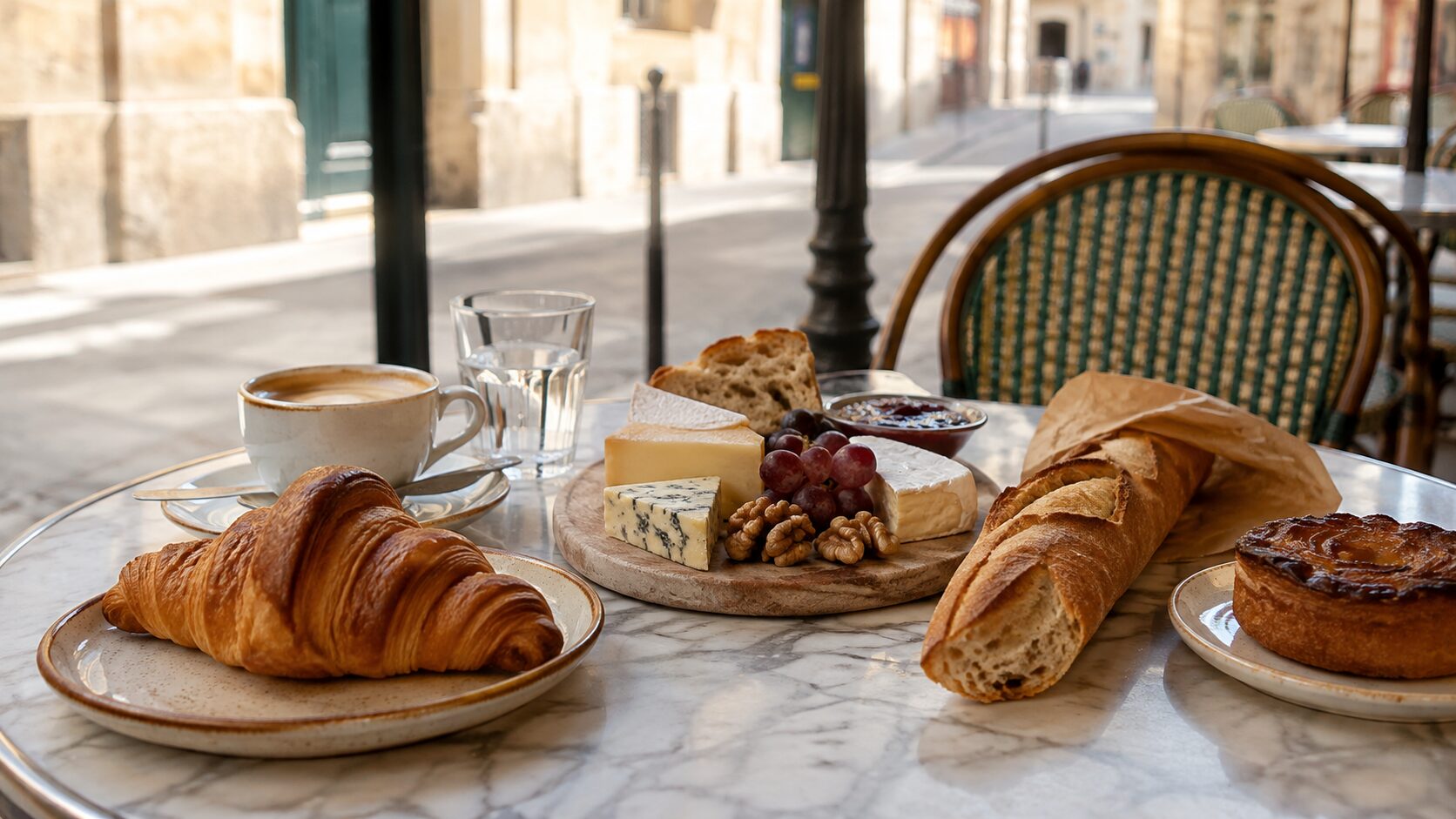
Eating well in Paris does not require a reservation at a famous restaurant for every meal. The city is best understood through layers: bakery breakfast, market produce, a lunch formula, an old-school bistro dish, a contemporary neighborhood restaurant, and one pastry chosen because it looks irresistible.
What to eat in Paris
Bread and viennoiserie
Compare a crisp baguette tradition, butter-rich croissant, pain au chocolat, or seasonal pastry from a neighborhood bakery. Buy what you will eat soon; good bread is at its best the same day.
Cheese
A specialist fromagerie can help you build a small tasting. Explain when you plan to eat the cheese and whether you prefer mild, creamy, firm, or assertive styles. Do not assume every cheese travels well without refrigeration.
Classic bistro dishes
Menus vary, but you may encounter onion soup, pâté or terrine, egg mayonnaise, steak-frites, duck confit, roast chicken, sole, lentils, and seasonal specials. Choose places that offer a focused menu rather than a laminated encyclopedia of every French dish.
Crêpes and galettes
A wheat crêpe is generally sweet; a buckwheat galette is savory. They make a convenient meal, but quality is better when the batter and fillings receive as much attention as the location.
Pastries and desserts
Try one or two carefully selected items instead of buying a box for the sake of a checklist. Paris excels at both classics—éclair, mille-feuille, Paris-Brest, tarte au citron—and modern seasonal work.
Where to eat
Bakeries
Use a bakery for breakfast, sandwiches, quiche, or picnic supplies. A line of local customers is often more useful than an influencer list. Say bonjour on entry and know what you want before reaching the counter during the morning rush.
Markets
Street and covered markets can combine produce, cheese, meat, flowers, and prepared food. Marché des Enfants Rouges and Marché Saint-Quentin are well known, but a market near your accommodation may give you a more useful glimpse of daily life. Confirm operating days and hours before going.
Cafés, brasseries, and bistros
A café is ideal for a drink or simple meal; a brasserie traditionally offers broad hours and familiar dishes; a bistro is typically smaller and more focused, although modern businesses use the terms loosely. Read the posted menu and recent reviews rather than relying on the label.
Neighborhood restaurants
The 9th, 10th, 11th, 18th, and other districts beyond the central monuments contain excellent options at many price levels. Build dinner around where you want to spend the evening. Traveling across the city for every viral recommendation wastes time and makes delays stressful.
How to read a French menu
- Entrée: starter, not main course.
- Plat: main dish.
- Dessert: dessert.
- Formule or menu: a fixed combination, often especially useful at lunch.
- À la carte: items ordered separately.
- Plat du jour: dish of the day.
Ask about allergens explicitly. Translation apps help with vocabulary but should not replace a clear conversation when a severe allergy is involved.
Paris dining etiquette that helps
Begin interactions with bonjour or bonsoir. Wait to be seated when uncertain. Meals may proceed more slowly than in some countries, and the check is not always brought until requested; ask for l’addition, s’il vous plaît. Service is generally included in menu prices, although rounding up or leaving a modest extra amount for especially good service is common. Practices change, so follow the bill and your judgment.
How to avoid a disappointing meal
- Do not wait until everyone is exhausted and hungry beside a major attraction.
- Step away from the most obvious frontage and inspect the menu first.
- Be cautious when a menu tries to serve every cuisine and displays aggressive solicitation.
- Reserve meals that matter, but keep some spontaneous options.
- Check current opening days; many independent restaurants close one or two days weekly.
Eating well on a budget
Use bakeries and markets for some breakfasts and lunches, look for weekday lunch formulas, choose tap water where suitable, and make dinner the planned splurge. A picnic can be memorable when treated as a meal rather than a compromise. More strategies are in our Paris budget guide.
A one-day Paris food plan
Start with coffee and a pastry near your hotel. Browse a market in the late morning, then choose a lunch formula. Take an afternoon pastry break after a museum or walk. For dinner, reserve a neighborhood bistro or contemporary restaurant, leaving time for a post-meal walk rather than another attraction.
Frequently asked questions
Do you need restaurant reservations in Paris?
Reserve popular or special-occasion restaurants and any dinner essential to your plan. Many casual meals can remain flexible, especially outside peak times.
Is tap water free in Paris restaurants?
You can request une carafe d’eau for tap water in ordinary dining situations. Bottled mineral water is charged.
What time is dinner?
Many restaurants serve dinner later than typical North American schedules. Verify the restaurant’s service hours rather than assuming continuous food service.
For the rest of your trip, combine this food plan with our complete Paris travel guide and neighborhood guide.
How to build a food plan for Paris
Think in meal types rather than a list of famous restaurants: one traditional meal, one modern interpretation, one market or food-hall visit, one bakery or snack stop, and one cuisine connected to the city’s immigrant communities. This approach survives closures and sold-out reservations.
Map food to sightseeing. A restaurant is rarely worth two hours of extra travel unless it is a central reason for the trip. Save several options in each district and confirm the current menu, opening hours, and reservation policy directly.
Foods and formats worth understanding
A bakery breakfast
Treat a bakery breakfast as an invitation to compare preparation, setting, and neighborhood rather than a box to check. Look for a business that specializes or serves it naturally, order an amount that leaves room for the rest of the day, and ask questions respectfully when the staff has time.
A market picnic
Treat a market picnic as an invitation to compare preparation, setting, and neighborhood rather than a box to check. Look for a business that specializes or serves it naturally, order an amount that leaves room for the rest of the day, and ask questions respectfully when the staff has time.
A bistro lunch formula
Treat a bistro lunch formula as an invitation to compare preparation, setting, and neighborhood rather than a box to check. Look for a business that specializes or serves it naturally, order an amount that leaves room for the rest of the day, and ask questions respectfully when the staff has time.
Cheese chosen with help
Treat cheese chosen with help as an invitation to compare preparation, setting, and neighborhood rather than a box to check. Look for a business that specializes or serves it naturally, order an amount that leaves room for the rest of the day, and ask questions respectfully when the staff has time.
Seasonal pastries
Treat seasonal pastries as an invitation to compare preparation, setting, and neighborhood rather than a box to check. Look for a business that specializes or serves it naturally, order an amount that leaves room for the rest of the day, and ask questions respectfully when the staff has time.
North african cooking
Treat North African cooking as an invitation to compare preparation, setting, and neighborhood rather than a box to check. Look for a business that specializes or serves it naturally, order an amount that leaves room for the rest of the day, and ask questions respectfully when the staff has time.
A neighborhood wine bar
Treat a neighborhood wine bar as an invitation to compare preparation, setting, and neighborhood rather than a box to check. Look for a business that specializes or serves it naturally, order an amount that leaves room for the rest of the day, and ask questions respectfully when the staff has time.
A classic brasserie meal
Treat a classic brasserie meal as an invitation to compare preparation, setting, and neighborhood rather than a box to check. Look for a business that specializes or serves it naturally, order an amount that leaves room for the rest of the day, and ask questions respectfully when the staff has time.
Markets, food halls, and busy counters
Markets are workplaces, not outdoor museums. Keep aisles clear, ask before photographing people or displays, and buy with intention. Popular markets can be most enjoyable near opening or after the primary lunch rush, although individual stalls keep different schedules.
Food halls simplify groups with different preferences and offer shelter in poor weather. They can also be more expensive than neighborhood counters. Use them for variety and convenience, then seek at least one independent place elsewhere.
Reservations and choosing restaurants
Reserve a special meal when it represents something you truly want, not because a social feed declared it mandatory. Read the cancellation terms, arrive on time, and tell the restaurant about essential dietary needs in advance. Keep spontaneous meals flexible.
Menus posted by third parties may be stale. Check the restaurant’s own site or recent direct communication for prices, service charges, dress expectations, children’s policies, and accessibility. A short current menu often signals seasonal focus rather than limited choice.
Dietary restrictions and allergies
Research useful local terms before arrival and carry a concise translated explanation. Distinguish preference from a medically serious allergy, and ask about stock, sauces, garnishes, and shared equipment when relevant. If the risk is severe, contact suitable restaurants ahead of time.
Do not assume that removing a visible ingredient makes a dish safe or compliant. Cultural understanding helps, but direct communication matters most. Pack appropriate backup food for transit days and late arrivals.
How to eat well without overspending
Use breakfast counters, bakeries, lunch specials, noodle or sandwich shops, markets, and neighborhood takeout to balance one more expensive dinner. Order for actual hunger and share large portions when appropriate rather than wasting food for the sake of variety.
Avoid waiting until you are exhausted beside a major attraction. Save two nearby choices each morning and carry water where permitted. A modest planned snack can prevent an overpriced meal selected only because it is visible.
A one-day tasting framework
Begin with a bakery breakfast or a simple local breakfast, choose a bistro lunch formula or cheese chosen with help for lunch, stop for North African cooking or another small specialty in the afternoon, and finish with a classic brasserie meal. Adjust the sequence to opening hours and appetite; the goal is contrast, not maximum consumption.

Meet Leo: The Heartbeat Behind ‘A Country A Month’
Journeying through the pages of A Country A Month, you might often feel the rhythm of a storyteller’s heartbeat, pulsating through each line, each image, and each adventure shared. That heartbeat belongs to none other than our remarkable website editor, Leo.
With a lens in one hand and a pen in the other, Leo seamlessly marries his passions for photography and writing. His eye captures moments that words can barely describe, yet his eloquence brings those images to life, transcending borders and connecting us all through shared stories. An avid traveler, every country he’s visited has added another chapter to his expansive tale, and through our platform, he generously shares these chapters with us.