Which Baltic capitals actually earn your time, and how do you handle a run of back-to-back port days without burning out? A Baltic capitals cruise aboard the Nieuw Statendam typically strings together Copenhagen, Oslo, Stockholm, Helsinki, Tallinn, and Visby on Gotland, and the honest answer is that each one rewards a different approach. Some you can walk off the ship and explore on foot. Others need a plan, a booked excursion, or an early alarm to catch the scenic approach. This guide walks you through what to do at each port, when to book a tour versus going independent, how to manage Nordic prices, and how to use the ship itself — especially the Crow’s Nest — to get the most out of a port-rich itinerary.
Everything in this article and far more, deck by deck, in The Ultimate Guide to Sailing on Nieuw Statendam.
Get the book →Why the Baltic capitals suit this ship
The Nieuw Statendam is the second Pinnacle-Class ship of Holland America Line, a roughly 99,900-gross-ton vessel carrying about 2,666 guests at double occupancy across around a dozen guest decks. That mid-size scale matters on a Baltic itinerary. She is large enough to carry the entertainment and dining you want for the sea days between capitals, but not so vast that she feels out of place gliding into a compact Scandinavian harbour or threading a fjord approach. Holland America has been sailing these northern waters as home waters for a very long time — the company was founded in Rotterdam in 1873 and spent decades carrying cargo and emigrants from that quay to New York — and the Baltic sailing leans into that heritage.
Before you get lost in the ports, it helps to know there are two quite different Northern Europe voyages on this ship, and they are easy to confuse. One is this Baltic capitals run. The other is a Norwegian fjords itinerary built around places like Geiranger and Bergen. If you booked the fjords instead, read the Nieuw Statendam Norwegian fjords guide — the packing, the pace, and the shore approach are genuinely different. Longer “Collector’s Voyages” of up to about four weeks combine the Baltic capitals into one grand loop, so always confirm exactly which ports your sailing includes in the Navigator app before you plan a thing.
Copenhagen: the walkable start
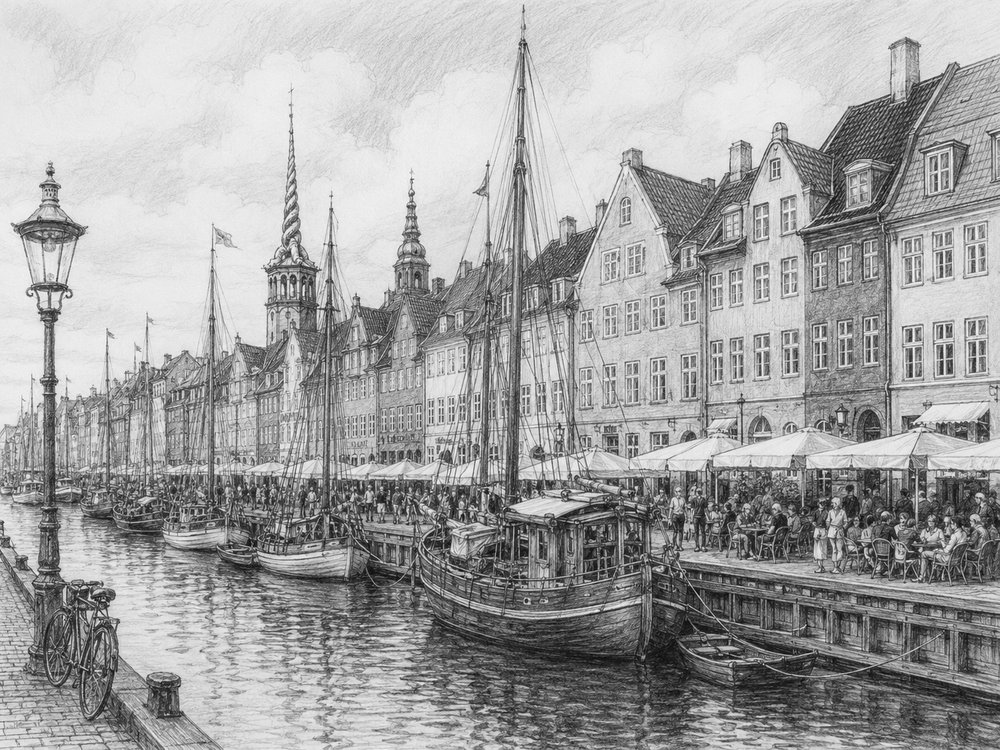
Copenhagen is one of the friendliest capitals on the route for independent travellers. The city is flat, compact, and built for walking and cycling, and the classic sights cluster close enough that you can string several together on foot in a day. Start at Nyhavn, the canal lined with painted townhouses that every photo of Copenhagen seems to come from, then work toward Amalienborg, the royal palace, and out along the waterfront to the Little Mermaid statue. She is famously smaller than first-timers expect, so treat her as a stop on a longer walk rather than a destination in herself.
Tivoli Gardens, the historic pleasure garden near the central station, is worth an afternoon or evening if the ship stays late. For food, smørrebrød — the open-faced rye sandwiches piled with fish, egg, or roast beef — is the local lunch and a good way to eat well without a full sit-down bill. Because so much of Copenhagen is doable on your own, this is a port where I would skip the ship’s excursion unless you specifically want a guided theme like a design tour or a canal boat with commentary. Save your shore-excursion budget for the ports where a tour genuinely unlocks something.
Oslo: watch the fjord approach
Oslo begins before you dock. The ship sails up the Oslofjord to reach the city, and on a clear morning the approach — islands, forested shorelines, summer cabins on the rocks — is one of the quiet highlights of the whole cruise. This is the first place the Crow’s Nest earns its keep. More on that room below, but the short version is: be up and forward with a coffee for the approach rather than still asleep in your cabin.
In the city, the museums are the draw and several sit together on the Bygdøy peninsula. The Fram Museum, built around the actual polar exploration ship, and the Viking Ship offerings tell Norway’s seafaring story better than any brochure. Closer to the port, the Opera House is the one to walk to first — you can climb its sloping marble roof for free and get a panorama of the harbour and the ship. Vigeland Park, with its hundreds of human sculptures, is a longer trip out but memorable. Oslo is walkable at its core, though the outlying museums make a hop-on ferry or a booked excursion worthwhile if your day is short. Norway is expensive, so plan where you will spend.
Stockholm: the archipelago approach is the event
If there is one scenic approach not to miss on this itinerary, it is Stockholm. The city sits at the inner end of an archipelago of thousands of islands, and the ship spends a long, slow stretch weaving between them before she reaches the dock. Wooded islets, red-painted houses, sailboats, people waving from jetties — it goes on for a good while, and it is genuinely better than most of the organised excursions you could book. Check the Navigator app for the arrival time, set an alarm, and get to the Crow’s Nest or an open deck early. This is the single best reason to be awake before breakfast on the whole cruise.
Ashore, Gamla Stan — the old town — is the heart of Stockholm: narrow lanes, ochre and rust-coloured buildings, the royal palace, and cafés tucked into squares. It is compact and easy to explore on foot straight off the ship or a short transfer away. The Vasa Museum is the must-see indoor sight, built around a 17th-century warship that sank on her maiden voyage and was raised almost intact centuries later; it is one of the most striking museum experiences in Northern Europe. Stockholm is spread across islands connected by bridges and ferries, so if your docking point is farther out, factor in transfer time and confirm the port location for your sailing.
Helsinki: compact and independent
Helsinki is another strong independent port. The centre is walkable and the signature sights are close together. Senate Square, with its pale neoclassical cathedral, is the postcard image of the city. The Rock Church — Temppeliaukio — is carved directly into solid granite and topped with a copper dome, an interior unlike anything else on the route and worth timing around any services. If you have a longer day, the Suomenlinna sea fortress sits on islands a short public ferry ride from the market square; it is a UNESCO-listed set of ramparts and makes a relaxed half-day.
Sauna culture runs deep here, and a few public saunas near the waterfront let visitors experience it properly if you are curious. Helsinki rewards a self-guided walk more than a coach tour for most people — the distances are manageable and signage is good. Book an excursion only if you want the Suomenlinna history narrated or you are combining Helsinki with a longer countryside trip.
Tallinn: the walled old town
Tallinn is many travellers’ surprise favourite. The medieval old town is one of the best preserved in Europe: intact city walls, cobbled lanes, spires, and merchants’ houses climbing toward Toompea, the upper town on the hill with viewpoints over the red rooftops. From the cruise berth it is a walkable distance into the old town, and once you are inside the walls, the whole place is on foot. This is a port where going independent is easy and satisfying — you mostly want to wander, climb to the viewpoints, and stop for a coffee.
Estonia also has a modern story worth knowing as you walk: it is one of the most digitally advanced nations in the world, with much of daily life and government run online. It is a nice contrast to the medieval setting. The main caution in Tallinn is crowds — when several ships are in, the core lanes get busy midday, so head up to Toompea early and drop back down into the lower town as day-trippers thin out in the afternoon.
Visby on Gotland: the small port that steals the cruise
Visby, on the Swedish island of Gotland, is the one many people have never heard of and end up loving most. It is a walled medieval Hanseatic town, its ring of stone ramparts largely intact, dotted with the dramatic roofless ruins of churches that were never rebuilt. It is smaller and quieter than the capitals, made for slow wandering: climb the walls, follow the rose-covered lanes, and let a compact town do the work after a run of big cities. Because it is small, you do not need a tour to see it — walking off the ship and following the walls is the plan.
Two practical notes. Visby is often a tender port, meaning the ship anchors offshore and small boats ferry you in, so build in a little extra time each way and watch the tender schedule in the Navigator app. And because the town is so walkable, this is a port where Club Orange guests get real value from priority tender access — a genuinely useful perk on a tender day when the queues form.
Independent vs excursion: a quick rule of thumb
The Baltic capitals are, on balance, a very independent-friendly itinerary. Most of the historic centres are walkable from the ship or a short transfer away, and the sights that matter cluster tightly. Here is how I would split it:
| Port | Default approach | Book an excursion if… |
|---|---|---|
| Copenhagen | Walk / cycle | You want a canal cruise or design tour |
| Oslo | Walk core, ferry to museums | Your day is short or you want the Bygdøy museums narrated |
| Stockholm | Walk Gamla Stan | Docking is far out or you want the Vasa guided |
| Helsinki | Walk | You want Suomenlinna history or a countryside trip |
| Tallinn | Walk the old town | You prefer a guide for context and crowd routing |
| Visby | Walk the walls | Rarely — it’s built for wandering |
Where the ship’s excursions do earn their price on this route is transfers and guaranteed timing. If a port docks farther from the centre, a booked tour removes the logistics. And the Have It All bundled fare includes a shore-excursion credit, so if you sail on that fare you effectively have a tour partly pre-paid — worth using on the one port where you most want a guide.
Nordic prices: how to keep the day affordable
Scandinavia is expensive, and there is no way around that, but you can manage it. A few honest tactics:
- Eat your big meal on the ship. With the included Dining Room, the Lido Market buffet, Dive-In burgers, and the New York Deli & Pizza already paid for, treat ashore as a light lunch or a single coffee-and-cake stop rather than a full restaurant sitting.
- Use cards, not cash. These countries are close to cashless; a contactless card works almost everywhere and saves you from over-drawing local currency you’ll never spend.
- Walk instead of taxi where the centre is compact — which is most of these ports.
- Buy one memorable thing, not many small ones. Nordic design and craft are lovely but add up fast.
- Pack a refillable water bottle. Tap water across the region is excellent and free.
If you like the certainty of a fixed daily cost, the Have It All fare bundles a drinks package, Wi-Fi, the shore-excursion credit, and specialty dining into a set amount per person per day, which can make budgeting a port-heavy cruise simpler. Whether it pays off depends on how much you’d drink and dine anyway — check the current terms in the Navigator app.
Using the ship on port-rich days
A Baltic capitals sailing is dense with port calls, and the trap is treating the ship as just a hotel between cities. Two things make the days flow better.
The Crow’s Nest is your command post
The Crow’s Nest is the forward observation lounge, wrapped in floor-to-ceiling windows and built for watching a coastline slide past. On this itinerary it is the most valuable room aboard. The Oslofjord run in and, above all, the Stockholm archipelago approach are best watched from here with a coffee before the crowds wake up. Get there early on scenic-approach mornings, claim a forward seat, and let the entrance to the city be part of the day rather than something you miss from your cabin. It is also a calm place to plan the next port — laptop or paper map, the Navigator app open, working out your walking route before you step ashore.
Wind down after a walking day
After a day on cobbles, the ship’s music theme comes into its own. The Music Walk links several live-music venues, all included: B.B. King’s Blues Club, Billboard Onboard with its duelling pianists, and — unique to the Pinnacle-Class ships — the Rolling Stone Rock Room, where a five-piece band plays classic rock. The World Stage, the 270-degree LED theatre, hosts shows like BBC Earth in Concert. One honest caveat: the classical Lincoln Center Stage troupe is not a fixed venue on every ship — it rotates and appears on select sailings only, so don’t count on it. For a deeper look at the nightly line-up, see the guide to the Nieuw Statendam Music Walk and entertainment. For a full walkthrough of the ship’s layout and rhythms, the complete Nieuw Statendam cruise guide covers the rest.
The complimentary Grand Dutch Café — bitterballen and Dutch beer — is a fitting stop on a ship whose company began in the Netherlands, and the Explorations Central enrichment program often runs talks tied to the region you’re sailing. If this is your first Holland America sailing, the first-timer’s Holland America guide explains the line’s style, dress, and included features so nothing catches you off guard.
Choosing a cabin for a Baltic sailing
On a scenic Baltic approach, a Verandah earns its keep — being able to step onto your own balcony for the archipelago or the Oslofjord, without hunting for deck space, is a real luxury on this itinerary. The best all-round pick is a midship Verandah on the mid-decks, which balances balcony access with a steady ride. If you want to keep costs down for a port-heavy trip where you’re ashore most days, an Interior or Ocean View is the honest value choice — you spend little waking time in the room anyway. At the top end, a Neptune Suite adds the Neptune Lounge and concierge.
A few rooms to check against the deck plan before you book: cabins directly under the Lido pool deck or the buffet can be noisy with early-morning chair-scraping, rooms under the World Stage or near the Music Walk can carry sound at night, forward high-deck rooms move most in any swell, and some verandahs are obstructed by lifeboats or structure. None of these are dealbreakers, but on an itinerary with early scenic mornings you’ll appreciate a quiet, well-placed cabin.
Get the complete Nieuw Statendam playbook
Want every port, cabin, and dining decision worked out before you sail? “The Ultimate Guide to Sailing on Nieuw Statendam” gives you the full Baltic-ready playbook, part of the Ultimate Ship Guides series by Leo Sotropa, with clear action steps in every chapter.
Frequently asked questions
Which Baltic ports does the Nieuw Statendam visit?
A Baltic capitals sailing typically calls at Copenhagen, Oslo, Stockholm, Helsinki, Tallinn, and Visby on Gotland, among others, and is based out of Rotterdam. Exact ports vary by sailing, so confirm your specific itinerary in the Navigator app before planning.
Do I need to book excursions or can I explore on my own?
Most Baltic capitals are very walkable from the ship or a short transfer away, so many guests explore independently. Book a ship’s excursion when a port docks farther out, when you want a specific sight narrated, or when you want guaranteed timing. If you’re on the Have It All fare, you have a shore-excursion credit to put toward one.
What is the best scenic approach to watch?
The Stockholm archipelago approach is the standout — a long, slow weave between wooded islands before the city. The Oslofjord run into Oslo is the other one to catch. Watch both from the Crow’s Nest or an open deck, and check arrival times in the Navigator app so you’re up in time.
How expensive is a Baltic cruise ashore?
Scandinavia is pricey. Keep costs down by eating your main meals on the ship and treating ashore as a light lunch or coffee, paying by contactless card rather than local cash, walking in the compact centres, and carrying a refillable water bottle. The Have It All fare can simplify budgeting into a fixed daily cost.
Is Visby worth the stop?
For many guests it’s a highlight. Visby is a walled medieval town on Gotland with intact ramparts and roofless church ruins, small and quiet after a run of capitals. It’s often a tender port, so allow extra time each way and watch the tender schedule; Club Orange guests get priority tender access.
What kind of cabin suits this itinerary?
A midship Verandah on the mid-decks is the best all-round choice, since a private balcony is a real bonus on the scenic approaches. For value on a port-heavy trip an Interior or Ocean View works fine, since you’re ashore most days. A Neptune Suite is the top pick, adding the Neptune Lounge and concierge.
How is a Baltic sailing different from the Norwegian fjords itinerary?
They’re two distinct voyages on the same ship. The Baltic capitals run focuses on cities — Copenhagen, Stockholm, Tallinn and more — while the Norwegian fjords itinerary is built around dramatic scenery like the Geirangerfjord and Bergen. Longer Collector’s Voyages can combine the Baltic capitals into one extended loop. Confirm which you’ve booked, since the pace and packing differ.
Ready for the whole ship in one place? It is all in The Ultimate Guide to Sailing on Nieuw Statendam.
Get the book →
Meet Leo: The Heartbeat Behind ‘A Country A Month’
Journeying through the pages of A Country A Month, you might often feel the rhythm of a storyteller’s heartbeat, pulsating through each line, each image, and each adventure shared. That heartbeat belongs to none other than our remarkable website editor, Leo.
With a lens in one hand and a pen in the other, Leo seamlessly marries his passions for photography and writing. His eye captures moments that words can barely describe, yet his eloquence brings those images to life, transcending borders and connecting us all through shared stories. An avid traveler, every country he’s visited has added another chapter to his expansive tale, and through our platform, he generously shares these chapters with us.