Palma de Mallorca is one of the easiest and most rewarding cruise stops in the Western Mediterranean, and the best way to spend a day here is simple: get into the old town, see La Seu cathedral, wander the medieval lanes and the Passeig del Born, then decide whether you want a beach afternoon or a scenic escape into the mountains. Palma is the capital of the Balearic Islands, and its historic centre sits close to the cruise piers, so you can build a full day without ever booking a formal excursion.
Where your ship docks in Palma de Mallorca
Ships berth at Palma’s cruise port on the western side of the bay, a short distance from the city centre. Palma is a docked port, not a tender port, so you simply walk off onto the pier. The exact berth depends on your ship and how many vessels are in that day; larger ships sometimes use the piers a little farther from town, so check your cruise line’s app for your berth and all-aboard time.
Getting into the old town is straightforward. You have three options:
- Walk: Roughly a 25-minute walk along the flat waterfront promenade from the piers to the cathedral, scenic and pleasant in mild weather.
- Taxi: Taxis wait at the terminal and reach the cathedral in a few minutes. The fastest option, worth it in heat or if you are short on time.
- Shuttle: Many ships and the port run a paid shuttle bus that drops you near the city centre. Confirm whether yours is running and where it stops.
Top things to do on a port day
La Seu cathedral
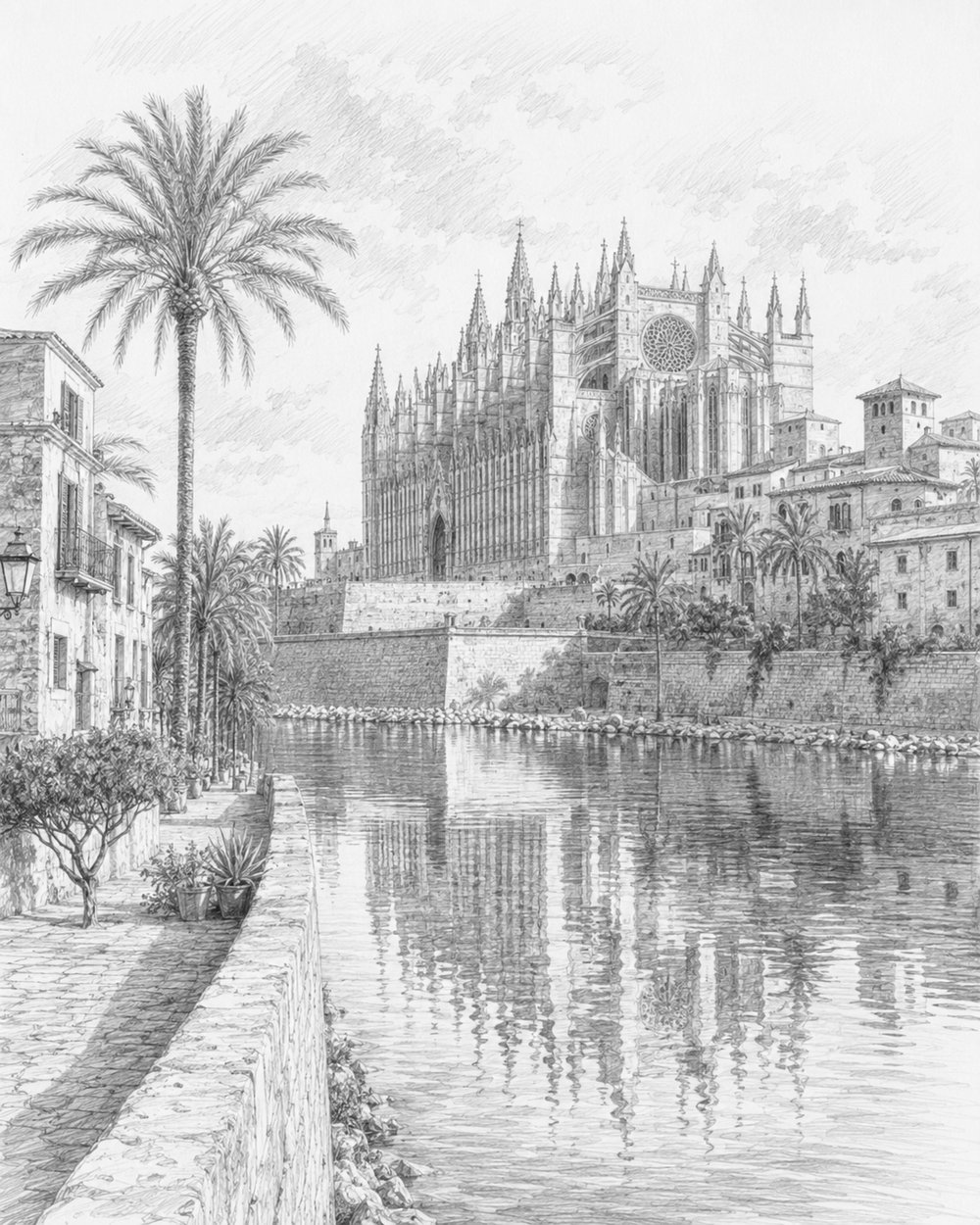
La Seu, Palma’s Gothic cathedral, defines the city’s skyline and is the single sight you should not miss. It rises directly above the seafront, so you see it from the ship and from almost everywhere along the waterfront walk. The sandstone facade is remarkable up close, and the interior is famous for its enormous rose window and for a striking modern reworking of the sanctuary and a side chapel by the architect Antoni Gaudí and, later, the artist Miquel Barceló.
Buy an admission ticket if you want to go inside; lines are longest when several ships are in port, so arrive early. If time is tight, even circling the exterior and the terraces below is worthwhile. Confirm opening times, as the cathedral closes to tourist visits during services and on some afternoons.
The old town and Passeig del Born
Behind the cathedral, Palma’s old town is a maze of narrow stone streets, shaded courtyards, and honey-coloured townhouses. This is the part of the day to slow down. There is no single must-see building so much as an atmosphere: patios glimpsed through iron gates, tucked-away churches, artisan shops, and cafes spilling onto the pavement.
The Passeig del Born is the leafy central boulevard that acts as the spine of the centre, lined with plane trees and a run of shops and cafes. Use it to orient yourself: from the Born you can strike off into the lanes and always find your way back. Near the cathedral you will also find the Royal Palace of La Almudaina and the Arab Baths, easy add-ons if you enjoy history.
Bellver Castle
Bellver Castle sits on a wooded hill west of the centre and is one of very few round castles in Europe. The circular design is unusual and photogenic, but the real reward is the panorama: from the ramparts you look out over the whole bay, the city, and your ship at the pier.
Most cruise visitors take a taxi up rather than walking the climb. Pair it with the old town only if you have a full day; on a short call, choose one or the other, and check it is open first.
Beaches and coves
Mallorca is a beach island, and several sandy stretches sit within an easy taxi ride of the port, making a half-day of swimming realistic if the weather cooperates.
- Cala Major: The closest beach resort to the port, a small sandy bay just west of the city. It is the simplest choice if you want sea and sand without going far.
- Illetes: A pretty stretch of small coves with clear water, a little farther along the coast, popular for its rocky-and-sandy mix and calm swimming.
- Palma Nova: A larger, family-friendly resort beach a short drive west, with a broad sweep of sand, gentle shallows, and plenty of cafes along the front.
For any beach day, take a taxi out and agree how you will get back, since taxis are less frequent at the beaches than at the terminal. Bring what you need from the ship, and watch the time.
Day trips: Valldemossa and the Sóller train
If you would rather see the island than the city, two classic outings stand out, both heading into the Serra de Tramuntana mountains that shelter Palma’s north-west coast.
Valldemossa
Valldemossa is a stone-built mountain village of steep, flower-filled lanes and one of the prettiest spots on the island. Its monastery, the Real Cartuja, is famous as the place where composer Frédéric Chopin and writer George Sand spent a winter. It is a straightforward taxi or bus ride from Palma.
The vintage Sóller train and Port de Sóller
The Sóller railway is the outing to prioritise if you can. A vintage wooden train has run from central Palma to the mountain town of Sóller for more than a century, rattling through orchards and tunnels and over viaducts on a slow, scenic climb. From Sóller, a historic tram carries on down to Port de Sóller, a horseshoe bay with a seafront promenade and small beach.
It is a wonderful ride, but the round trip plus time to look around eats a large part of a port day. Only attempt it if your ship is in for a long call, build in a generous margin to get back, and consider whether a ship-organised version gives you a guaranteed return.
Ship tour vs independent
Palma is one of the most independent-friendly ports in the Med. The old town, cathedral, and even Bellver Castle are all reachable on your own with a short walk or a cheap taxi, so most visitors do not need an organised tour for the city.
Where a ship excursion earns its keep is on the time-sensitive trips inland. The Sóller train and Valldemossa involve driving distances and fixed timetables, and a booked excursion guarantees the ship waits if the tour runs late. If you would be anxious watching the clock on a long inland outing, book it through the ship; for the city itself, go independent. Palma pairs well with the rest of a Western Mediterranean itinerary, so if your voyage also calls at Barcelona, you can plan complementary days rather than repeating yourself.
How much time you need
A standard port call of six to eight hours is enough to do one of these things well, not all of them. A realistic city day is: walk or taxi into town, tour La Seu, wander the old town and the Born, have lunch, and either climb to Bellver Castle or head to a nearby beach.
If you choose the Sóller train or a Valldemossa trip, treat it as your whole day and skip the old-town wander. Whatever you plan, confirm your departure and all-aboard times in your cruise line’s app, and be back with time to spare, especially if you rely on taxis from an outlying beach or a distant berth.
What to skip and watch out for
- Do not try to do everything. The cathedral, the castle, a beach, and a mountain train cannot all fit into one call. Pick a theme for the day.
- Mind the heat. Summers are hot and the waterfront walk offers little shade. Carry water and use taxis when the sun is fierce.
- Watch queues on busy days. When several ships are in, La Seu and the shuttle can back up. Go early.
- Plan your return. Taxis are scarcer away from the terminal, and timetabled trains and trams do not wait. Leave a buffer.
- Skip a rushed island loop. On a short call, a hurried drive around multiple villages is less satisfying than doing Palma’s old town properly.
Cruise ships that visit Palma de Mallorca
Palma is a regular stop on Western Mediterranean itineraries, and many ships that call here also visit ports like Barcelona and Marseille. Here are guides for vessels that include Palma de Mallorca:
Frequently asked questions
Can you walk from the Palma de Mallorca cruise port into town?
Yes. It is about a 25-minute walk along the flat seafront promenade from the piers to La Seu cathedral. If it is hot or you are short on time, a taxi reaches the centre in a few minutes, and many ships and the port also run a paid shuttle.
Is Palma de Mallorca a tender port?
No. Ships dock at Palma’s cruise piers and you walk off directly onto the pier. Your exact berth can vary with the size of your ship and how many vessels are in that day, so confirm it in your cruise line’s app.
What is the one sight I should not miss?
La Seu, the Gothic cathedral on the seafront. It dominates the skyline, the interior with its huge rose window and modern artistic additions is impressive, and it sits at the edge of the old town, so it is the natural place to begin your day.
Is the Sóller train worth it on a cruise day?
It is a lovely ride through the mountains on a vintage wooden train, with a tram down to Port de Sóller, but the round trip takes a big part of the day. Only do it on a long call, leave plenty of margin to get back, and consider a ship-organised version.
Are there good beaches near the Palma de Mallorca cruise port?
Yes. Cala Major is the closest, with Illetes and the larger, family-friendly Palma Nova a short taxi ride farther west. Take a taxi out, agree how you will get back, and keep an eye on all-aboard time.
Do I need a ship excursion or can I explore independently?
The city is easy to do on your own, since the old town, cathedral, and Bellver Castle are all reachable on foot or by cheap taxi. A ship tour makes most sense for time-sensitive inland trips like the Sóller train, where a booked excursion guarantees the ship waits if you run late.
What other ports pair well with Palma de Mallorca?
Palma sits on classic Western Mediterranean loops alongside Spanish and French ports. Many itineraries combine it with Marseille and Provence, so you can plan each day to see something different.

Meet Leo: The Heartbeat Behind ‘A Country A Month’
Journeying through the pages of A Country A Month, you might often feel the rhythm of a storyteller’s heartbeat, pulsating through each line, each image, and each adventure shared. That heartbeat belongs to none other than our remarkable website editor, Leo.
With a lens in one hand and a pen in the other, Leo seamlessly marries his passions for photography and writing. His eye captures moments that words can barely describe, yet his eloquence brings those images to life, transcending borders and connecting us all through shared stories. An avid traveler, every country he’s visited has added another chapter to his expansive tale, and through our platform, he generously shares these chapters with us.