
Retiring abroad on a budget in Spain is not an exercise in finding the lowest monthly total. It is the design of a life that remains affordable after rent rises, the dollar weakens, healthcare changes, or family needs pull you home.
Spain can work when a retiree chooses the right local market, uses walkability, respects the residence rules, and preserves savings.
Let housing make the plan
Start outside central Madrid, central Barcelona, the most promoted islands, and prime coastal districts.
Compare residential neighborhoods in Granada, Alicante, Seville, Valencia, and smaller inland cities. A good home is not simply cheap. It should be:
- Available year-round
- Healthy and secure
- Manageable without stairs if needed
- Close to groceries and a pharmacy
- Connected to healthcare
- Affordable under a weaker dollar
Choose the maximum sustainable rent before viewing properties.
Avoid a car when possible
Walkability and transit can save more than small daily economies. A neighborhood with groceries, healthcare, cafés, parks, and reliable transit nearby may justify slightly higher rent.
A distant bargain can become expensive once a car, fuel, insurance, parking, and maintenance are added.
Live locally
Spanish markets, local brands, seasonal meals, neighborhood bars, municipal culture, public beaches, and the evening paseo can provide a rich life without constant spending.
An imported lifestyle—large home, frequent driving, international products, and tourist-zone dining—produces an imported budget.
Treat immigration as part of affordability
The non-lucrative visa’s current financial-resource standard, insurance, documents, translations, travel, and arrival steps all belong in the relocation budget.
Someone may be able to live on less than the legal financial benchmark. That does not remove the benchmark. Test eligibility before committing to the move.
Fund healthcare honestly
Budget for qualifying private insurance, prescriptions, dental and vision care, private appointments, and later-life needs.
Do not assume immediate or unlimited access to public care. Do not assume Medicare pays in Spain.
Model Spanish taxes
Taxes can determine whether a seemingly adequate gross income remains adequate after residence.
Have a qualified cross-border professional review every income source and major asset before choosing a withdrawal strategy or moving date.
Keep separate reserves
Maintain distinct funds for:
- Visa and relocation
- Normal emergencies
- Medical and family travel
- A second move
- Returning to the United States
The reserve is not idle money. It is what allows a fixed-income retirement to absorb change without debt or panic.
Test the plan for a year
Rent, bring little, and experience all seasons. Track real spending. Learn the healthcare system, rental market, language demands, transportation, heat, cold, and social rhythm.
At the end of the year, decide whether to stay, change cities, buy, or leave. The goal is not the cheapest first year. It is an affordable and satisfying tenth year.
Read the Spain cornerstone guide, cost-of-living framework, and fixed-income guide.
Get the complete retirement guide
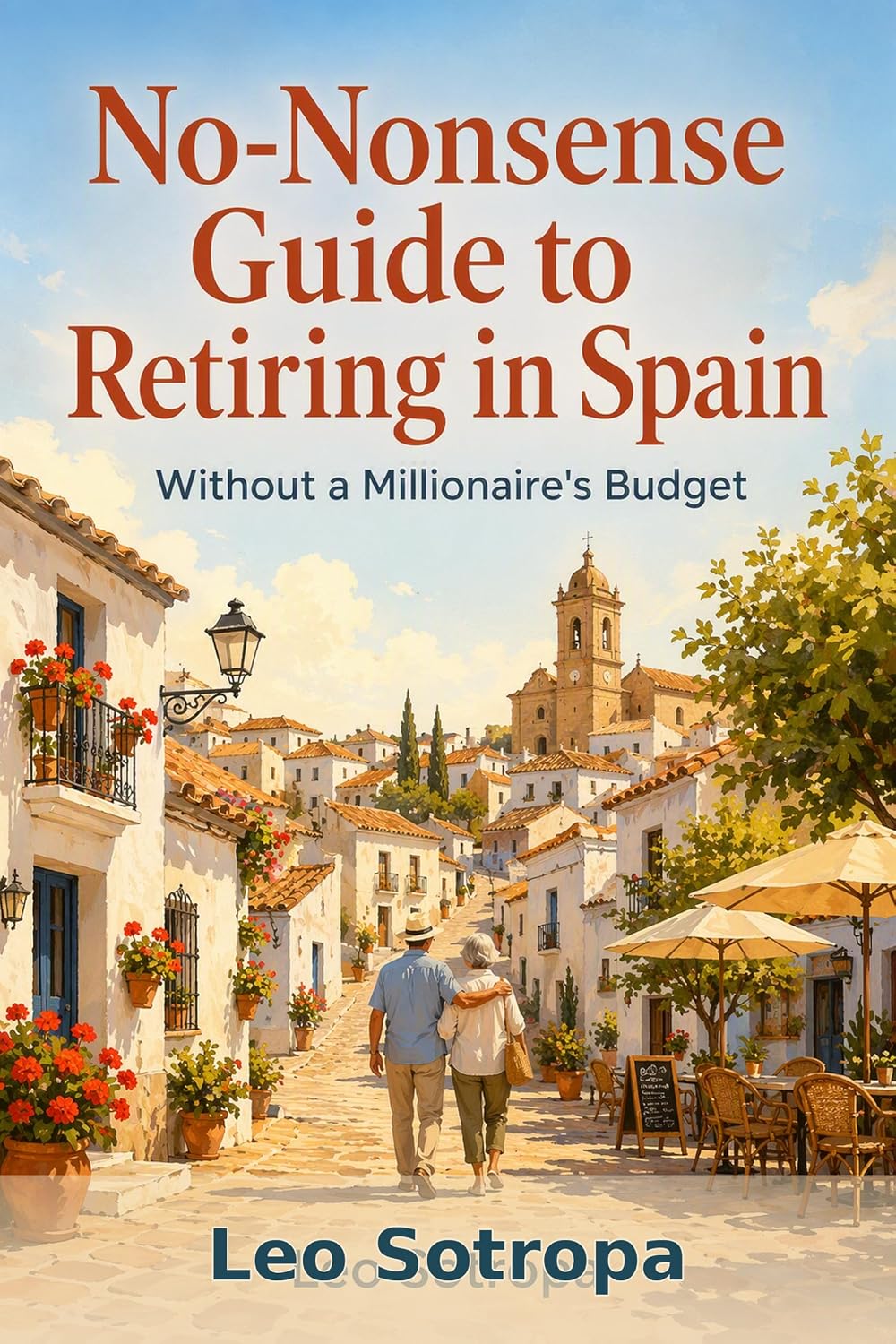
No-Nonsense Guide to Retiring in Spain by Leo Sotropa brings the budget, residency, healthcare, housing, tax, and location decisions together in one practical plan.

Meet Leo: The Heartbeat Behind ‘A Country A Month’
Journeying through the pages of A Country A Month, you might often feel the rhythm of a storyteller’s heartbeat, pulsating through each line, each image, and each adventure shared. That heartbeat belongs to none other than our remarkable website editor, Leo.
With a lens in one hand and a pen in the other, Leo seamlessly marries his passions for photography and writing. His eye captures moments that words can barely describe, yet his eloquence brings those images to life, transcending borders and connecting us all through shared stories. An avid traveler, every country he’s visited has added another chapter to his expansive tale, and through our platform, he generously shares these chapters with us.