Should you pick a warm South Pacific week or a cooler New Zealand voyage on Anthem of the Seas? Both leave from the same city and use the same ship, but they feel like different holidays: one is barefoot beaches and turquoise lagoons, the other is fjords, geothermal parks, and layered cities. This guide explains how each itinerary works, what every port is known for, and how to plan tenders, scenic cruising, and packing so you spend your time enjoying the trip rather than untangling logistics on the fly.
Everything in this article and far more, deck by deck, in The Ultimate Guide to Sailing on Anthem of the Seas.
Get the book →Sailing from Sydney: the starting point for both journeys
In her Australia and New Zealand season, Anthem of the Seas sails round-trip from Sydney. That single fact shapes everything about the trip. Sydney is a destination in its own right, so most people who fly in give themselves a day or two on either side of the cruise. The Opera House and the Harbour Bridge are within easy reach of the harbour, The Rocks is a short walk for history and pubs, and Bondi Beach is a quick ride away if you want sand before you even board. Arriving early also buffers you against flight delays, which matters when the ship will not wait.
The ship herself is a Quantum-Class megaship of around 168,000 gross tons, with roughly 16 guest decks and about 4,180 guests at double occupancy. What makes her such a smart match for this part of the world is the sheer amount of indoor space. A tropical South Pacific week and a New Zealand voyage can hand you very different weather, sometimes on the same sailing, and Anthem has enough to do under cover that a grey sea day never feels wasted. The glass-roofed indoor pool and the glass-domed adults-only Solarium are genuinely useful on cooler days, and SeaPlex, the largest indoor active space at sea, keeps families busy no matter what the sky is doing.
If you are still deciding which ship experience suits you, our Anthem of the Seas cruise guide covers the vessel end to end, and what to expect on Anthem of the Seas walks through a typical day on board.
Two kinds of voyage: tropical week vs New Zealand crossing
The choice really comes down to what you want the trip to feel like. Both round-trip from Sydney, and both share the same cabins, dining, and thrills, so the difference is entirely in the ports and the pace.
The South Pacific week
A South Pacific itinerary is the warm-weather option. These sailings visit the islands of New Caledonia, calling at places such as Nouméa, Isle of Pines, and Lifou, and the islands of Vanuatu, including Port Vila and Mystery Island. The rhythm is relaxed: a couple of sea days to cross open water, then a run of island stops built around beaches, snorkeling, and easy shore time. Pack for heat and humidity, expect tender boats at some of the smaller islands, and plan on doing very little that requires a schedule. This is the trip for travelers who want turquoise water and shade under a palm rather than a full touring agenda.
The New Zealand voyage
A New Zealand itinerary is longer, cooler, and more varied. These voyages call at the Bay of Islands, Auckland, Tauranga, Wellington, and Picton, and include scenic cruising of Milford Sound and the Fiordland, where the ship cruises the fjord rather than docking. You cross the Tasman Sea to get there, which can be lively, so a steady midship cabin earns its keep. The reward is range: Maori culture and geothermal landscapes, a working capital city, historic bays, and one of the most dramatic stretches of scenery any cruise ship sails through. It is a touring holiday more than a beach one, and you will use the ship’s indoor spaces more than you might expect.
Ports and lengths vary by sailing, so treat the lists above as the shape of each itinerary rather than a fixed schedule. Always confirm your exact ports, dates, and arrival times in the Royal Caribbean app before you book excursions or fix any plans on land.
Port by port: what each stop is known for
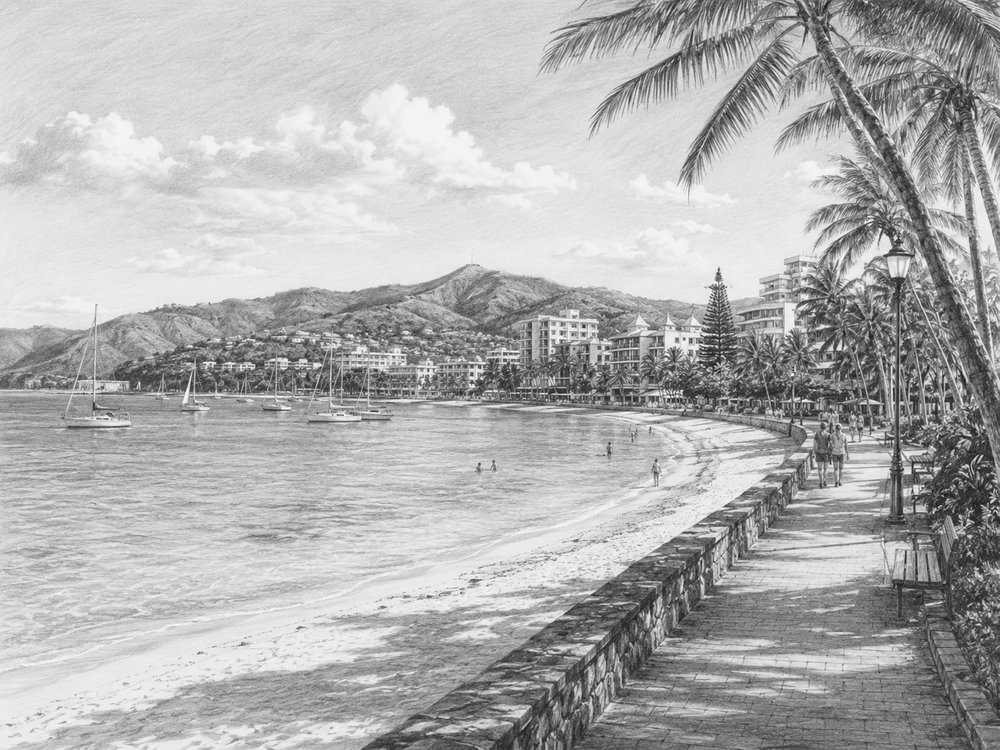
Here is the practical rundown for the ports and scenic highlights these itineraries include. For each, you will find what the place is known for, a couple of things to do, and an honest read on whether to book a ship tour or head out on your own.
Nouméa, New Caledonia
Nouméa is a French-Melanesian capital with a distinctly European feel layered over a Pacific setting. It is known for its lagoon beaches and its markets, where the mix of French and island influences shows up in the food and the goods on offer.
- Spend beach time at Anse Vata, the city’s best-known stretch of lagoon sand, with cafés along the front.
- Browse the markets for produce, pastries, and local crafts to get a feel for the French-island blend.
Ship tour vs independent: Nouméa is a proper city with taxis and a compact centre, so independent exploring is straightforward if you are comfortable finding your own way. A ship tour makes sense if you want a guided city overview or a hassle-free ride to a beach without negotiating transport in French.
Isle of Pines, New Caledonia
Isle of Pines is the picture-postcard stop. It is known for pristine beaches, the natural pool at Oro Bay, and the towering pines that give the island its name and its unusual skyline.
- Swim or snorkel at the natural pool at Oro Bay, a calm, sheltered lagoon that is the island’s signature sight.
- Simply enjoy the beaches; this is a stop where doing less is the point.
Ship tour vs independent: this is a tender port with limited infrastructure, so a ship excursion is the reliable way to reach Oro Bay if you want guaranteed transport and timing. Independent beach time near the tender landing works well too if you would rather keep it simple and cheap.
Lifou, Loyalty Islands
Lifou, in the Loyalty Islands, is known for snorkeling, its sea cliffs, and vanilla plantations. It is a quieter, more traditional island where the appeal is nature and local culture rather than resorts.
- Snorkel the clear water near the tender landing, which is among the best easy snorkeling on these itineraries.
- Visit a vanilla plantation or walk to the sea cliffs for views over the coastline.
Ship tour vs independent: Lifou is another tender port, and facilities are limited. Snorkeling straight off the beach needs no booking at all, so many people go independent here. Book a ship tour if you want a guided snorkel site, a cultural visit, or transport to the vanilla plantations further inland.
Mystery Island and Port Vila, Vanuatu
Vanuatu gives you two contrasting stops. Mystery Island is an uninhabited white-sand snorkeling islet, tiny enough to walk around, ringed by reef. Port Vila is the country’s main hub, known for its markets and, inland, the Mele Cascades waterfalls.
- At Mystery Island, snorkel over the reef and find your own patch of sand; the whole island is the attraction.
- From Port Vila, head to the Mele Cascades to climb the terraced waterfall pools, or browse the town market.
Ship tour vs independent: Mystery Island is a tender-only islet with no town and no real services, so bring what you need from the ship and keep it simple; there is little to book and little that needs booking. Port Vila has taxis and operators, but the Mele Cascades sit outside town, so a ship tour is the easiest way to reach them with transport and timing handled. Confident independent travelers can arrange a local taxi, but leave a comfortable margin to get back.
Bay of Islands, New Zealand
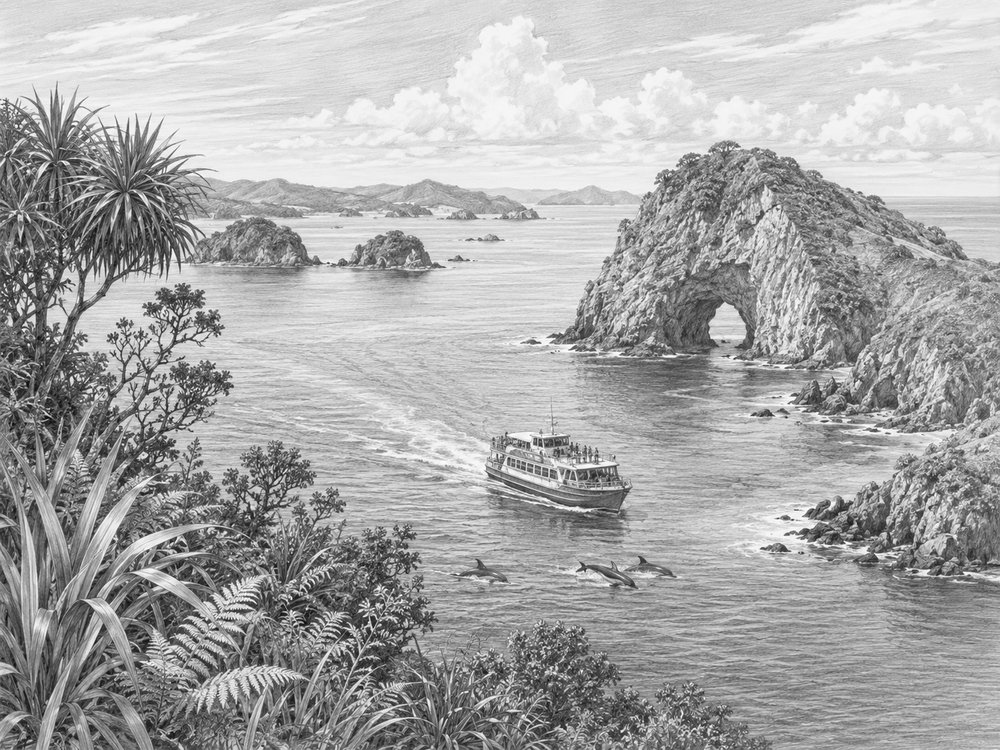
The Bay of Islands is the first taste of New Zealand on these voyages and a highlight in its own right. It is known for the Waitangi Treaty Grounds, historic Russell, dolphins in the bay, and the Hole in the Rock.
- Visit the Waitangi Treaty Grounds, the site central to New Zealand’s founding, for its history and setting.
- Take a boat trip out to the Hole in the Rock and watch for dolphins, or wander historic Russell across the water.
Ship tour vs independent: this is a tender port, and the sights are spread across the bay and nearby towns. Ship tours to Waitangi or a dolphin and Hole in the Rock cruise take the guesswork out of connections. Independent visitors can catch local passenger ferries to Russell and Paihia, which works well if you want a relaxed, self-guided day close to the water.
Tauranga: gateway to Rotorua and Hobbiton
Tauranga is a docking port on the Bay of Plenty, and its real value is as a gateway. It is known as the jumping-off point for Rotorua’s geothermal parks and Maori culture, and for Hobbiton, the film set on the movie-set farmland inland.
- Head to Rotorua for geysers, bubbling mud, and a Maori cultural experience with performance and food.
- Tour Hobbiton, the preserved movie set, if you want the most photographed inland day trip from this port.
Ship tour vs independent: both Rotorua and Hobbiton are a fair drive inland, so timing is the whole game here. A ship tour is the safest choice because the ship guarantees your return; if a booked excursion runs late, the ship waits for it. Independent operators are available and often cheaper, but you carry the risk of traffic and delays yourself, so only go that route if you build in a generous buffer.
Wellington, New Zealand
Wellington is the compact, walkable capital, and it packs a lot into a small footprint. It is known for the Te Papa museum, the cable car, and Weta Workshop, the effects studio behind many well-known films.
- Spend time at Te Papa, the national museum, which is free to enter and easy to reach from the waterfront.
- Ride the cable car up for a city view, then walk down through the botanic garden, or tour Weta Workshop.
Ship tour vs independent: Wellington is one of the easiest ports to do on your own. The central sights are close together, Te Papa is walkable, and a shuttle or taxi covers the short distance from the pier. Save a ship tour for Weta Workshop, which sits in a suburb and benefits from arranged transport, or if you simply prefer a guided overview.
Milford Sound and the Fiordland
Milford Sound is the scenery day, and it is unlike any port stop. The ship does not dock here; instead it cruises the fjord, gliding past Mitre Peak and towering waterfalls that pour straight off sheer cliffs. It is the single most dramatic stretch of the New Zealand voyage, and it happens entirely from the ship.
- Find a spot on an open deck or a forward-facing vantage point early, and stay out for the whole passage.
- Keep your camera and a warm layer ready; the fjord is cool and often damp even when the rest of the trip is mild.
Ship tour vs independent: there is nothing to book because there is no landing. Your job is to position yourself well and give yourself time, which the next section covers in detail.
Tender ports and timing
Several of the best stops on these itineraries are tender ports, meaning the ship anchors offshore and small boats ferry you to land. That is normal for the smaller islands and some New Zealand bays, but it changes how you plan the day. On the South Pacific week, expect tenders at islands like Isle of Pines, Lifou, and Mystery Island; on a New Zealand voyage, the Bay of Islands is commonly a tender port too. Always confirm which of your stops are tender ports in the app, since this varies by sailing.
The practical rules for tender days are simple and worth following. Guests booked on ship excursions usually tender first, which is one quiet advantage of booking a tour on a busy island. If you are going independently, collect a tender ticket early rather than assuming you can walk straight off. Start your day early so a queue does not eat into limited island time, and give yourself a comfortable cushion to get back aboard, because the last tender leaves well before the ship sails and the ship does not wait for independent travelers who miss it.
| Situation | What to do |
|---|---|
| On a ship excursion | You typically tender first; follow the meeting instructions in the app. |
| Going independent | Get a tender ticket early and head down as soon as you can. |
| Coming back aboard | Aim to be at the tender well before the last one; build in a buffer. |
Watching Milford Sound from the ship
Because Milford Sound is scenic cruising rather than a docking port, the experience is what you make of it. The ship slows and turns through the fjord over a stretch of time, giving you the chance to see Mitre Peak and the waterfalls from several angles as the light shifts. The most common regret is treating it like a quick photo stop; the reward comes from staying out and letting the scenery unfold.
- Get out on deck early and claim a railing spot, especially if the ship has announced a timed passage.
- A forward-facing vantage point gives the best sense of sailing into the fjord, but both sides reveal waterfalls as the ship turns.
- Dress warmly and expect damp air; the North Star observation capsule, if you can reserve it, offers an elevated view, so check the app for availability.
- If the weather closes in, do not despair; low cloud and rain actually swell the waterfalls and add to the drama.
For more on making the most of the ship’s signature features on a day like this, see our guide to the North Star and RipCord by iFly.
Packing for mixed climates
The single biggest packing mistake on these voyages is treating them as one type of holiday. A South Pacific week is hot and humid, a New Zealand voyage is cool and changeable, and if your sailing combines elements of both, you need to pack for the full range. Layers are the answer, not two separate wardrobes.
- For tropical islands: lightweight clothing, swimwear, reef-safe sun protection, a hat, and water shoes for rocky tender landings and snorkeling.
- For New Zealand: a warm layer, a waterproof jacket, and comfortable walking shoes for city and inland touring.
- For Milford Sound specifically: something warm and windproof you can throw on quickly to stand out on deck.
- For the ship: smart-casual clothes for the Main Dining Room and specialty venues, plus something a little dressier if you enjoy a formal evening.
- Always aboard: any medication you rely on, since the smaller islands have very limited services.
Anthem’s indoor design helps you get away with a lighter bag than you would need on an open-deck ship. If a day turns cold or wet, the glass-roofed indoor pool, the domed Solarium, SeaPlex, and Two70 mean you are never forced outdoors to enjoy the ship. That safety net is exactly why this vessel suits the Australia and New Zealand region so well. If you are weighing where to sleep for the best mix of comfort and steadiness, our guide to the best cabins on Anthem of the Seas explains why a midship balcony on the mid-decks pays off on the Tasman crossing.
Get the complete Anthem of the Seas playbook
Ready to plan your own South Pacific week or New Zealand voyage with confidence? “The Ultimate Guide to Sailing on Anthem of the Seas,” part of the Ultimate Ship Guides series by Leo Sotropa, turns every port, tender day, and packing decision into clear action steps you can follow chapter by chapter.
Frequently asked questions
Which is better, the South Pacific week or the New Zealand voyage?
Neither is better; they suit different travelers. Choose the South Pacific week if you want warm weather, beaches, and a relaxed pace built around snorkeling and island time. Choose the New Zealand voyage if you want cooler, more varied touring across Maori culture, geothermal parks, cities, and the scenery of Milford Sound. Both sail round-trip from Sydney on the same ship, so the ports are the deciding factor.
Which ports are tender ports?
On the South Pacific week, smaller islands such as Isle of Pines, Lifou, and Mystery Island are typically tender ports, and the Bay of Islands in New Zealand often is too. Tauranga and Wellington are docking ports. Because this varies by sailing, always confirm which of your stops require tenders in the Royal Caribbean app before you plan your day ashore.
Do I need to book ship excursions, or can I explore on my own?
It depends on the port. Cities like Nouméa and Wellington are easy to explore independently. For inland trips from Tauranga to Rotorua or Hobbiton, a ship tour is the safer choice because the ship waits for its own excursions if they run late. On tender islands with few services, independent beach and snorkel time works well since there is little that needs booking.
Will I actually see Milford Sound, and can I get off the ship there?
Milford Sound is scenic cruising, not a docking port, so you experience it entirely from the ship as it cruises the fjord past Mitre Peak and the waterfalls. You do not get off. Get out on deck early, find a forward-facing spot if you can, and dress warmly. Weather affects visibility, but rain often makes the waterfalls more spectacular.
How rough is the crossing to New Zealand?
New Zealand voyages cross the Tasman Sea, which can be lively on the open stretches. Anthem is a large, stable ship, but if you are prone to motion, a midship cabin on the mid-decks gives the steadiest ride, and the ship’s large indoor spaces mean a bumpy sea day is easy to spend comfortably under cover.
What should I pack for these cruises?
Pack for the full range you might meet: lightweight clothing, swimwear, and sun protection for tropical islands, plus a warm layer and a waterproof jacket for New Zealand and Milford Sound. Add comfortable walking shoes for touring, water shoes for rocky tender landings, and smart-casual outfits for the dining venues. Layers let you handle both climates without doubling your luggage.
How do I confirm my exact ports and times?
Use the Royal Caribbean app, which runs your day on board and shows your itinerary, arrival and departure times, tender information, and excursion details. Ports and lengths vary by sailing, so check the app rather than relying on a general itinerary, and review it again close to sailing in case anything has changed. For broader planning, our Anthem of the Seas tips pull together the small habits that make a voyage run smoothly.
Ready for the whole ship in one place? It is all in The Ultimate Guide to Sailing on Anthem of the Seas.
Get the book →
Meet Leo: The Heartbeat Behind ‘A Country A Month’
Journeying through the pages of A Country A Month, you might often feel the rhythm of a storyteller’s heartbeat, pulsating through each line, each image, and each adventure shared. That heartbeat belongs to none other than our remarkable website editor, Leo.
With a lens in one hand and a pen in the other, Leo seamlessly marries his passions for photography and writing. His eye captures moments that words can barely describe, yet his eloquence brings those images to life, transcending borders and connecting us all through shared stories. An avid traveler, every country he’s visited has added another chapter to his expansive tale, and through our platform, he generously shares these chapters with us.