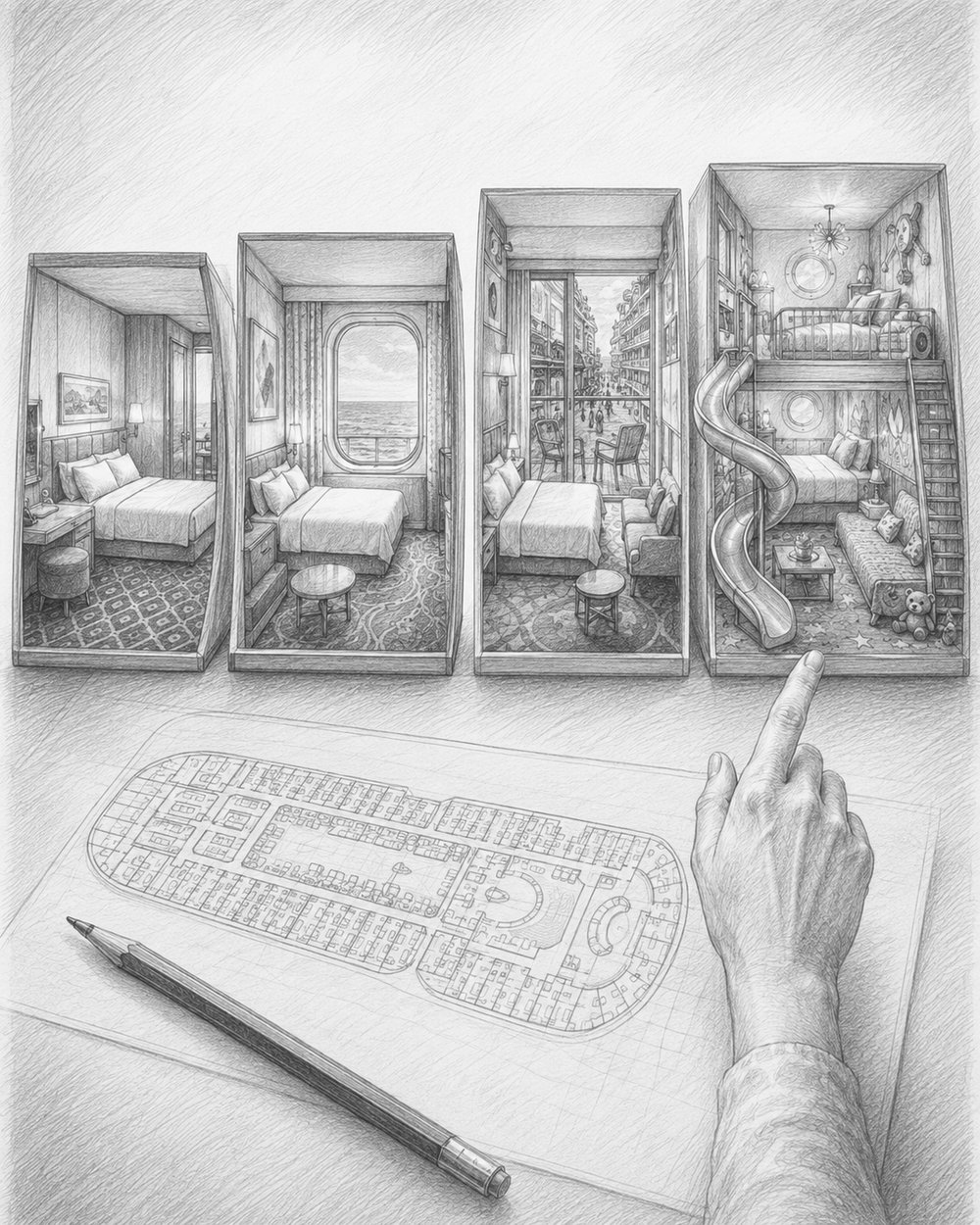
Which cabin should you book on Ovation of the Seas? For an Alaska sailing, the honest answer for most travelers is a midship Balcony on the mid-decks: it gives you the scenery, the steadiest ride, and a private outdoor spot to watch glaciers and wildlife drift past. If you are watching your budget, the Virtual Balcony interior is the smartest value on the ship. Below is a category-by-category breakdown, a deck-by-deck orientation, picks for solo travelers, couples and families, and the specific rooms worth avoiding so you do not end up under the pool deck or staring at a lifeboat.

Everything in this article and far more, deck by deck, in The Ultimate Guide to Sailing on Ovation of the Seas.
Get the book →How cabins are organized on a Quantum-class ship
Ovation of the Seas is one of Royal Caribbean’s Quantum-class ships, a mid-size megaship carrying roughly 4,180 guests at double occupancy and up to about 4,900 when every berth is full. That scale means a lot of cabins, but the layout is more logical than the numbers suggest. Staterooms are grouped into a handful of clear categories, and within each category the price and experience shift depending on which deck you are on and where along the ship your room sits.
The four broad tiers are interior, ocean view, balcony, and suites, plus a set of purpose-built studio cabins for solo travelers. What makes this ship a little different from older vessels is the interior category. Instead of a windowless box, many interiors come with a Virtual Balcony: a floor-to-ceiling screen showing a real-time view of the sea, fed by cameras mounted on the exterior of the ship. It is a genuinely clever middle ground that changes the math on whether you need to pay up for a window.
One structural point worth knowing before you compare deck plans: every ocean view and balcony cabin on this ship faces outward to the sea. There are no cabins looking inward onto a promenade or an atrium the way some other ship classes have. That simplifies your decision, because with a balcony or ocean view you are always getting an actual water view rather than a courtyard.
A category-by-category deep dive
Virtual Balcony interior: the value pick
The Virtual Balcony interior is the cabin I recommend to anyone trying to keep the fare reasonable without feeling shut in. The screen runs floor to ceiling and shows the live view outside in real time, with the sound optional, so you wake up to daylight and a sense of where the ship is pointed. It is not the same as fresh air, and nobody should pretend it is, but it removes the claustrophobic feeling that keeps a lot of people away from interiors entirely.
These rooms sit in the interior corridors, so they tend to be quiet and shielded from weather. On a cool-weather itinerary that is a real advantage: you are not paying a premium for a balcony you might only use for a few minutes at a time when it is genuinely cold or raining. If the budget is the deciding factor, put the money you save toward a specialty dinner or a shore excursion instead.
Ocean View: a window without the outdoor step
Ocean View cabins give you a real window and real daylight, but no outdoor space. They are a sensible compromise for travelers who want to see the water from bed and track the coastline, yet do not plan to stand outside in the cold to do it. Because every one of these faces the sea, you are guaranteed a water view rather than an obstructed or inward one.
The catch is that Ocean View sits in an awkward spot on the value curve. It usually costs more than a Virtual Balcony interior while giving you a fixed pane of glass instead of a screen and no ability to step outside. If you are choosing between the two, decide whether a physical window matters enough to you to pay the gap; many people conclude that the interior screen plus the money saved is the better trade.
Balcony: the all-round choice, especially here
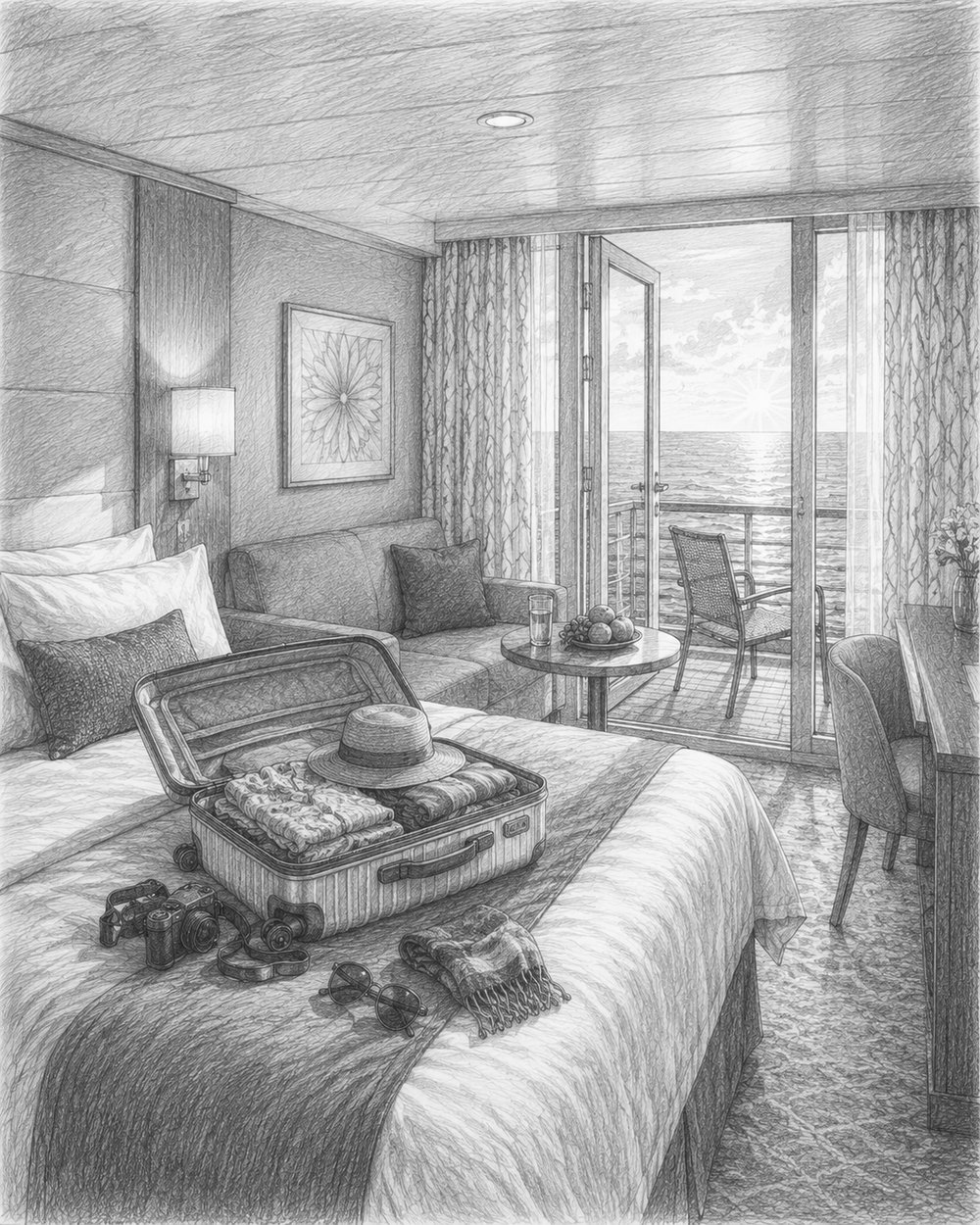
Balcony cabins are the heart of the ship’s lineup and, for this itinerary, the category most travelers should aim for. Every balcony faces outward to open sea, so you get a private railing to lean on while the scenery slides by. The rooms themselves are a comfortable size for two, with the sliding door letting in light and, on the good days, letting you hear the water and the birds.
Within the balcony category, position matters more than deck luxury. A midship balcony on one of the mid-decks is the sweet spot: least motion, quick access to elevators and stairs, and far enough from the pool deck and top-deck venues to stay quiet. I will come back to why the balcony earns its keep on this particular route, because that is the single biggest reason to stretch for it here rather than on a warm-weather cruise.
Studio cabins: built for solo travelers
Ovation of the Seas carries dedicated Studio cabins designed and priced for one person, which is unusual and welcome. The advantage is that you are not charged the single supplement that normally makes solo cruising expensive, where one person effectively pays close to a double fare. A Studio is a right-sized room for one with a proper bed rather than a converted twin, and it lets solo travelers sail without subsidizing an empty second berth.
They are compact by design, so a solo traveler who wants to spread out or who plans to spend a lot of time in the room might prefer a standard interior or balcony booked at the single rate. But if the goal is to travel affordably and use the room mainly for sleeping and changing between the ship’s many indoor spaces, the Studio is the most efficient way to do it.
For a fuller picture of how solo life works aboard this ship, from dining tables to the active venues, the what to expect on Ovation of the Seas guide walks through the daily rhythm.
Suites: from junior suites to the Royal Loft
The suite ladder climbs a long way on this ship, topping out at the two-deck Royal Loft Suite, a genuine showpiece with soaring windows and a private outdoor space. Below that sit a range of grand and junior suites offering more square footage, larger balconies, and access to suite perks. The exact perks vary by suite tier, so read the current benefits carefully in the app before you commit, but they generally include priority boarding and expanded services.
Suites make the most sense for travelers who value space and quiet time in the room, families who need separate sleeping areas, or anyone who wants the largest possible private balcony for scenery watching. The Royal Loft in particular turns your own cabin into a viewing platform, which on a scenic route is a legitimate reason to splurge rather than a pure luxury flourish.
Why a real balcony earns its keep on this route
On a warm-weather cruise, a balcony is a nice-to-have you might use for morning coffee. On this ship’s signature Alaska sailings, it becomes something closer to essential. The itinerary includes a day of scenic glacier cruising, at a place such as Hubbard Glacier or Dawes Glacier in Endicott Arm, where the ship slows and turns so guests can watch ice calve into the water. Having your own outdoor railing means you can watch that unfold in a bathrobe with coffee, without fighting for a spot along the crowded public rails.
The same logic applies to wildlife. Whales, sea otters, eagles and coastal bears can appear at any hour along these waters, and the sightings are often brief. A balcony gives you a standing invitation to look up from your book and catch something the moment it happens, rather than needing to hustle up several decks. Across a week of cruising, those private, unhurried viewing moments add up to a meaningfully different trip.
One honest caveat: the weather is cool and often wet, so you will not live on the balcony the way you might in the Caribbean. That is exactly why the Virtual Balcony interior remains a reasonable value alternative. But if scenery is the reason you chose this cruise, the balcony pays for itself over a single glacier day.
Which side of the ship for the scenery
People always want to know which side to book for the best views, and the honest answer is that it depends on the direction you sail and the day. These Alaska voyages are open-jaw, running one-way between Vancouver and Seward, either northbound or southbound, so a side that faces the coast on one leg may face open water on another. The captain also rotates the ship at the glacier so both sides get a turn, which softens the difference on the single most scenic day.
Because of that, I would not pay a large premium to guarantee one specific side. Prioritize a midship balcony at a good deck level first; treat the side as a secondary preference. If you do want to optimize, check your specific sailing’s direction and port sequence in the Royal Caribbean app, and remember that you can always walk to the public decks or ride the North Star for a 360-degree view regardless of which way your cabin faces.
Best value and best all-round picks
If I had to name two winners, they would be these. The best value on the ship is the Virtual Balcony interior: it is the least expensive comfortable option, it does not feel like a cave, and it lets you redirect money toward excursions that sell out early. The best all-round choice for this itinerary is a midship Balcony on the mid-decks, which balances scenery, space and the steadiest ride while keeping you away from the noisier zones at the top and ends of the ship.
Everything else is a variation on those two ideas. Ocean View suits travelers who want a window but not an outdoor step. Suites suit travelers who want space, separation, or the largest private balcony. Studios suit solo travelers who want to avoid the single supplement. Match the category to how you actually plan to use the room, and you will rarely regret the choice.
A deck-by-deck orientation
This ship has roughly 16 guest decks, and rather than memorize deck numbers, it helps to think in zones, then confirm the specifics on the current deck plan in the app. The key idea is that noise and motion both come from predictable places, so once you know where those are you can pick a cabin that avoids them.
- Top decks: the pool deck, the glass-roofed indoor pool, the Solarium, SeaPlex and the North Star live up here. Great for being near the action, but the decks directly below the pool and SeaPlex can carry noise, and high-forward rooms feel the most motion.
- Upper-mid decks: a comfortable zone for balconies that keeps you close to venues without sitting right under them.
- Mid-decks, midship: the calm center of the ship, least motion and quick access to elevators. This is the sweet spot for balconies.
- Lower decks: steady and often better priced, but check the deck plan for lifeboats, which can block the view from some lower balconies.
Wherever you land, look at the deck directly above and below your candidate cabin on the plan. A room is only as quiet as its neighbors, and a public lounge or a galley overhead can undo an otherwise perfect location. The Royal Caribbean Ovation of the Seas tips guide has more on reading the deck plan like a pro.
Cabins for solo travelers, couples and families
Solo travelers
Start with the Studio cabins for the reasons above: no single supplement and a room sized for one. If you want more room or a balcony and do not mind paying the solo rate, a standard interior with a Virtual Balcony is a comfortable middle ground. Either way, this ship is a strong solo choice because so much of it is indoor and social, from the Bionic Bar to the SeaPlex, so you are never stuck alone in a small room.
Couples
For two people, a midship Balcony on the mid-decks is the classic pick, giving you a private outdoor spot for the scenery and a steady, quiet base. Couples who care more about budget than fresh air can take the Virtual Balcony interior and spend the difference on a Chops Grille or Wonderland dinner. If you want to mark a special occasion, a junior suite adds noticeably more space without jumping to the top tiers.
Families
Families should think about connecting cabins or a suite with separate sleeping areas, and about being within easy reach of the venues kids gravitate to, such as the SeaPlex and Adventure Ocean. A pair of connecting balconies often works better than cramming everyone into one room, and it gives parents a door they can close. Just avoid booking directly beneath the pool deck or SeaPlex, where early-morning and late-night noise can wake light sleepers. For a broader look at planning a family trip on this ship, see the Ovation of the Seas cruise guide.
Cabins to avoid
No cabin on this ship is a disaster, but some locations create predictable annoyances. Confirm every one of these against the current deck plan before you book, because exact positions shift between ships and refits.
- Directly under the pool deck or SeaPlex: the pool deck sees dragging deck chairs early and late, and the SeaPlex hosts active programming. Rooms immediately below can pick up thumps and rolling noise.
- Near Two70 or the Music Hall: both are terrific venues, but they run live shows and nightlife into the evening. Cabins close by can hear the bass, so light sleepers should give them a wide berth.
- Forward, high decks: the front of the ship on the upper decks feels the most pitch and motion in open water. Anyone prone to seasickness should move midship and lower.
- Lower-deck balconies with lifeboats: some lower balconies sit behind or above the lifeboats, which can partly block the view and the light. On a scenery-driven cruise that obstruction matters more than usual.
The fix for all of these is the same two-minute habit: open the deck plan, find your candidate cabin, and look at what is directly above, below and beside it. If it is quiet on all sides and clear of lifeboats, you have found a good room.
Quick-pick table by traveler type
| Traveler type | Best cabin choice | Why |
|---|---|---|
| Budget-focused | Virtual Balcony interior | Lowest comfortable fare, live-view screen, saves money for excursions |
| Scenery lover | Midship Balcony, mid-decks | Private outdoor railing for glaciers and wildlife, steadiest ride |
| Solo | Studio cabin | No single supplement, right-sized for one |
| Couple, special trip | Junior suite | Extra space and a larger balcony without top-tier pricing |
| Family | Connecting balconies or a suite | Separate sleeping areas near the kids’ venues |
| Prone to seasickness | Midship, lower deck | Least motion, away from the forward pitch |
| Want the wow factor | Royal Loft Suite | Two decks of space and a private viewing platform |
Treat the table as a starting point, then confirm live pricing and availability in the Royal Caribbean app, since fares move constantly and the best-value category on your specific sailing can shift week to week.
Get the complete Ovation of the Seas playbook

Ready to book the right cabin and get the most out of every port? “The Ultimate Guide to Sailing on Ovation of the Seas” walks you through it step by step, part of the Ultimate Ship Guides series by Leo Sotropa, with clear action steps in every chapter so you can plan with confidence.
Frequently asked questions
Is a balcony worth it on Ovation of the Seas?
On this ship’s Alaska sailings, yes, more so than on a typical warm-weather cruise. A private balcony lets you watch glacier calving and wildlife from your own railing without fighting for space on the public decks, and the sightings are often brief enough that being right outside your room matters. If your budget is tight, a Virtual Balcony interior is the reasonable alternative.
What is a Virtual Balcony?
It is a floor-to-ceiling screen in certain interior cabins that shows a live, real-time view of the sea from cameras mounted outside the ship, with optional sound. It does not replace fresh air, but it removes the closed-in feeling of a traditional interior and is the best value on the ship.
Which side of the ship is best for Alaska scenery?
It depends on your sailing’s direction and the day, since these voyages run one-way between Vancouver and Seward in either direction. The ship also rotates at the glacier so both sides get a view. I would prioritize a midship balcony at a good deck level over guaranteeing a specific side, and confirm your route in the Royal Caribbean app.
Are there cabins for solo travelers?
Yes. Ovation of the Seas has dedicated Studio cabins priced for one person, which avoids the single supplement that usually makes solo cruising expensive. They are compact but efficient, and the ship’s many indoor social spaces make it an easy choice for traveling alone.
Which cabins should I avoid?
Avoid rooms directly under the pool deck or SeaPlex for noise, cabins near Two70 or the Music Hall for evening nightlife, forward high-deck rooms if you are prone to motion, and lower-deck balconies where lifeboats block the view. Check each candidate against the current deck plan before booking.
What is the best cabin for a family?
Look at connecting balcony cabins or a suite with separate sleeping areas, ideally within easy reach of the SeaPlex and Adventure Ocean. Connecting rooms usually beat squeezing everyone into one cabin, and they give parents a door to close. Just steer clear of the space directly below the pool deck.
How do I confirm cabin prices and availability?
Use the Royal Caribbean app, which shows live fares, categories and deck plans for your specific sailing. Prices move constantly and the best-value category can change week to week, so treat any general recommendation as a starting point and verify the current numbers before you book.
Ready for the whole ship in one place? It is all in The Ultimate Guide to Sailing on Ovation of the Seas.
Get the book →
Meet Leo: The Heartbeat Behind ‘A Country A Month’
Journeying through the pages of A Country A Month, you might often feel the rhythm of a storyteller’s heartbeat, pulsating through each line, each image, and each adventure shared. That heartbeat belongs to none other than our remarkable website editor, Leo.
With a lens in one hand and a pen in the other, Leo seamlessly marries his passions for photography and writing. His eye captures moments that words can barely describe, yet his eloquence brings those images to life, transcending borders and connecting us all through shared stories. An avid traveler, every country he’s visited has added another chapter to his expansive tale, and through our platform, he generously shares these chapters with us.