Tokyo’s best experiences reveal its contrasts: sacred and commercial, quiet and electric, meticulous and playful.
Landmarks and traditions
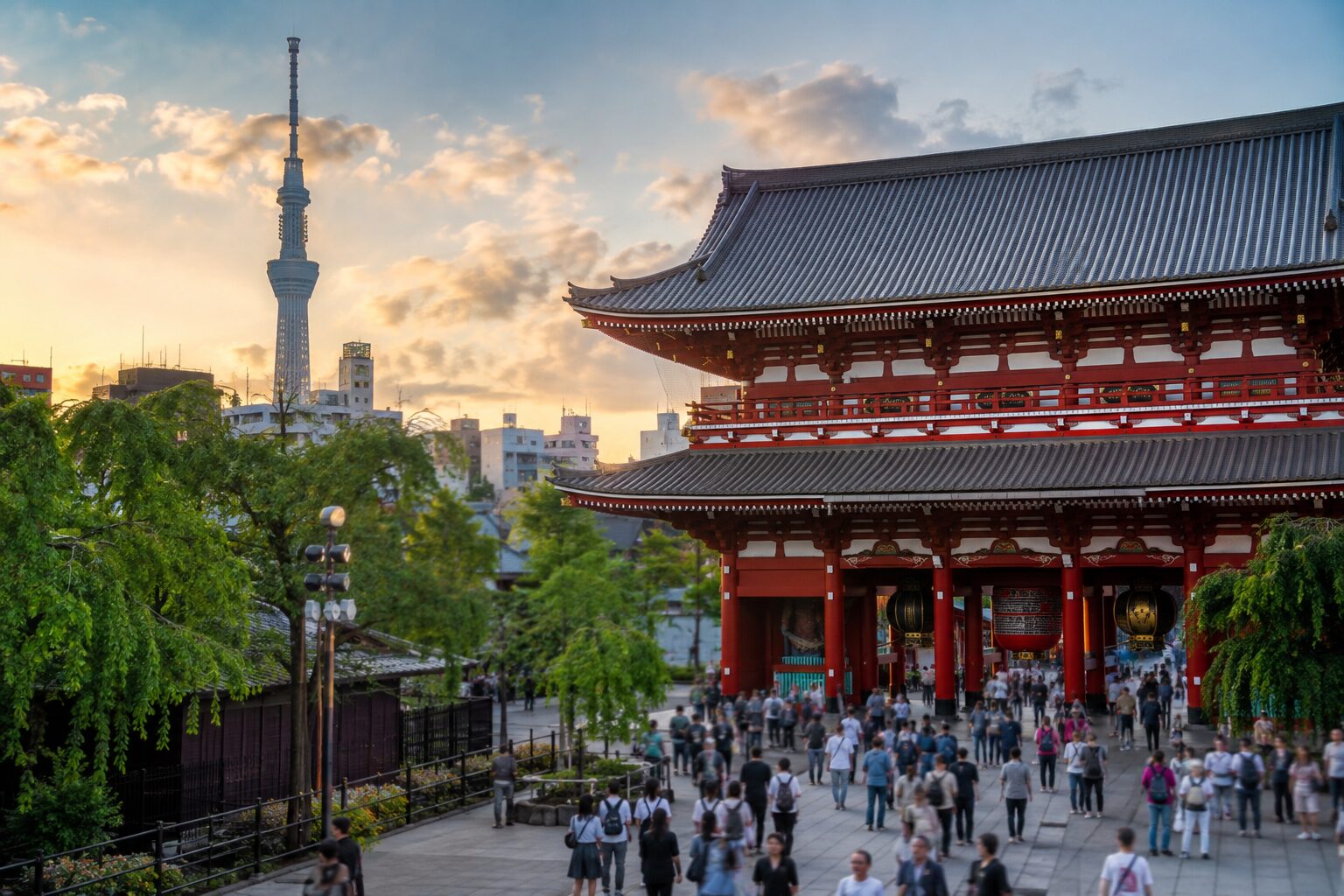
- Visit Senso-ji early.
- Walk the forested approach to Meiji Jingu.
- Explore the Imperial Palace East Gardens when open.
- Experience a traditional garden.
- Watch sumo through a tournament or legitimate practice opportunity.
Modern Tokyo
- Cross Shibuya and explore beyond the intersection.
- See the skyline from one viewpoint.
- Walk Shinjuku after dark.
- Explore Harajuku and Omotesando together.
- Visit Akihabara or Ikebukuro for pop-culture interests.
- Discover contemporary architecture in central districts.
Museums, parks, and neighborhoods
- Choose a Ueno museum by subject.
- Visit Yanaka for a lower-rise neighborhood walk.
- Relax in Yoyogi, Ueno, or another major park.
- Explore Kichijoji and Inokashira Park.
- Choose a bayside or digital-art experience if it fits your interests.
Food and everyday rituals
- Eat sushi in a format that suits your budget.
- Try ramen, soba, or udon.
- Browse a department-store basement food hall.
- Spend an evening at an izakaya.
- Ride a local train to a district chosen simply because it interests you.
How to choose
Pick one shrine or temple, one viewpoint, one museum or special-interest attraction, and several district walks. The official GO TOKYO guide is a useful starting point for current ideas.
Frequently asked questions
What should a first-time visitor prioritize?
Asakusa, Meiji Jingu, Shibuya, Shinjuku, one skyline view, and one personal-interest district create a balanced visit.
What needs reservations?
Popular observation decks, themed attractions, digital-art museums, and special restaurants may sell out.
Organize the highlights with our three-day Tokyo itinerary.
How to use this list
Twenty-one ideas do not belong in one trip. For a first visit to Tokyo, choose one major landmark, one museum or cultural institution, one viewpoint or landscape, one performance or evening, and several neighborhood walks. The combination produces variety without constant ticket queues.
Mark each choice as essential, interesting, or optional. Reserve only the essential experiences with limited capacity, then group everything else geographically. This prevents a ranked list from sending you back and forth across the city.
Planning the signature experiences
Senso-ji early
Visit before peak crowds, observe worship respectfully, and explore Asakusa beyond the primary shopping approach. Check the official operator for current hours, closures, ticket rules, accessibility, and photography policies. Build nearby streets or a meal around the experience so that a delay does not unravel the entire day.
Meiji Jingu
Walk the forested approach quietly and connect the shrine with Harajuku and Omotesando. Check the official operator for current hours, closures, ticket rules, accessibility, and photography policies. Build nearby streets or a meal around the experience so that a delay does not unravel the entire day.
Shibuya beyond the crossing
Use the famous intersection as an introduction, then explore side streets, shopping, food, and a viewpoint. Check the official operator for current hours, closures, ticket rules, accessibility, and photography policies. Build nearby streets or a meal around the experience so that a delay does not unravel the entire day.
Shinjuku after dark
Choose between department stores, observation views, restaurants, or small nightlife areas rather than wandering without a plan. Check the official operator for current hours, closures, ticket rules, accessibility, and photography policies. Build nearby streets or a meal around the experience so that a delay does not unravel the entire day.
A garden
Use a landscaped garden for seasonal detail, rest, and a different understanding of urban space. Check the official operator for current hours, closures, ticket rules, accessibility, and photography policies. Build nearby streets or a meal around the experience so that a delay does not unravel the entire day.
A museum selected by interest
Choose art, history, design, animation, science, or craft instead of visiting an institution only because it is famous. Check the official operator for current hours, closures, ticket rules, accessibility, and photography policies. Build nearby streets or a meal around the experience so that a delay does not unravel the entire day.
A personal-interest district
Let anime, architecture, music, stationery, coffee, fashion, or baseball determine a meaningful half-day. Check the official operator for current hours, closures, ticket rules, accessibility, and photography policies. Build nearby streets or a meal around the experience so that a delay does not unravel the entire day.
A depachika
Browse a department-store basement for prepared dishes and gifts while respecting closing times and eating rules. Check the official operator for current hours, closures, ticket rules, accessibility, and photography policies. Build nearby streets or a meal around the experience so that a delay does not unravel the entire day.
A neighborhood train ride
Explore Yanaka, Koenji, Kichijoji, Kagurazaka, or another lower-rise district at an unhurried pace. Check the official operator for current hours, closures, ticket rules, accessibility, and photography policies. Build nearby streets or a meal around the experience so that a delay does not unravel the entire day.
A skyline view
Compare public and paid viewpoints, reserve only when necessary, and accept that weather controls visibility. Check the official operator for current hours, closures, ticket rules, accessibility, and photography policies. Build nearby streets or a meal around the experience so that a delay does not unravel the entire day.
Finding worthwhile alternatives
When a famous attraction is sold out, ask what you wanted from it: a skyline, a historic interior, a particular artist, or the feeling of a neighborhood. The city usually offers another way to satisfy that interest without buying a dubious resale ticket.
Smaller museums and local institutions can provide deeper experiences because their scale permits attention. Check language support, temporary exhibitions, and opening days, then pair one with a nearby market, park, or meal.
Photography without losing the day
Arrive early for uncluttered public spaces, but respect barriers, worship, residents, and working businesses. Never block a narrow route for a photograph. A few deliberate images plus time spent looking usually creates a stronger memory than documenting every stop.
For skyline photographs, weather and sun direction matter more than owning several observation tickets. Choose one elevated view and supplement it with free street, bridge, park, or waterfront perspectives.
Free and low-cost experiences
Walking through Shinjuku, Shibuya, and Tokyo Station and Marunouchi reveals architecture and daily life without another admission charge. Public parks, markets, religious sites, and waterfronts can anchor half a day when approached with curiosity.
Free does not mean unrestricted. Timed reservations, security, donation expectations, photography limits, or worship schedules may apply. Verify details through the official site and behave as a guest.
Build a balanced day
Combine one mentally demanding interior with an outdoor route and a meal worth anticipating. Place the fixed entry first, then choose optional stops that can disappear without disappointment. Leave travel time and a seated break between large experiences.
End in a district with several dinner choices and a simple return route. An evening plan should restore the day, not become another cross-city obligation completed only because it appeared on a list.
Geographic discipline
Keep Shinjuku with the places naturally around it. This area is known for major rail connections, department stores, viewpoints, restaurants, and nightlife spread across very different sides of the station. A saved place across town is not automatically part of the same day; move it to another cluster or release it.
Time estimates
Add a margin to every transfer in Tokyo. Ticket checks, finding the correct entrance, station corridors, toilets, photographs, and a wrong turn are normal parts of travel. A plan that depends on perfect timing is already late.
Official information
For Shibuya beyond the crossing, read the venue or operator’s current page shortly before the visit. Use the famous intersection as an introduction, then explore side streets, shopping, food, and a viewpoint. Third-party summaries are useful for ideas but should not control a time-sensitive reservation.
Rest and attention
Schedule a genuine seated pause before concentration disappears. Rest is not time stolen from sightseeing; it is what allows the next neighborhood, artwork, meal, or performance to register as an experience rather than another task.
Flexible alternatives
Save one indoor and one outdoor alternative near Ueno. When weather, crowds, or a closure changes the day, choose the nearby substitute. Crossing Tokyo to rescue the original checklist usually compounds the problem.
Evening judgment
Decide each evening whether the next day needs subtraction. Check weather, transport notices, and opening information, then remove one optional stop before going to sleep. The resulting space often becomes the best hour of the trip.
Local businesses
In Ebisu and Meguro, spend with businesses that serve the neighborhood as well as visitors. Read the menu or service before entering, greet staff, and avoid occupying scarce space only for photographs. Small courtesies improve both value and interaction.
A useful map
Create a map layer for Kichijoji containing the main anchor, two meal possibilities, a rest stop, and the route onward. This is more useful on the street than dozens of unrelated pins distributed across Tokyo.
Opening-hour reality
Never assume that a famous place opens daily or admits the last visitor at its posted closing time. Entry cutoffs, worship, maintenance, private events, and seasonal schedules matter. Verify the exact date before committing the surrounding itinerary.
Quality over quantity
The purpose of visiting A skyline view is not merely to say it happened. Compare public and paid viewpoints, reserve only when necessary, and accept that weather controls visibility. Give the experience enough time, then remove a weaker item rather than turning both into rushed photographs.
Arrival buffer
For a timed entry, aim to reach the immediate area early but do not join an unofficial line without checking signs. Use the buffer for a short walk or coffee, then approach the correct entrance with identification and confirmation ready.
Departure buffer
End the final full day with luggage, checkout, and onward transport already understood. Keep essential documents and medication accessible, confirm the terminal or station, and avoid a late plan that depends on the last possible connection.

Meet Leo: The Heartbeat Behind ‘A Country A Month’
Journeying through the pages of A Country A Month, you might often feel the rhythm of a storyteller’s heartbeat, pulsating through each line, each image, and each adventure shared. That heartbeat belongs to none other than our remarkable website editor, Leo.
With a lens in one hand and a pen in the other, Leo seamlessly marries his passions for photography and writing. His eye captures moments that words can barely describe, yet his eloquence brings those images to life, transcending borders and connecting us all through shared stories. An avid traveler, every country he’s visited has added another chapter to his expansive tale, and through our platform, he generously shares these chapters with us.