Planning a trip to Cancun is easier when the city is treated as a set of connected neighborhoods and decisions, not a checklist of famous names. This complete guide brings together the essential sights, the right time to visit, transport, places to stay, food, realistic costs, and the choices that most affect a first trip.
Use this article with the complete Cancun travel guide, the three-day itinerary, and the where-to-stay guide.
Here is a number worth sitting with before you book anything: Cancun’s airport processed roughly 19.4 million international passengers last year, more than arrived at any other airport in Mexico from abroad, and more than land at most cities you could name for a beach vacation anywhere on earth. Ask most of those travelers why they came and you will get some version of the same answer: turquoise water, warm sand, and a flight short enough that you can be in a lounge chair by early afternoon. That answer is true and it is not the whole story, and the gap between the two is what this book is for.
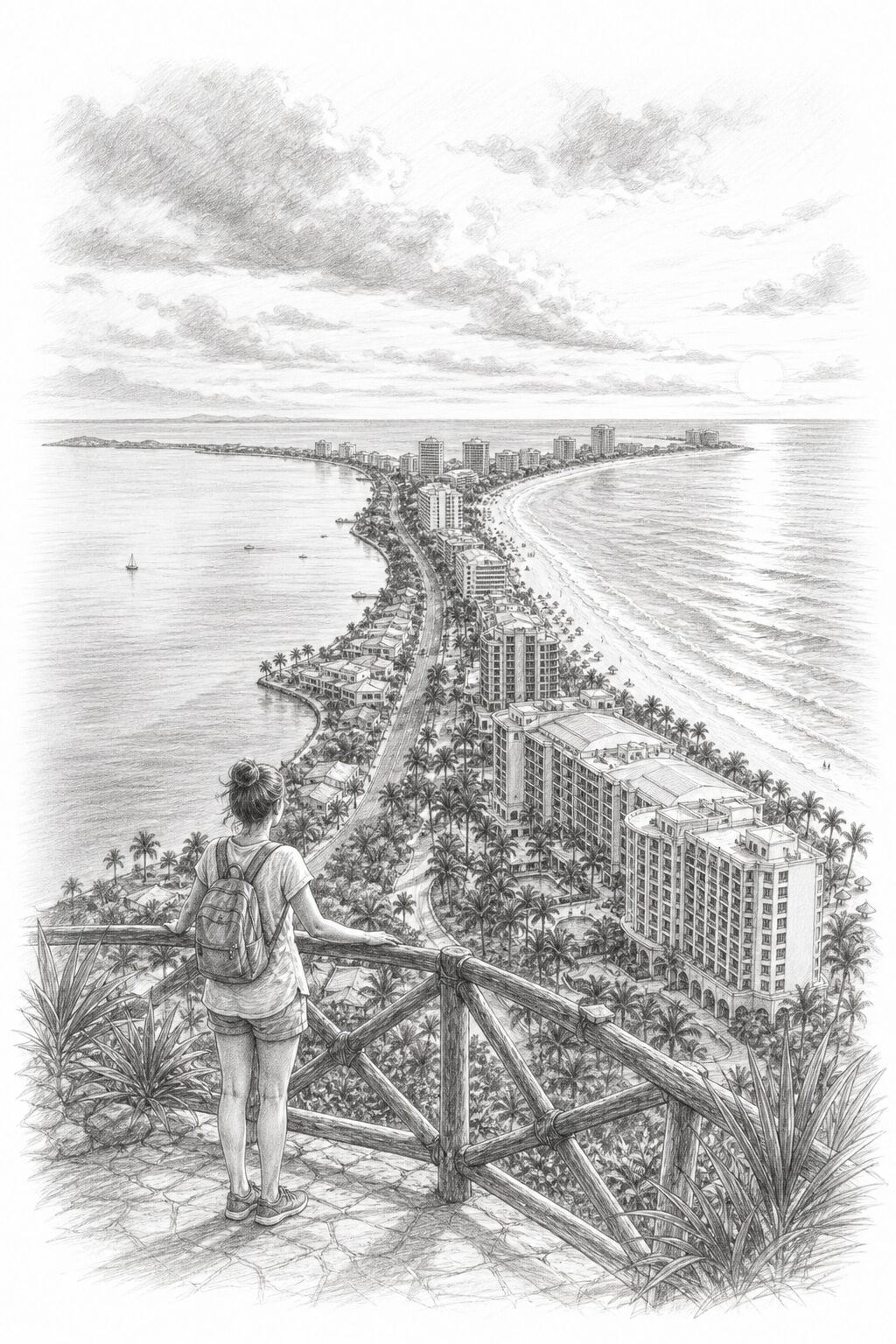
The whole story is this: Cancun is really two cities wearing one name, and almost nobody explains that to first-timers before they land. The Zona Hotelera, the Hotel Zone, is a narrow sandbar shaped like the numeral 7, curling more than twenty kilometers between a calm bay and the open Caribbean, lined nearly solid with resort towers. A short bridge away, on the mainland, sits Downtown, an ordinary, unpolished Mexican city of close to a million people, with none of the resort gloss and almost all of the region’s real food, real prices, and real life. Most visitors never cross that bridge. This book thinks you should, at least once, and it will tell you exactly how to do it without giving up a single beach day.
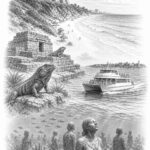
There is a second thing most guidebooks get backward about this city, and it is worth saying plainly here at the start: Cancun is not primarily a museum city or an old-town-wandering city, and this book will not pretend otherwise or pad a chapter to make it look like one. What Cancun actually offers, and offers better than almost anywhere else in the hemisphere, is convenience stacked on convenience. World-class beach time. Two of the most famous Maya ruins on the planet, Chichen Itza and Tulum, within a manageable day’s drive. Cenotes, the limestone sinkholes that are one of the most talked-about swims in all of travel, scattered along the same highway. And Isla Mujeres and Cozumel, two genuinely different island experiences, a short ferry ride away. You can wake up in the same hotel bed for five straight mornings and still touch four or five completely different kinds of days. That combination, not any single sight, is Cancun’s real headline attraction, and this book is organized to help you actually use it rather than just admire it from a beach chair.
This guide is built the way a longtime local friend would build it, not the way a database would. First the city itself, the two-places-in-one shape of it and the surprisingly recent, surprisingly deliberate story of how it came to exist at all. Then the sights that are genuinely in Cancun proper, told straight, including an honest admission that the biggest, most famous sights near Cancun are not technically in it and get their own full chapter later. Then the planning layer: when to come (a real question here, because of two things called sargassum and hurricane season that this book will not soften), how to get around, and where to sleep. Then the city up close, neighborhood by neighborhood, the food, the day trips that are the true beating heart of a Cancun trip, and ready-made itineraries. And near the end, the deeper material: how a nearly empty stretch of Yucatan coastline became one of the busiest tourist destinations on the continent inside a single working lifetime, and the people, from housekeepers to ferry captains to Maya cenote cooperatives, who keep the whole operation running.
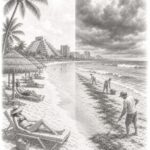
A word on honesty, since this book deals in it throughout. Cancun has real, openly discussed downsides: a Hotel Zone that can feel like a sealed bubble disconnected from the country around it, seaweed that periodically fouls the very beaches you came for, a hurricane season that deserves genuine respect, and timeshare sales pitches persistent enough to eat a whole morning if you let them. None of that should keep you home. All of it is easier to handle when someone tells you about it before you land instead of after.
Two promises about how this book works, and they matter more here than in most cities, because prices and rules along this coast shift with real speed. Every figure in these pages was accurate at the time of writing, and wherever something changes often, you will see the phrase “as of this writing” and a pointer to the official source to confirm, because entrance fees, ferry schedules, and bus routes here move more often than the guidebooks tracking them. And nothing in this book is padding. Where a chapter has less to say, as the complete guide honestly does, it says less and sends you somewhere richer instead. Where a chapter has more to say, as the day trips chapter does, it says considerably more.
Action Steps
- Decide now whether this is a Hotel Zone trip, a mixed Hotel Zone and Downtown trip, or a base-on-Isla-Mujeres trip; the complete guide lays out the honest tradeoffs of each.
- Before booking dates, skim the complete guide for the sargassum and hurricane-season reality; the cheapest weeks and the least comfortable weeks overlap here more than in most destinations.
- Treat Chichen Itza as close to mandatory and start thinking now about DIY versus a guided tour; the complete guide makes the case in full.
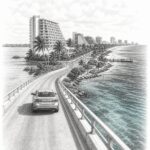
Step off the jet bridge at Cancun International Airport, clear the mostly digital immigration line, and walk out into air that feels like a warm towel just out of the dryer. Within twenty minutes, if you have arranged your transfer well, you are crossing onto a narrow strip of land with the color of the water changing beside you in real time: pale green in the shallows, then a turquoise so saturated it looks corrected, then, past the reef line, a deep Caribbean blue. Palm-lined boulevards curl past resort towers stacked one after another for miles. It looks, from the moment you arrive, exactly like the postcard, and that is because in a very real sense, someone designed it to.
Here is the detail almost no first-time visitor knows, and it changes how the whole trip reads: none of this existed sixty years ago. There is no ancient Cancun the way there is an ancient Rome or an ancient Mexico City. A small Maya trading post and lookout once stood on this coast, and its low stone traces, now called El Rey and San Miguelito, still stand today, oddly and wonderfully, inside the modern Hotel Zone itself. But the resort city around those ruins is a twentieth-century invention, built on purpose, on a schedule, by people you can name.
A resort chosen by data, not by history
In the late 1960s, the Mexican federal government, working through the central bank and a purpose-built development agency, set out to pick a location for an entirely new resort from scratch. Officials evaluated candidate stretches of coastline using data on beach quality, hurricane exposure, available workforce, and proximity to the American travel market that would eventually fill it. This narrow, then-empty barrier island of jungle and mangrove, fronting a coral-fringed Caribbean shoreline, won. A federal agency began quietly acquiring more than 12,000 hectares of coastal land, and construction broke ground in 1970 with financing that included the Inter-American Development Bank. The plan split the project into two deliberate halves from day one: a tourist Hotel Zone on the sandbar itself, and a separate mainland city, Downtown, built to house the construction and hospitality workforce that the resort would need. The first hotels opened by the mid-1970s. By the 1980s and 1990s, the Hotel Zone had grown into a global spring-break and honeymoon capital in the same breath, a dual identity the city still carries comfortably today, while Downtown grew alongside it into the ordinary, functioning city of nearly a million people it is now. You will not find a single founder’s statue here the way a European capital credits a king or a saint. Cancun’s origin story belongs to institutions, a central bank and a development agency, which is itself worth noticing as you walk around: this is a city that was willed into being on a blank stretch of coast within one working lifetime, and plenty of the people who built it are still alive to tell you about it.
The shape of two cities on one strip of coast
Understanding Cancun’s geography takes about five minutes, and it will save you real time and money for the rest of your trip. The Zona Hotelera is a sandbar shaped like the numeral 7, roughly 22.5 kilometers long, with a calm, sheltered bay (the Bahia de Mujeres) on its inner curve and the open Caribbean on its outer edge. Everything on this strip is numbered by kilometer marker along Boulevard Kukulcan, from Km 0 near the bridge to Downtown out to Km 23 near Punta Nizuc and the airport, and once you internalize that numbering, orienting yourself becomes almost automatic. Almost nobody actually lives on the sandbar itself; the tens of thousands of people who staff its resorts, restaurants, and shops commute in every day from Downtown and the surrounding neighborhoods, which is worth remembering the next time a smiling front-desk clerk wishes you a good morning after an hour-long commute of their own.
Downtown, or El Centro, sits on the mainland a short bridge away from the Hotel Zone’s northern end. It is, deliberately, nothing like the resort strip: wide ordinary avenues, Avenida Tulum chief among them, real pharmacies and hardware stores mixed in with taquerias, and none of the manicured resort landscaping. This is where Cancun’s actual food culture lives, where prices drop to a fraction of Hotel Zone levels, and where you get a sense of Mexico rather than a sense of vacation. A short bus ride separates the two worlds, and this book will make the case throughout that crossing that bridge, even for a single afternoon, is one of the smartest moves a Hotel Zone-based visitor can make.
A day in the life
Run the sandbar through one full rotation and you start to see how the two Cancuns actually mesh. Before dawn, buses already carry the first wave of housekeeping, kitchen, and grounds staff in from Downtown and the outlying colonias, since almost nobody who works the Hotel Zone lives on it; by sunrise, lifeguard towers go up on the beaches and the first joggers and early swimmers have the water nearly to themselves, the calmest and most pleasant hour of the whole day. Mid-morning belongs to the pool bars filling with breakfast trays and the tour vans loading up for Chichen Itza and Tulum, most of them departing between 7 and 8am to beat both the heat and the crowds at the ruins. Midday is when the sun does its heaviest work and the smart move, learned quickly by repeat visitors, is shade, a long lunch, or a nap rather than a forced march down the boulevard. Late afternoon brings the golden light that makes every Hotel Zone sunset photo look professionally lit, and by early evening the day-trip vans are rolling back in, tired and sunburned in the good way, while the malls and restaurants along “the curve” near Punta Cancun start filling for dinner and the timeshare presentations, mercifully, wind down for the night. After dark, the Hotel Zone’s clubs take over the middle stretch of the strip while Downtown’s Parque de las Palapas fills instead with families, food carts, and the low hum of live music that has nothing to do with spring break at all. Two rhythms, running the same 24 hours, barely overlapping.
The headline numbers
A few figures give you the scale of what you are stepping into. The municipality that contains Cancun, Benito Juarez, has grown from essentially nothing in 1970 to a population approaching a million residents today, one of the fastest-growing urban areas in Mexico. Quintana Roo, the state that includes Cancun and the Riviera Maya corridor running south of it, carries well over 130,000 hotel rooms, the great majority of them concentrated in and around this one metropolitan area. And that airport figure from the introduction bears repeating in context: roughly 19.4 million international passengers passed through Cancun International Airport last year, making it the busiest gateway for American leisure travelers to any destination outside the United States, and Mexico’s busiest airport for international arrivals. You are not visiting a hidden gem. You are visiting one of the most efficiently built and most heavily used tourist machines on the planet, and there is real skill, learned mostly from decades of American package tourism, packed into how smoothly that machine runs.
One more layer worth knowing before the complete guide tells the fuller story: the early hotels that built the Hotel Zone’s reputation, among them the Hyatt Cancun Caribe and the Camino Real, opened in the 1970s aiming squarely at an upscale honeymoon and family market. It was the wave of nightclubs and entertainment venues that followed through the 1980s and 1990s that layered the spring-break identity on top, without ever fully replacing the first one. That is why a Cancun trip today can look like a quiet family week at a resort with a supervised kids’ club or a loud week on the club strip near Punta Cancun, sometimes on the very same block, and both are equally authentic versions of the place.
What genuinely makes it special
Set aside the postcard color of the water for a moment, because plenty of coastlines have beautiful water. What actually sets Cancun apart is the stacking. Nowhere else in the hemisphere gives you a genuinely world-class beach, one of the great archaeological sites on earth (Chichen Itza), a walled Maya city perched directly on the Caribbean (Tulum), a network of freshwater cenotes unlike anything most travelers have ever swum in, and two distinct island getaways (Isla Mujeres and Cozumel), all reachable from one hotel bed without a single internal flight or a complicated multi-city itinerary. Add a well-executed all-inclusive resort model, which at its best genuinely delivers low-friction, low-stress relaxation, particularly for families, and you understand why this stretch of coast pulls in the numbers it does.
The honest cons
This book deals straight with you throughout, and the fairest thing to say up front is this: Cancun is not a culture-and-museum destination, and if that is specifically what you are chasing, Mexico City or Merida will serve you better; this guide says so plainly in the complete guide rather than padding that chapter to pretend otherwise. The Hotel Zone can genuinely feel like a sealed resort bubble, with a real and sometimes uncomfortable gap between the tourist economy and the mainland city most visitors never bother to see. Sargassum seaweed, a floating brown algae that has arrived in unpredictable but sometimes heavy volumes since the mid-2010s, periodically fouls beaches, worst from roughly June through September in bad years; the complete guide gives it the full, honest treatment it deserves. Hurricane season runs June through November, peaking in September and October, and it is real enough to require a genuine weather-watching mindset for any late-summer trip. Timeshare touts working the Hotel Zone’s main boulevard and mall entrances are persistent and can consume an entire morning if you let them get a foot in the door. And prices inside the Hotel Zone, food and drinks especially outside an all-inclusive plan, run close to what you would pay in a comparable American resort town, a fact that surprises travelers who arrive expecting Mexico to be uniformly inexpensive.
Who this city is best for
Cancun is close to ideal for families who want one easy, self-contained beach base with real kids’ programs built in, for couples who want a genuinely low-effort all-inclusive week, and for first-time international travelers who want warm water and a short flight without complicated logistics. It also suits, better than almost any other single base in the Americas, travelers who want ruins and cenotes without building a long, complicated, multi-city Mexico itinerary from scratch.
Who might prefer somewhere else? Travelers chasing deep local culture, old-city wandering, or serious museum time will get considerably more from Mexico City or Merida, both of which this book will point you toward at the right moments. Travelers who instinctively dislike heavy resort-zone tourism infrastructure may find the Hotel Zone’s density of timeshare touts and package deals grating. And true budget backpackers should know upfront that the Hotel Zone is not a budget destination, though Downtown and its hostels are considerably more reasonable, and this book will not pretend the two halves of the city cost the same.
Action Steps
- Fix the two-cities map in your head now: the Hotel Zone sandbar for beach and resort life, Downtown across the bridge for real food and real prices; most of your trip will run along that line.
- Learn the kilometer-marker system on Boulevard Kukulcan early; it is how you will orient yourself for the rest of the trip.
- Accept upfront that Cancun’s deepest sights, Chichen Itza and Tulum above all, sit outside the city; the complete guide is where this book delivers on that promise in full.
- If a culture-heavy museum trip is truly the goal, treat this as an honest signal to look at Merida or Mexico City instead; if beach, ruins, and easy logistics are the goal, you are exactly where you should be.
A city’s “sights” chapter usually means a list of museums and monuments. Cancun’s does not, and this book will not force it to pretend otherwise. Here, the beach itself is the headline attraction, and the truly iconic sights within reach, Chichen Itza, Tulum, and the cenote country between them, sit outside the city limits and get the full, rich treatment they deserve in the complete guide, the richest chapter in this book. What follows here is the honest, complete list of what is genuinely in Cancun: free public beaches that rival anything on the coast, two low-key ruin sites hiding in plain sight among the resort towers, the city’s one real museum, an underwater sculpture park you reach only by boat, and Downtown’s market and civic-square culture. Short list, and every entry on it earns its place.
One general crowd-beating rule applies across nearly every entry below: the beaches in front of the big resorts run busiest from late morning through mid-afternoon, when the pool bars have emptied out and the day-trip vans have not yet come back, so a swim before 10am or after 4pm consistently buys you more space in the water. The two ruin sites and the museum are the opposite story: El Rey and the Museo Maya de Cancun rarely see a real line at any hour, simply because so few Hotel Zone guests bother to stop, which is precisely what makes them worth your time.
Zona Hotelera beaches
The sight itself, and the one most visitors underrate precisely because it does not feel like sightseeing. Every beach along Boulevard Kukulcan is public by federal law regardless of which resort sits behind it, free, and open to anyone willing to walk down an access path. Morning brings the calmest water for swimming, particularly on the bay-facing north stretch; sunset brings the kind of Caribbean-side glow that makes the whole strip look staged. Allow anywhere from half a day to a full day, and treat this, honestly, as your primary Cancun sight rather than a backdrop to everything else.
Playa Delfines
The single best free public beach in the city and the spot for the genuine photo stop: a large hillside “CANCUN” sign overlooking open Caribbean surf at Km 17.5. Free parking accommodates more than 300 cars, but it fills by mid-morning in high season, so aim for a weekday and arrive before 10am, or take the R-1 or R-2 bus instead of driving. Allow two to three hours. This stretch sits on the open-Caribbean south side of the peninsula, meaning bigger surf and stronger currents than the calmer bay beaches, so respect the posted flag warnings.
Playa Tortugas and Playa Langosta
The Hotel Zone’s calm-water beaches, at Km 5 to 6.5 on the sheltered bay side, both free and both excellent choices for swimming with young kids thanks to shallow, gentle water. Playa Tortugas adds a bungee tower and water-sports outfitters and draws a livelier crowd; Playa Langosta’s far end draws noticeably fewer people if you want the same calm water with more elbow room. Allow two to three hours, any time of day, though mornings are calmest.
Frequently asked questions
How many days are enough for Cancun?
Three well-planned full days cover a strong first visit, while four or five allow slower neighborhoods, additional museums, or a day trip. Count usable sightseeing days rather than hotel nights.
What should be booked first?
Reserve the experience you would be most disappointed to miss, then secure lodging and any limited-entry sights. Verify current rules and opening information on the official operator’s website shortly before travel.
How do you avoid rushing?
Group each day geographically, allow time for security and transport, and treat extra stops as optional. One demanding reservation plus nearby flexible experiences usually produces a better day than a chain of timed entries.
Continue planning Cancun
- Complete Cancun travel guide
- 3 days in Cancun: first-time itinerary
- Where to stay in Cancun
- Best things to do in Cancun
- Cancun food guide
- Cancun first-time tips
- Cancun on a budget
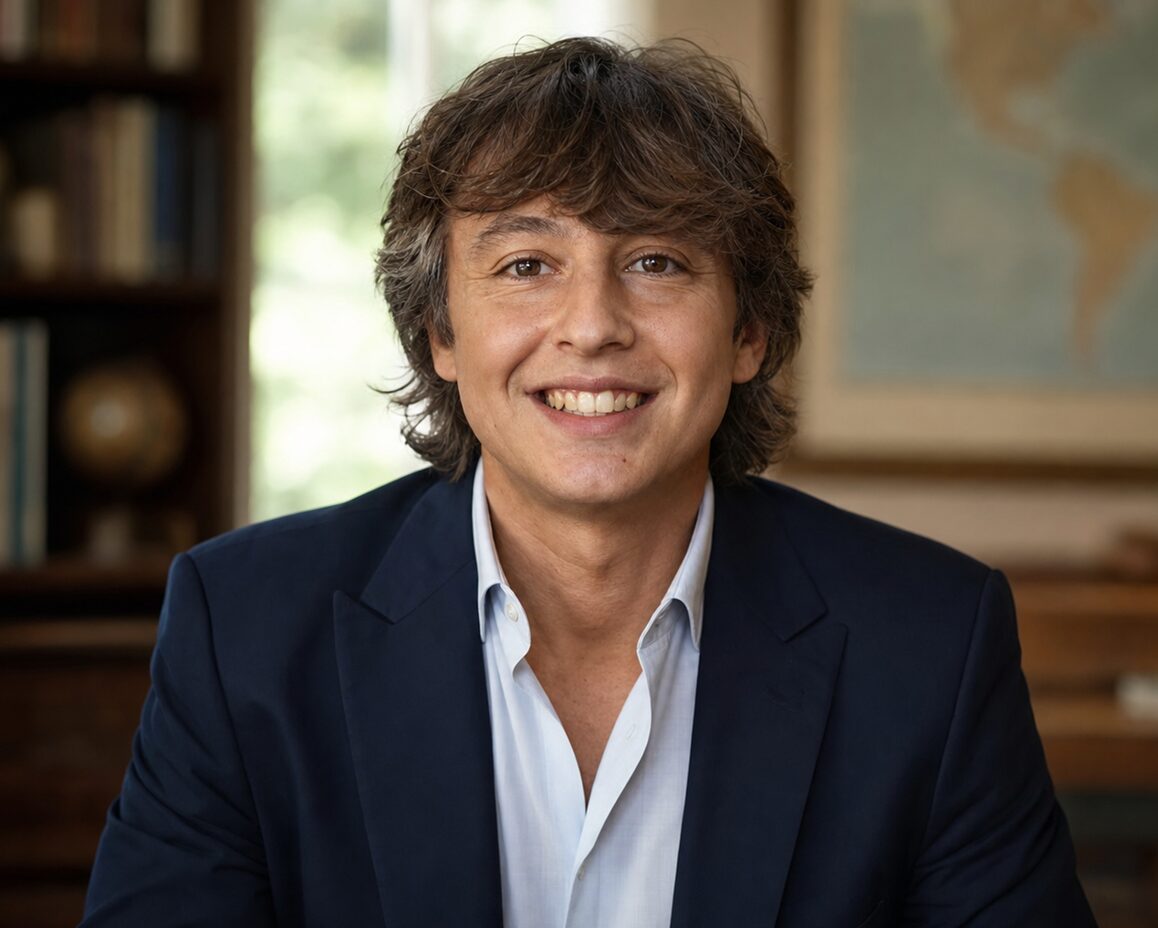
Meet Leo: The Heartbeat Behind ‘A Country A Month’
Journeying through the pages of A Country A Month, you might often feel the rhythm of a storyteller’s heartbeat, pulsating through each line, each image, and each adventure shared. That heartbeat belongs to none other than our remarkable website editor, Leo.
With a lens in one hand and a pen in the other, Leo seamlessly marries his passions for photography and writing. His eye captures moments that words can barely describe, yet his eloquence brings those images to life, transcending borders and connecting us all through shared stories. An avid traveler, every country he’s visited has added another chapter to his expansive tale, and through our platform, he generously shares these chapters with us.