What makes Carnival Celebration different from every Carnival ship that came before her? The short answer is architecture. She is the second ship in Carnival’s Excel class, and instead of the single long promenade that defined older Fun Ships, her public spaces are organized into six themed Zones, each with its own look, soundtrack, and reason to linger. Add cleaner LNG power, a top-deck roller coaster, and a three-deck atrium that opens straight onto the sea, and you have a vessel that feels less like a bigger version of what Carnival used to build and more like a rethink of how a mega-ship should flow. This guide walks through the Excel class design, the deck and capacity numbers, the dining spread, and the cabin categories, so you can understand what you are actually stepping aboard.
Everything in this article and far more, deck by deck, in The Ultimate Guide to Sailing on Carnival Celebration.
Get the book →What the Excel class is, and why it matters
Carnival Celebration belongs to a three-ship family: Mardi Gras came first, Celebration second, and Carnival Jubilee third. These are Carnival’s largest ships and the first the line has ever powered with liquefied natural gas, a cleaner-burning fuel than the heavy marine fuel that older ships relied on. She weighs in at roughly 180,000 gross tons, spans about 20 decks, and carries around 5,300 guests at double occupancy, climbing to roughly 6,500 when every berth is filled. Those numbers put her in a different league from the Carnival ships many repeat cruisers grew up on.
She launched in Carnival’s fiftieth-anniversary year and sails from Miami, the line’s historic home port. That anniversary is stitched into the ship itself, most visibly in the Golden Jubilee Lounge, which honors Carnival’s fifty years at sea. If you want the broader picture of life aboard beyond the design story, the companion Carnival Celebration cruise guide covers the day-to-day rhythm in more detail.
The Excel class matters because size on its own is not interesting. Plenty of ships are big. What Carnival did here was use the extra room to break the ship into distinct neighborhoods rather than stretching one corridor longer. That single decision shapes almost everything else about how Celebration feels underfoot.
The six Zones: how the ship is organized
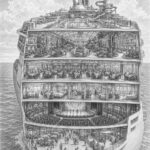
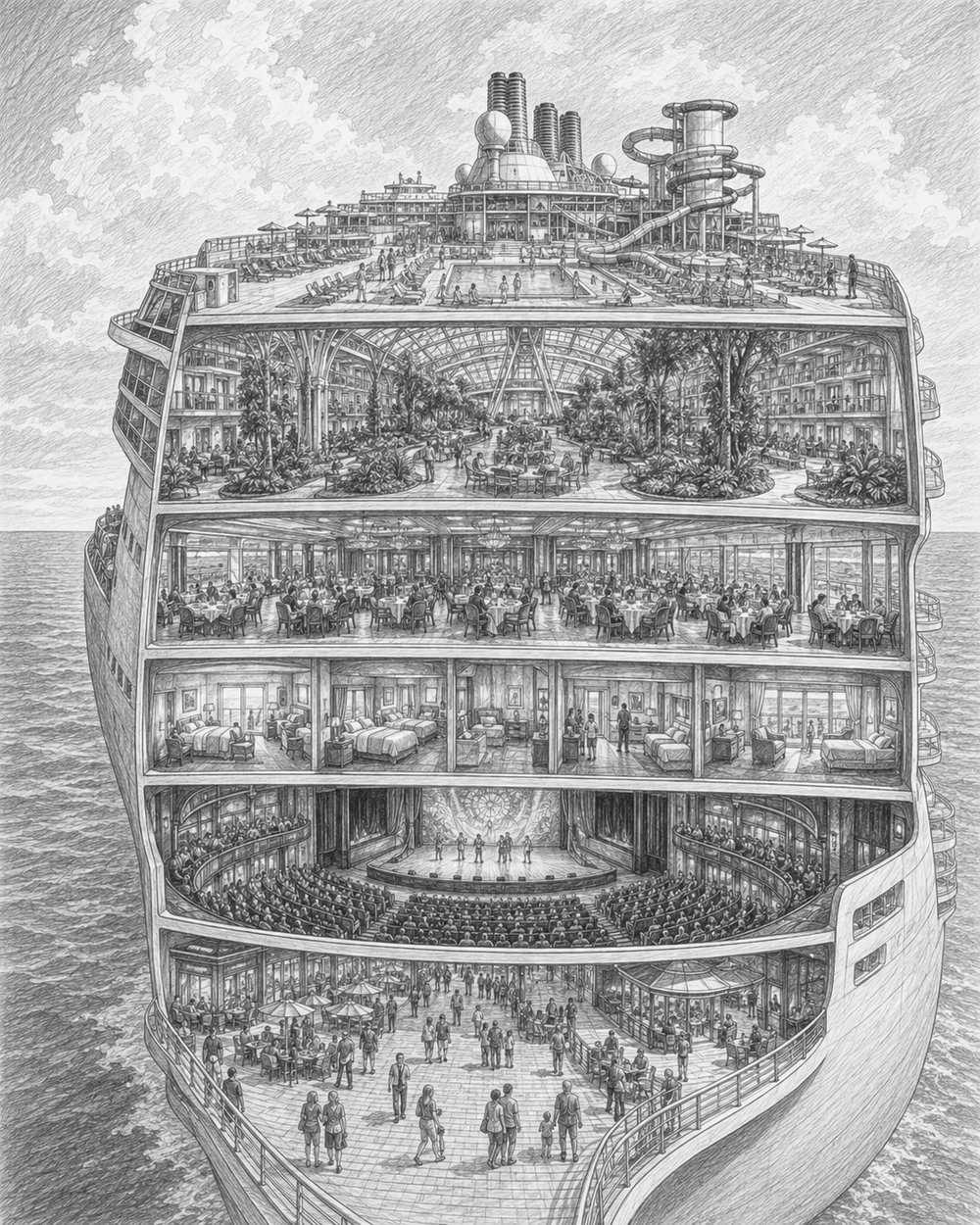
Older Carnival ships funneled most of their bars, shops, and lounges along a single indoor promenade. Celebration replaces that layout with six themed Zones, each designed to feel like its own place. Understanding them is the fastest way to learn your way around, because once you know the Zones, you know roughly where everything lives.
Grand Central
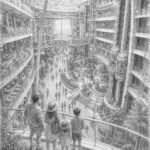
Grand Central is the heart of the ship, a three-deck atrium with floor-to-ceiling windows that look directly out to sea and a stage built into the space. This is a genuine break from Carnival tradition. On older ships the atrium faced inward; here it faces the water, so the room changes character with the light and doubles as a performance venue for live music and shows. Expect to pass through it constantly, and expect it to be where a lot of the ship’s energy gathers in the evening.
820 Biscayne
820 Biscayne is the neon Miami tribute, a nightlife Zone of bars and after-dark energy that leans into the ship’s home city. It is also home to Emeril’s Bistro 1396, so the Zone is not purely about drinks. If you are the kind of traveler who likes a lively night, this is your corner of the ship. If you are not, it is worth knowing where it is, because you will want your cabin away from it.
The Gateway
The Gateway is travel-themed, a nod to the idea of the ship as a passage to somewhere else, and it houses the Golden Jubilee Lounge that celebrates Carnival’s 50th. It tends to be one of the more atmospheric Zones, good for a quieter drink and a sense of occasion.
La Piazza
La Piazza brings Italian flavors, an Italian-styled square with the food and feel to match. It is where you find the ship’s Italian dining and a slower, café-style pace during the day.
Summer Landing and Lido
Summer Landing is the laid-back pool Zone, with a pool, a whirlpool, and Guy’s Pig & Anchor barbecue nearby for casual eating with a view. Lido is the main pool Zone and the ship’s casual-dining engine, home to the buffet and the busiest daytime crowds. Between the two, you have distinct outdoor personalities: Lido for the party and the main pool, Summer Landing for something more relaxed.
Above and around these Zones sits the Ultimate Playground, the top-deck cluster of active attractions that gives Celebration its thrill-ride reputation.
The practical upshot of the Zone design is that the ship reads as a set of destinations rather than one route. You can build a day around a couple of Zones and barely see the others, or you can wander all six and never repeat yourself. It also spreads crowds out. On a single-promenade ship, everyone funnels through the same corridor; here the flow splits six ways, which keeps even a full sailing from feeling like one continuous crush. That is a real advantage on a vessel that can carry up to 6,500 people.
The top-deck attractions
The headline feature is BOLT, billed as “The Ultimate Sea Coaster” and the first roller coaster ever installed on a cruise ship. It is a top-deck electric coaster you drive yourself, reaching speeds of up to about 40 mph along an 800-foot track, and it carries an extra charge. It is genuinely a first-of-its-kind attraction, and it is worth reading the dedicated guide to the BOLT roller coaster if riding it is high on your list.
BOLT is not the only reason to head up top. The WaterWorks aqua park brings waterslides and splash zones, SportSquare adds a suspended ropes course, mini-golf, and games, and the whole Ultimate Playground area is built for guests who do not want to spend a sea day sitting still. Below the surface energy, the ship also carries a Cloud 9 Spa, a casino, and the Serenity adults-only retreat, so the active decks are balanced by places designed to slow down.
That contrast is deliberate and it is one of the ship’s quiet strengths. A family can spend the morning cycling between BOLT, the ropes course, and WaterWorks while another member of the party never leaves Serenity or the spa. Because those spaces live on different parts of the ship, the loud fun and the quiet retreat do not compete with each other. If your ideal cruise involves both a coaster and a silent sun lounger, Celebration is set up to give you each without compromise.
Capacity, decks, and the LNG design
Here is the ship at a glance, using only the confirmed figures for the class.
| Detail | Carnival Celebration |
|---|---|
| Class | Excel class (2nd of three) |
| Sisters | Mardi Gras, Carnival Jubilee |
| Gross tonnage | About 180,000 tons |
| Decks | About 20 |
| Guests (double occupancy) | About 5,300 |
| Guests (full) | Up to about 6,500 |
| Fuel | Cleaner LNG |
| Home port | Miami |
The LNG design is more than a technical footnote. Liquefied natural gas burns cleaner than the fuel older ships use, and building a ship around it is part of why the Excel class exists as a new platform rather than a stretched older hull. The scale also explains the Zone concept: at 180,000 tons and 20 decks, a single promenade would leave the ship feeling like a long hallway. Splitting it into neighborhoods keeps distances human and gives each space a purpose.
One practical consequence of the size is that a big ship carrying up to 6,500 people rewards a little planning. Knowing which Zone you are heading to, and where your cabin sits relative to it, saves a surprising amount of walking. For a fuller orientation to daily logistics, the what to expect on Carnival Celebration overview is a useful companion to this design-focused guide.
Dining across the Excel class
Celebration follows the Fun Ship formula of a lot of included food plus a slate of extra-charge specialty rooms. That mix is one of the strongest arguments for the ship: you can eat well without ever paying beyond your fare, and then choose to trade up on the nights you want something special.
Included dining
Your fare covers the two main dining rooms, where you can choose set dining times or Your Time dining, plus the Lido Marketplace buffet. Beyond those, the free casual spots do a lot of heavy lifting: Guy’s Burger Joint for burgers, BlueIguana Cantina for tacos and burritos, Pizzeria del Capitano for pizza, and Street Eats for quick bites. The Seafood Shack is also aboard, though it runs at market price rather than free.
Specialty dining
When you want to make a night of it, the specialty rooms carry an extra charge and cover a wide range of cuisines. The lineup includes the Fahrenheit 555 Steakhouse, Emeril’s Bistro 1396 in 820 Biscayne, Rudi’s Seagrill, Cucina del Capitano, ChiBang!, Bonsai Sushi, and Guy’s Pig & Anchor Smokehouse. That is a broader specialty spread than older Carnival ships offered, and it is one of the ways the Excel class uses its extra room.
Drinks, payment, and connectivity
Carnival’s Cheers! package covers most drinks if you would rather not think about individual tabs. Everything aboard runs on your Sail & Sign card, the cashless account tied to your room, and gratuities are added to your bill. Wi-Fi plans are sold aboard if you need to stay connected. As always, confirm the current venues, hours, and package details in the Carnival HUB app once you are on board, since offerings can shift between sailings.
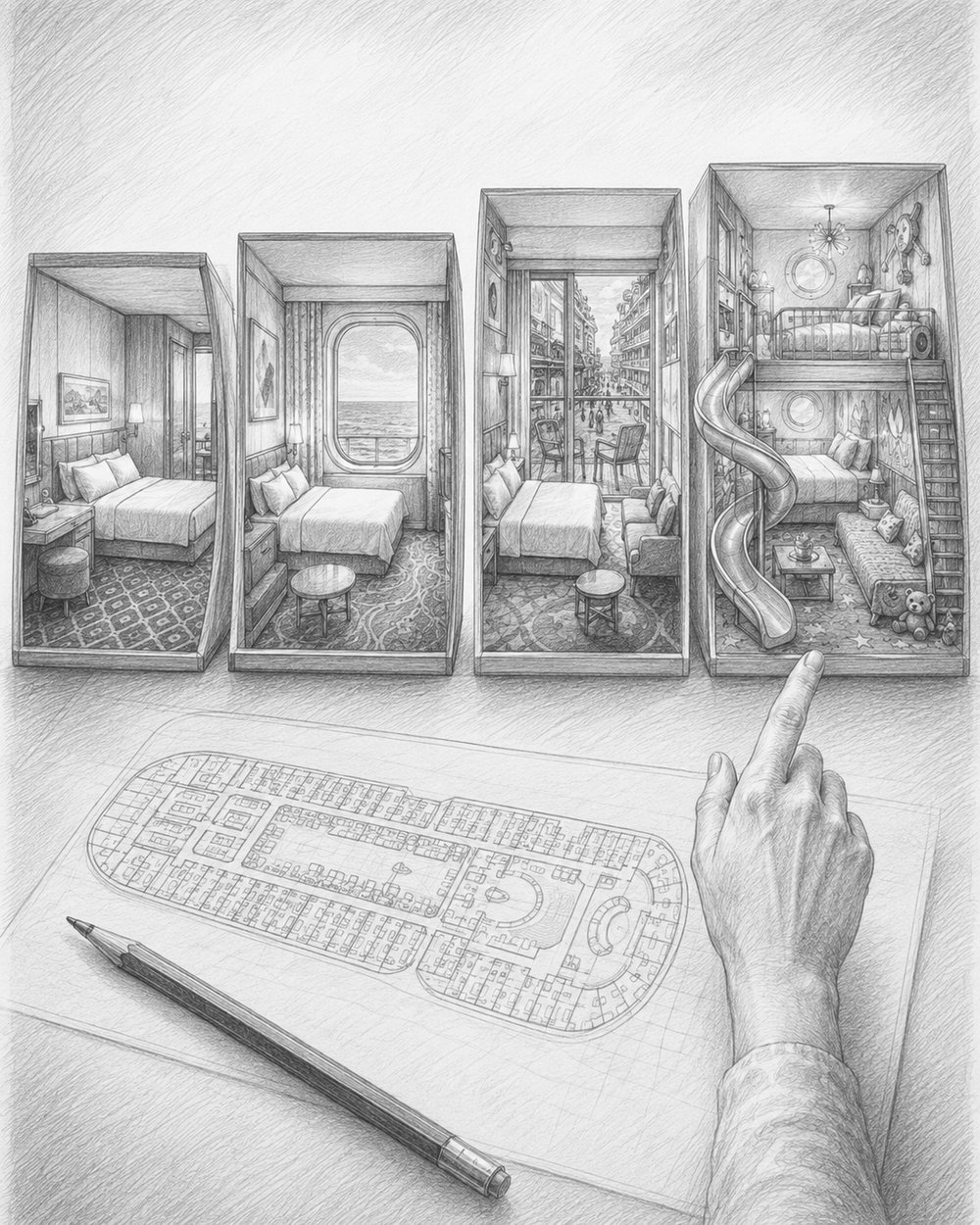
Cabin categories on Carnival Celebration
The cabin range runs from simple interiors all the way up to Excel suites, and the Excel class introduced a couple of options you will not find on older Carnival ships. Choosing well is mostly about matching the category to how you actually travel.
- Interior — the value pick, and perfectly comfortable on the mid-decks.
- Ocean View — a window and natural light without the balcony premium.
- Balcony — including extended balconies and Cloud 9 Spa balconies with spa access.
- Family Harbor — cabins with access to the private Family Harbor Lounge.
- Cloud 9 Spa staterooms — rooms tied to the spa for guests who want that focus.
- Suites — up to the Excel Presidential and Excel Aft-View suites, which include access to the exclusive Loft 19 sundeck.
Which category to pick
For the best value, an interior or a balcony on the mid-decks is hard to beat: you are central, you are away from the noisiest zones, and you are not paying for perks you may not use. Families traveling with kids should look hard at the Family Harbor cabins, which sit forward on the lower decks and come with the Family Harbor Lounge as a home base. As for the big question, is an Excel suite with Loft 19 worth it? Only if you genuinely value the private sundeck and the suite perks. If a quiet deck of your own matters to you, it delivers. If not, the money is better spent elsewhere.
Cabins to think twice about
Always cross-check the deck plan before you book, and be cautious about a few spots. Rooms directly under the Lido pool deck or the buffet can pick up early-morning noise from deck chairs and setup. Cabins near the 820 Biscayne nightlife can run late and loud. Forward high-deck rooms feel motion more than mid-ship rooms, which matters if anyone in your party is prone to seasickness. And on the lower promenade decks, some balconies are obstructed or partially covered, so confirm the view before you commit.
How Celebration compares to Mardi Gras and Jubilee
Because the three Excel sisters share a hull design, they have far more in common with each other than any of them has with an older Carnival ship. All three run the six-Zone layout, all three are LNG-powered, and all three carry BOLT on the top deck. If you have sailed one, you will find your feet quickly on another.
What distinguishes Celebration is her theme and her home. Her Zones lean into Miami, most obviously in 820 Biscayne’s neon tribute, and she sails from Miami itself, the city that has been central to Carnival’s story since the beginning. She also launched in the fiftieth-anniversary year, which is why the Golden Jubilee touches run through the ship. Mardi Gras and Jubilee tell their own stories through their Zones; Celebration’s story is Miami and the milestone. The bones are shared, but the personality is her own.
The other thing that sets these Fun Ships apart from Carnival’s earlier fleet is the balance of free and paid. There is a lot of no-cost food and entertainment baked in, from pool parties and the Punchliner comedy club to live music and Playlist Productions shows, alongside the extra-charge coaster, spa, and specialty restaurants. That mix of casual, lively, family-friendly value with big-ship thrills is the core of what the Excel class is selling.
It is worth being clear-eyed about what that balance means for your budget. The base fare genuinely buys a full cruise: three main dining rooms’ worth of options if you count the buffet and casual spots, nightly shows, comedy, and the pools cost nothing beyond what you have already paid. The extras are exactly that, extras, and they are optional. You can sail Celebration and spend almost nothing more, or you can layer on BOLT, a Cheers! package, and a few specialty dinners and lift the experience considerably. Knowing which camp you fall into before you board makes the Sail & Sign statement far less of a surprise at the end of the week.
Where the ship fits your trip
Celebration runs seven-day Caribbean and Bahamas voyages out of PortMiami, with itineraries that can call at Carnival’s new private Celebration Key, the private island of Half Moon Cay, Nassau, Cozumel and Costa Maya in Mexico, Mahogany Bay on Roatán, and Grand Cayman. Exact ports vary by sailing and by Eastern or Western routing, so the ship you are reading about here is only half the story of any given cruise. If the destinations are what you are weighing, the Western Caribbean ports guide breaks down the stops in detail. First-timers, meanwhile, will find the first-time Carnival Celebration guide a good place to start before you sail.
Whatever the routing, confirm your current schedule, ports, and venue hours in the Carnival HUB app, and treat this ship guide as the piece that explains the vessel carrying you there.
Get the complete Carnival Celebration playbook
If you want every Zone, cabin, and dining decision mapped out before you board, “The Ultimate Guide to Sailing on Carnival Celebration” is written for exactly that. It is part of the Ultimate Ship Guides series by Leo Sotropa, with clear action steps in every chapter so you always know your next move.
Frequently asked questions
What is the Excel class?
The Excel class is Carnival’s family of its largest ships, made up of Mardi Gras, Carnival Celebration, and Carnival Jubilee. Celebration is the second of the three. They are the first Carnival ships powered by cleaner LNG fuel, weigh about 180,000 gross tons, span roughly 20 decks, and carry around 5,300 guests at double occupancy.
How is Carnival Celebration different from older Carnival ships?
The biggest difference is the layout. Instead of one long indoor promenade, Celebration organizes its public spaces into six themed Zones, each with its own atmosphere. She also runs on cleaner LNG fuel, carries the BOLT roller coaster on the top deck, and features a three-deck Grand Central atrium that faces out to the sea rather than inward.
What are the six Zones?
They are Grand Central, the atrium hub with sea views and a stage; 820 Biscayne, a neon Miami nightlife tribute; The Gateway, travel-themed and home to the Golden Jubilee Lounge; La Piazza, for Italian flavors; Summer Landing, a laid-back pool area with Guy’s Pig & Anchor barbecue; and Lido, the main pool and casual-dining Zone. The top-deck Ultimate Playground sits above them.
Is Carnival Celebration the same as Mardi Gras and Jubilee?
They share the same Excel class design, so all three have the six-Zone layout, LNG power, and BOLT. Celebration sets herself apart with a Miami theme, most visibly in 820 Biscayne, and she sails from Miami. She also launched in Carnival’s fiftieth-anniversary year, which is reflected in touches like the Golden Jubilee Lounge.
What dining is included versus extra?
Included dining covers the two main dining rooms, the Lido Marketplace buffet, and free casual spots like Guy’s Burger Joint, BlueIguana Cantina, Pizzeria del Capitano, and Street Eats. Specialty rooms carry an extra charge and include Fahrenheit 555 Steakhouse, Emeril’s Bistro 1396, Rudi’s Seagrill, Cucina del Capitano, ChiBang!, Bonsai Sushi, and Guy’s Pig & Anchor Smokehouse. The Seafood Shack runs at market price.
Which cabin should I book?
For value, an interior or balcony on the mid-decks works well. Families should consider the Family Harbor cabins forward on the lower decks, which include access to the Family Harbor Lounge. Excel suites add access to the exclusive Loft 19 sundeck, which is worth it only if you value the private space and perks. Check the deck plan to avoid noise under the Lido deck or near 820 Biscayne, and confirm any lower-deck balcony is not obstructed.
Where does Carnival Celebration sail from?
She sails seven-day Caribbean and Bahamas voyages from PortMiami. Itineraries can include Celebration Key, Half Moon Cay, Nassau, Cozumel, Costa Maya, Mahogany Bay on Roatán, and Grand Cayman, with exact ports varying by sailing and by Eastern or Western routing. Confirm your specific schedule and ports in the Carnival HUB app.
Ready for the whole ship in one place? It is all in The Ultimate Guide to Sailing on Carnival Celebration.
Get the book →
Meet Leo: The Heartbeat Behind ‘A Country A Month’
Journeying through the pages of A Country A Month, you might often feel the rhythm of a storyteller’s heartbeat, pulsating through each line, each image, and each adventure shared. That heartbeat belongs to none other than our remarkable website editor, Leo.
With a lens in one hand and a pen in the other, Leo seamlessly marries his passions for photography and writing. His eye captures moments that words can barely describe, yet his eloquence brings those images to life, transcending borders and connecting us all through shared stories. An avid traveler, every country he’s visited has added another chapter to his expansive tale, and through our platform, he generously shares these chapters with us.