What is the Edge class, and how does Celebrity Ascent fit into it? The Edge class is Celebrity’s modern-luxury generation of ships, built around a handful of ideas that changed how the line designs a hull: the Magic Carpet riding the outside of the ship, the Infinite Veranda that turns a whole stateroom into an open-air balcony, and the three-deck living garden called Eden. Ascent is the fourth ship in that family and one of the stretched sisters, roughly twenty metres longer than the original Edge. That extra length is not cosmetic. It buys a two-level Retreat sundeck, an enlarged Rooftop Garden, the tiered Sunset Bar at the stern, and Le Voyage by Daniel Boulud, so Ascent keeps everything that made the class distinctive while adding room to breathe. This guide walks through the class DNA, what the stretch actually changes, the signature spaces, the cabin hierarchy, and who the ship suits.
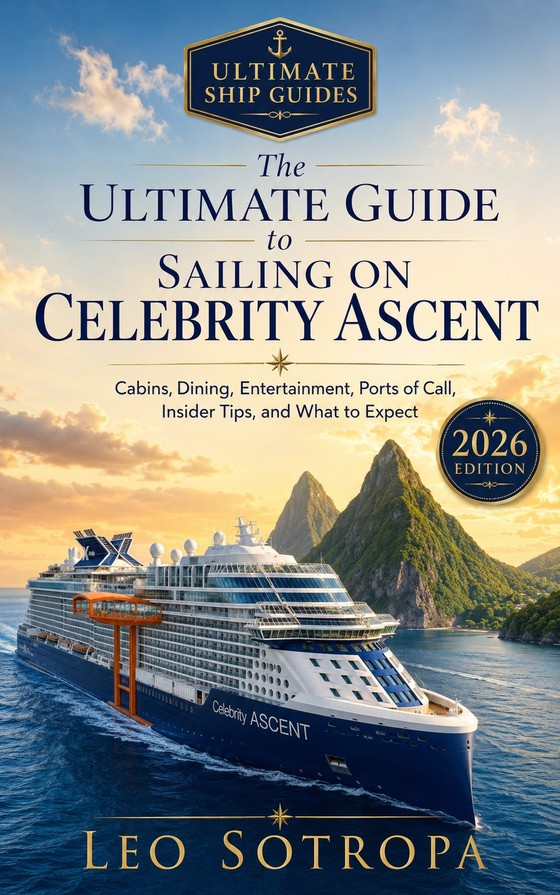
Everything in this article and far more, deck by deck, in The Ultimate Guide to Sailing on Celebrity Ascent.
Get the book →What the Edge class actually is
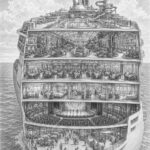
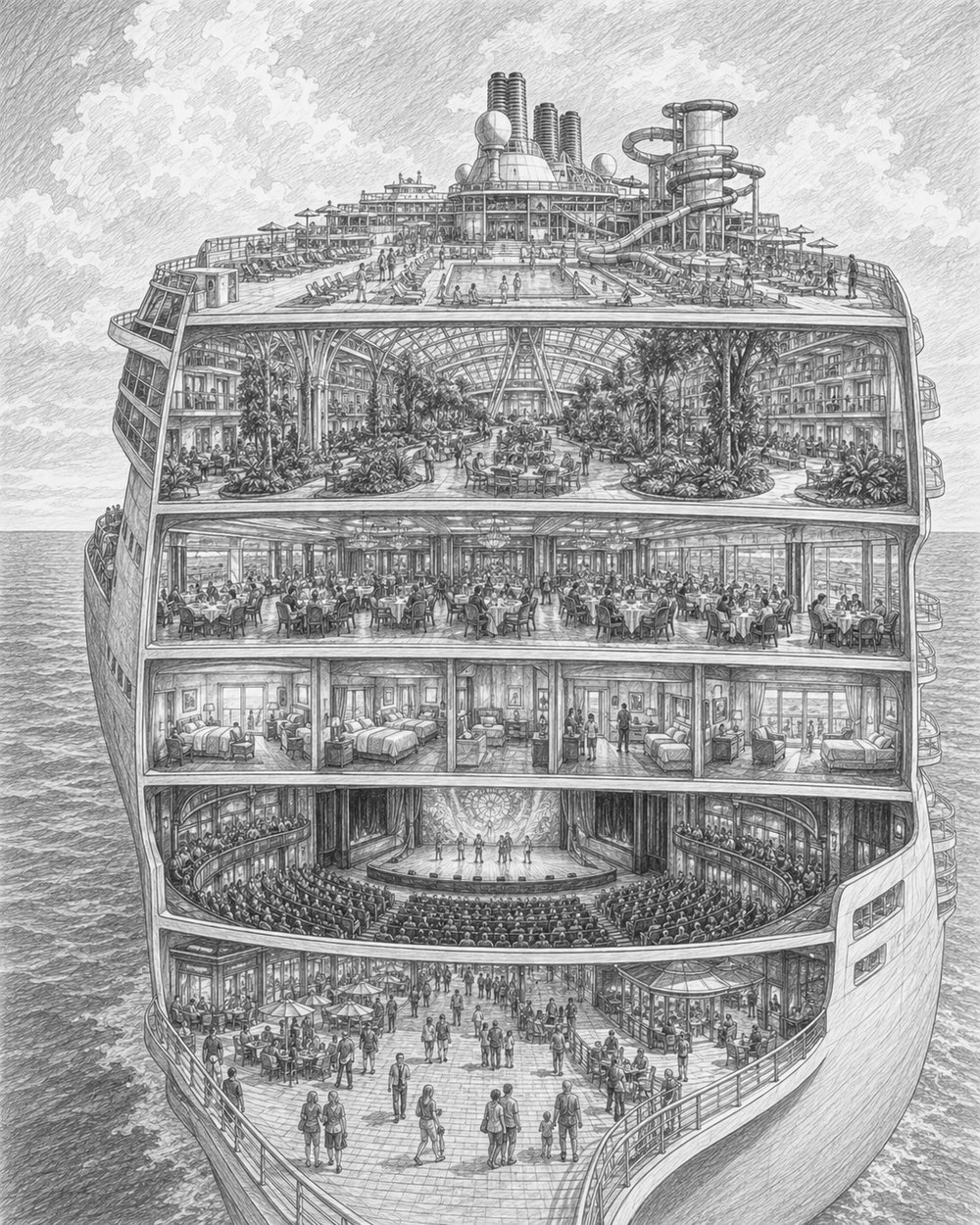
When Celebrity introduced the Edge class, it stopped iterating on the older Solstice-class template and started over. The result is a ship that looks and moves differently from anything the line had built before. Ascent carries that thinking forward as the fourth ship in the class, at about 140,600 gross tons, with roughly seventeen guest decks and around 3,260 guests at double occupancy. That is a mid-to-large ship by industry standards, but it never feels like a floating city, because the public spaces are broken into distinct, well-defined rooms rather than one continuous promenade.
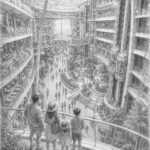
The design language Celebrity calls modern luxury runs through all of it: muted materials, a lot of glass, sightlines that keep pulling your eye back to the sea. Three features define the class and separate it from the rest of the market. The first is the Magic Carpet, a cantilevered platform on the starboard side that actually rides up and down the outside of the hull and changes function depending on where it stops. The second is the Infinite Veranda, a stateroom design where the whole room opens to the ocean at the touch of a button rather than sending you out onto a separate balcony. The third is Eden, three decks of glass and greenery at the stern that shift from a calm daytime lounge to a bar and performance space after dark. Ascent has all three, and understanding them is the fastest way to understand why the class feels the way it does.
How the stretched sisters differ from the original Edge
The Edge class did not stay static. The first two ships were built to one length, and the later pair, including Ascent, were stretched by about twenty metres. If you have sailed the original Edge and step aboard Ascent, the bones are familiar but the top of the ship feels noticeably more generous. That extra hull length was spent almost entirely on space you actually use rather than on more cabins crammed in.
The most visible change is up in the suite enclave. On the stretched sisters, the Retreat sundeck becomes a two-level space rather than a single deck, which gives suite guests a much larger private area with more loungers, more shade, and a proper sense of separation from the rest of the ship. The Rooftop Garden is enlarged as well, so the outdoor entertainment lawn near the top of the ship has more room for events, films under the stars, and daytime lounging. At the stern, the stretch adds the tiered Sunset Bar, a stepped outdoor space that is one of the best sail-away spots on the ship, angled to catch the light as you pull away from port. And the stretch made room for Le Voyage, the first signature restaurant at sea from chef Daniel Boulud, which the original two ships were not built around.
Put simply, the stretch did not reinvent the class. It relaxed it. Ascent gives you the same signature ideas with more square footage in the places where crowding used to be most likely, which matters more the longer your voyage runs. On a two-week itinerary with several sea days, that extra outdoor space is the difference between hunting for a lounger and simply finding one.
| Feature | Original Edge | Stretched sisters (incl. Ascent) |
|---|---|---|
| Hull length | Baseline | About 20 metres longer |
| Retreat sundeck | Single level | Two levels |
| Rooftop Garden | Standard | Enlarged |
| Sunset Bar | Not tiered | Tiered, stepped stern space |
| Le Voyage by Daniel Boulud | Not built in | Signature venue |
The signature spaces on Ascent
The Magic Carpet
The Magic Carpet is the piece of the ship people photograph before they board, and it earns the attention. It is a cantilevered platform, roughly the footprint of a tennis court, that moves vertically along the outside of the starboard hull. At different decks it does different jobs: it can be a specialty dining venue, an extension of the pool deck, or a tender embarkation platform when the ship is anchored offshore. On a long voyage, the Magic Carpet is also one of the best vantage points on the ship for a slow-motion event, and there is no slower or more absorbing event than a partial transit of the Panama Canal, watched from the platform as it sits level with the lock wall.
Eden
Eden occupies three decks at the aft end of the ship, wrapped in glass and filled with living greenery. By day it is one of the calmest rooms afloat, good for a coffee and a book with the wake sliding past below. In the evening it changes character entirely, becoming a bar and a stage for the performers Celebrity calls its Eden cast, with a menu at the Eden Restaurant for guests who want to make a night of it. It is a genuinely original space, and it is the clearest expression of what modern luxury is trying to do: keep you connected to the sea rather than sealing you inside.
The Infinite Veranda
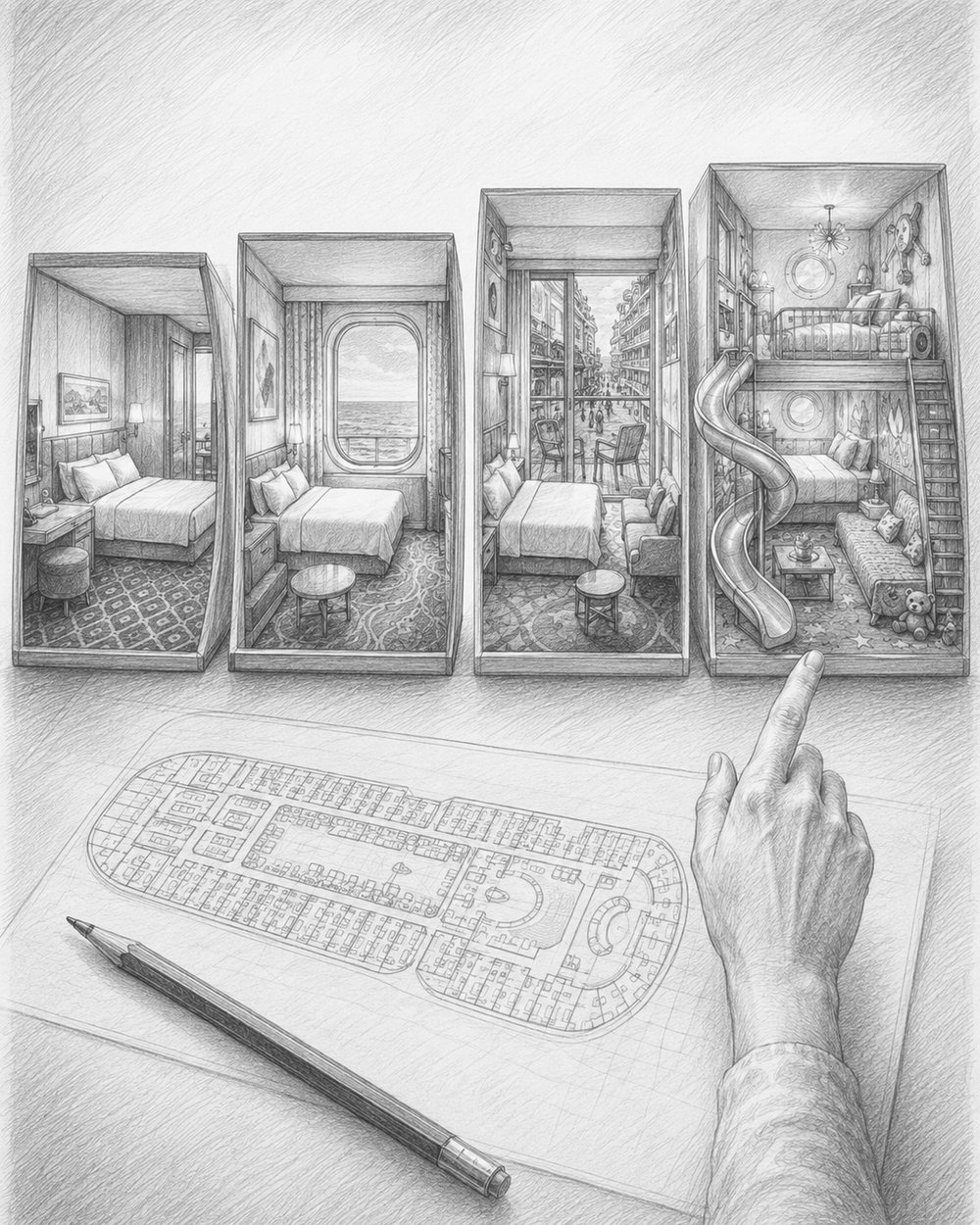
The Infinite Veranda is the class’s headline cabin idea. Instead of a separate balcony sectioned off behind a sliding door, the entire stateroom opens to the outside. The top half of the glass wall lowers and a bifold door folds back, so the front of your room becomes an open-air veranda while the bed and living area stay in climate-controlled comfort a few steps back. The trade is honest: you gain interior space and a wall of glass, and you lose the traditional deep balcony with its own separate furniture. On the sea days and canal day that define Ascent’s longer itineraries, that wall of open air is the reason the cabin choice matters so much.
The Solarium and the outdoor decks
The glass-domed Solarium is the adults’ sanctuary and one of the best rooms on any sea day, or on the day the ship spends inching across Gatún Lake. Because it is enclosed in glass, it stays comfortable in strong sun and gives you a front-row seat to the passing landscape without the wind. Up top, the enlarged Rooftop Garden and the tiered Sunset Bar give Ascent two very different outdoor moods: the Rooftop Garden for daytime lawn lounging and evening events, the Sunset Bar for the sail-away drink at the stern.
The cabin hierarchy, from Inside to The Retreat
Ascent’s accommodation ladder is straightforward once you know the rungs. Inside staterooms sit at the base for guests who treat the cabin as a place to sleep. Above them are the Infinite Veranda staterooms, the class signature and the category most guests should look at first. Concierge Class adds a few service touches and better locations. AquaClass is the spa-adjacent tier, and its two real benefits are dining at the exclusive restaurant Blu and easy access to the Solarium. Sunset Verandas at the aft of the ship give you the traditional deep balcony overlooking the wake for guests who want the classic balcony experience the Infinite Veranda trades away. At the top sits The Retreat.
The Retreat is Celebrity’s suite enclave, and on Ascent it is a ship within the ship. Suite guests get a private sundeck, which on the stretched sisters is the two-level space, along with the Retreat Lounge and the suites-only restaurant Luminae. All of it comes bundled under the fare structure the line calls Always Included, which folds a drinks package, Wi-Fi, and gratuities into the price so you are not adding those on afterward.
- Best value: an entry Infinite Veranda, which gets you the class’s signature cabin without paying up.
- Best all-round: a midship Infinite Veranda on the mid-decks, quiet and central with the least motion.
- Best for space: The Retreat, worth it on a fortnight if the budget allows, for the suite, the two-level sundeck, and Luminae.
- For the traditional balcony: a Sunset Veranda aft, if you want deep-balcony furniture and a wake view.
A few rooms are worth avoiding, and you should always confirm on the current deck plan before you book. Skip cabins directly under the pool deck or the buffet, where early-morning noise carries. Skip anything near the nightlife or under Eden’s late shows if you are a light sleeper. Forward high-deck rooms feel the most motion, which is worth weighing on the long open-water stretches, and a handful of lower-deck verandas are obstructed by lifeboats or structure. On a two-week voyage the cabin matters more than it does on a quick getaway, because a Veranda earns its keep on the long sea days and the canal day.
Dining across the class
The Edge class rethought the main dining room too. Instead of one enormous room, Ascent has four included main dining rooms, each with its own name and character: Cosmopolitan, Cyprus, Normandie, and Tuscan. You can rotate through them or settle on a favourite. Alongside them, the Oceanview Café and the complimentary Eden Café cover casual meals through the day.
Above the included tier is a strong specialty lineup that carries an extra charge. Le Voyage by Daniel Boulud is the flagship, the chef’s first signature restaurant at sea and one of the clearest reasons to choose a stretched sister. Fine Cut Steakhouse handles the classic steak dinner, Raw on 5 covers sushi and raw-bar dining, the Eden Restaurant turns the garden into a dinner destination, and the Rooftop Garden Grill does relaxed grilling up top. Suite guests dine at Luminae, and AquaClass guests dine at Blu, so your cabin tier quietly shapes your dining as much as your reservations do.
Where Ascent sails and why the class suits it
Ascent currently runs the kind of long voyages the seven-night ships never reach: ten, eleven, and fourteen nights from Fort Lauderdale, out of Port Everglades. The rhythm of these itineraries is deliberate: sea days out, a cluster of demanding ports in the middle, and sea days home, usually four or five sea days in total. That is exactly the kind of sailing the Edge class is built for, because the ship itself is a destination on the days between ports, and the stretched hull gives you the extra outdoor room to enjoy them.
The headline day is the Panama Canal. Ascent makes a partial transit, entering from the Caribbean side through the Gatún locks, where fresh water and gravity lift the ship about eighty-five feet, crossing Gatún Lake, and coming back out. There are no pumps involved; the whole system runs on gravity and rainwater, which is part of what makes the engineering worth watching up close rather than from a lounge chair inside. It takes most of a day and it is the day many guests book the cruise for. Be up early and stay outside: the Magic Carpet sitting level with the lock wall, the glass-roofed Solarium, and your own Infinite Veranda are three of the best places to watch it unfold, and the choice between them is one more reason the cabin and the ship’s layout matter on this itinerary. The canal day is usually paired with a call at Cartagena, Colombia, with its walled Old Town, its forts, and its Caribbean colour.
That rhythm, sea days out, a demanding cluster of ports, and sea days home, is what separates these voyages from the seven-night circuit and what makes the ship choice so consequential. On a short cruise you are ashore almost every day and the ship is mostly a place to sleep. On Ascent’s ten-, eleven-, and fourteen-night runs you will spend four or five full days at sea, and the ship has to hold your interest through all of them. This is exactly where the stretch pays off. The enlarged Rooftop Garden, the two-level Retreat sundeck, the tiered Sunset Bar, and the extra elbow room across the top decks mean the ship absorbs a full complement of guests on a sea day without the scramble for space you feel on tighter hulls. The Sunset Bar in particular becomes the natural gathering point as the ship pulls away from each port, its stepped tiers angled to catch the light on the water.
The rest of the map plays to independent travellers. The ABC islands, Aruba, Curaçao, and Bonaire, sit outside the hurricane belt, run dry and desert rather than rainforest, and are Dutch and among the easiest islands anywhere to explore on your own. In Aruba you have Eagle Beach, the desert interior and Arikok National Park, and the Antilla wreck offshore. Curaçao gives you the painted Handelskade waterfront, the Queen Emma pontoon bridge that swings open across the harbour, and a synagogue dating to 1651. Bonaire is the quiet standout, with a marine park protected for decades, world-class shore diving you can do straight off the beach, Klein Bonaire just offshore, the flamingos, and the salt pans. The Windwards bring St. Lucia, where the Pitons, the drive-in volcano, and the sulphur springs are best met from the water on a catamaran rather than a coach, and Barbados, coral-based and Atlantic-facing, the island that invented rum, with two coasts, cricket, and the colonial heart of Bridgetown. Fourteen-night voyages add ports like Antigua, St. Kitts, or Grenada. Ports vary by sailing, so always confirm the latest schedule in the Celebrity app.
The voyages begin and end at Fort Lauderdale, and the city rewards arriving early. Fly in the day before to take the embarkation-day pressure off, and use the extra time on the beaches, the canals that earned the city the nickname the Venice of America, Las Olas Boulevard, or a run out to the Everglades. It is a genuinely useful buffer against a delayed flight before a two-week commitment, and it lets you board Ascent rested rather than frazzled. The ABC islands guide goes deeper on the Dutch-Caribbean ports that anchor most of these itineraries.
Who the Edge class suits
The Edge class, and Ascent in particular, suits a specific kind of traveller. If you want a ship where the design keeps you connected to the sea, where sea days are a feature rather than a chore, and where the food and the private spaces reward paying attention, this is the class for you. Couples do especially well here, as do repeat cruisers who have done the seven-night circuit and want longer, more ambitious itineraries with a ship that can carry the sea days. Guests chasing a huge waterpark or a nonstop family-entertainment machine will be happier elsewhere, because that is not what modern luxury is chasing.
Between the two lengths, the stretched sisters are the ones to prioritise if the itinerary and price work, because the extra outdoor space and Le Voyage are meaningful upgrades on a long voyage. For a deeper look at the ship top to bottom, the full Celebrity Ascent cruise guide covers the practical detail, and what to expect on Celebrity Ascent sets the tone for first impressions. If the canal is the reason you are here, read the Panama Canal guide; and first-time Celebrity cruisers should start with first-time Celebrity Cruises on Ascent.
Get the complete Celebrity Ascent playbook
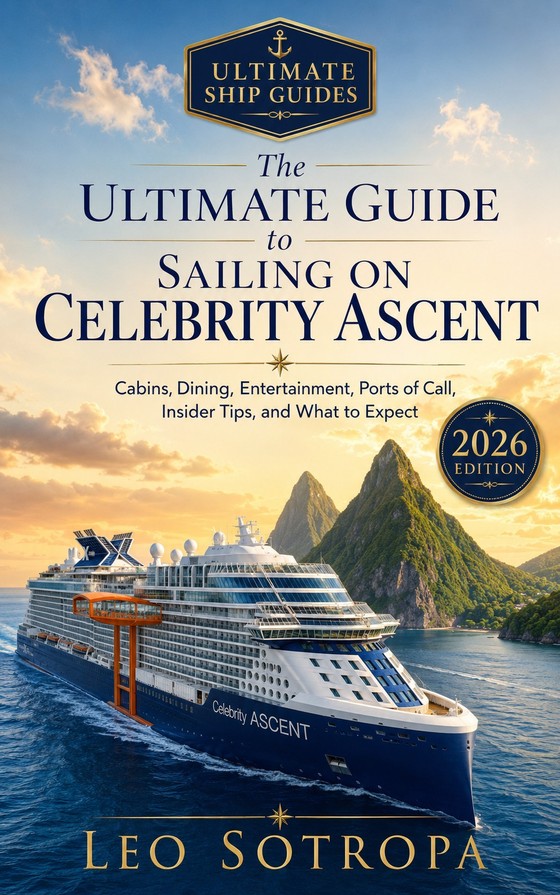
If you want the Edge class decoded deck by deck, “The Ultimate Guide to Sailing on Celebrity Ascent” walks you through every cabin category, venue, and canal-day tactic. It is part of the Ultimate Ship Guides series by Leo Sotropa, with clear action steps in every chapter so you board knowing exactly how to use the ship.
Frequently asked questions
What is the Edge class?
It is Celebrity’s modern-luxury generation of ships, built around the Magic Carpet, the Infinite Veranda, and Eden. Celebrity Ascent is the fourth ship in the class, so she carries all of the class signatures while adding the space the stretch buys.
How does Celebrity Ascent differ from the original Edge?
Ascent is a stretched sister, roughly twenty metres longer. That length adds a two-level Retreat sundeck, an enlarged Rooftop Garden, the tiered Sunset Bar at the stern, and Le Voyage by Daniel Boulud, none of which the original two ships were built around.
What is the Infinite Veranda?
It is the class’s signature stateroom design, where the whole room opens to the sea rather than putting you out on a separate balcony. The upper glass wall lowers so the front of the room becomes open-air, trading a deep traditional balcony for more interior space and a wall of glass.
What is The Retreat?
The Retreat is Celebrity’s suite enclave: a private sundeck, which on Ascent is the two-level version, the Retreat Lounge, and the suites-only restaurant Luminae. Suite fares come under Always Included, which bundles a drinks package, Wi-Fi, and gratuities.
What is AquaClass on Ascent?
AquaClass is the spa-adjacent cabin tier. Its two clearest benefits are dining at the exclusive restaurant Blu and easy access to the glass-domed Solarium, which makes it a strong pick for guests who want a quieter, wellness-leaning experience.
Which cabin should I book?
An entry Infinite Veranda is the best value, and a midship Infinite Veranda on the mid-decks is the best all-round choice for quiet and low motion. On a fortnight, The Retreat is worth it for space, the two-level sundeck, and Luminae if the budget allows. Confirm the deck plan before booking.
Who does the Edge class suit best?
It suits couples and repeat cruisers who want long, ambitious itineraries and a ship where sea days are a feature, with design that keeps you close to the sea. Guests wanting a big waterpark or nonstop family entertainment will be happier on a different line. Always confirm the latest venues and schedule in the Celebrity app.
Ready for the whole ship in one place? It is all in The Ultimate Guide to Sailing on Celebrity Ascent.
Get the book →
Meet Leo: The Heartbeat Behind ‘A Country A Month’
Journeying through the pages of A Country A Month, you might often feel the rhythm of a storyteller’s heartbeat, pulsating through each line, each image, and each adventure shared. That heartbeat belongs to none other than our remarkable website editor, Leo.
With a lens in one hand and a pen in the other, Leo seamlessly marries his passions for photography and writing. His eye captures moments that words can barely describe, yet his eloquence brings those images to life, transcending borders and connecting us all through shared stories. An avid traveler, every country he’s visited has added another chapter to his expansive tale, and through our platform, he generously shares these chapters with us.