The cost of retirement in Italy is determined less by the country than by the town, housing choice, transport needs, and healthcare plan.
Averages are useful for orientation and dangerous for decisions. Rome, Bologna, a small Abruzzo town, inland Puglia, and coastal Sicily do not produce the same budget. The largest difference is usually housing. The second is whether the location lets you live without a car.
The six costs that decide the plan
Housing
Use a year-round long-term rent, not a holiday listing. Add condominium charges, deposits, agency fees, heating, and the possibility that a furnished apartment still needs household items.
Utilities
Energy efficiency varies widely. Old stone buildings can be beautiful and costly to heat. Ask for prior bills and understand whether the system is individual or shared.
Transportation
A walkable town on a rail line may justify a higher rent. A cheap village that requires a car adds purchase, insurance, fuel, maintenance, parking, and licensing complications.
Healthcare
Budget separately for visa-compliant insurance, routine private care, medication, dental work, and any public-system enrollment cost that applies to your status.
Travel
Include trips to the United States, airport transfers, luggage, and travel during family emergencies. A cheap town four hours from an airport may carry a hidden cost.
Currency
Income in dollars and expenses in euros create exchange-rate risk. Test the budget with the euro meaningfully more expensive than it is today.
A better way to compare towns
Score each place on:
- Realistic rent
- Heating and cooling
- Car requirement
- Hospital access
- Rail and airport access
- Year-round population
- Rental availability
- Walkability
- Language support
- Social fit
Then compare total life cost, not rent alone.
Budget traps
Common mistakes include:
- Using a vacation rental as a housing benchmark
- Ignoring deposits and setup expenses
- Assuming public healthcare is immediately free
- Underpricing private insurance at an older age
- Forgetting U.S. trips
- Buying property before learning the area
- Building the plan around a favorable exchange rate
- Treating a tax incentive as guaranteed
How much cushion is enough?
The right reserve depends on health, home ties, income stability, and whether you own property in the United States. At minimum, separate the monthly budget from the relocation reserve and the return-home reserve.
If the plan uses savings each month, model the withdrawal over a long retirement and include inflation. A low Italian budget is not safe if it steadily drains the money required for later care.
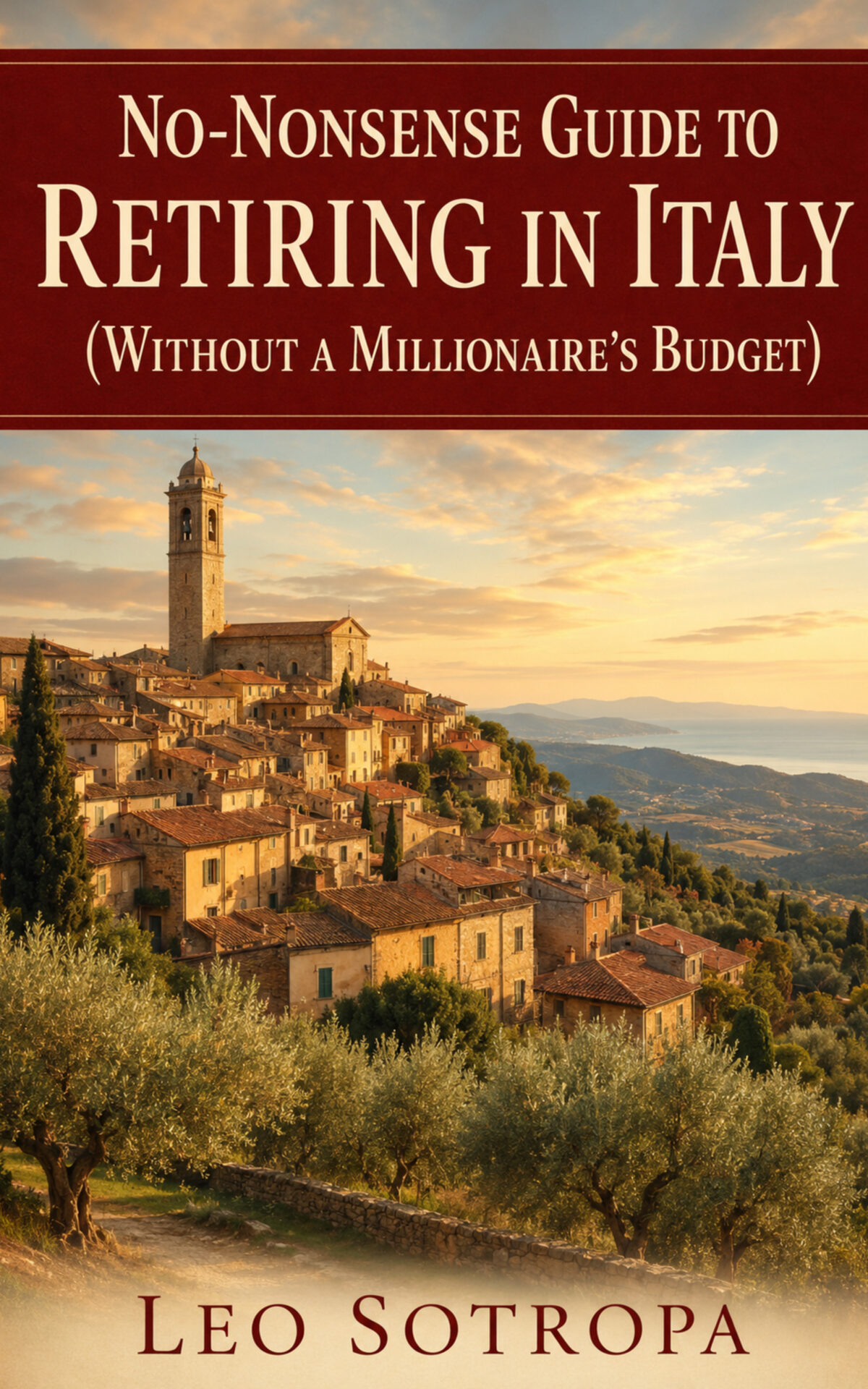
For a full planning framework, see No-Nonsense Guide to Retiring in Italy. If Social Security is your primary income, read Can You Retire in Italy on Social Security?.
Get the complete retirement guide
No-Nonsense Guide to Retiring in Italy by Leo Sotropa brings the budget, residency, healthcare, housing, tax, and location decisions together in one practical plan.

Meet Leo: The Heartbeat Behind ‘A Country A Month’
Journeying through the pages of A Country A Month, you might often feel the rhythm of a storyteller’s heartbeat, pulsating through each line, each image, and each adventure shared. That heartbeat belongs to none other than our remarkable website editor, Leo.
With a lens in one hand and a pen in the other, Leo seamlessly marries his passions for photography and writing. His eye captures moments that words can barely describe, yet his eloquence brings those images to life, transcending borders and connecting us all through shared stories. An avid traveler, every country he’s visited has added another chapter to his expansive tale, and through our platform, he generously shares these chapters with us.