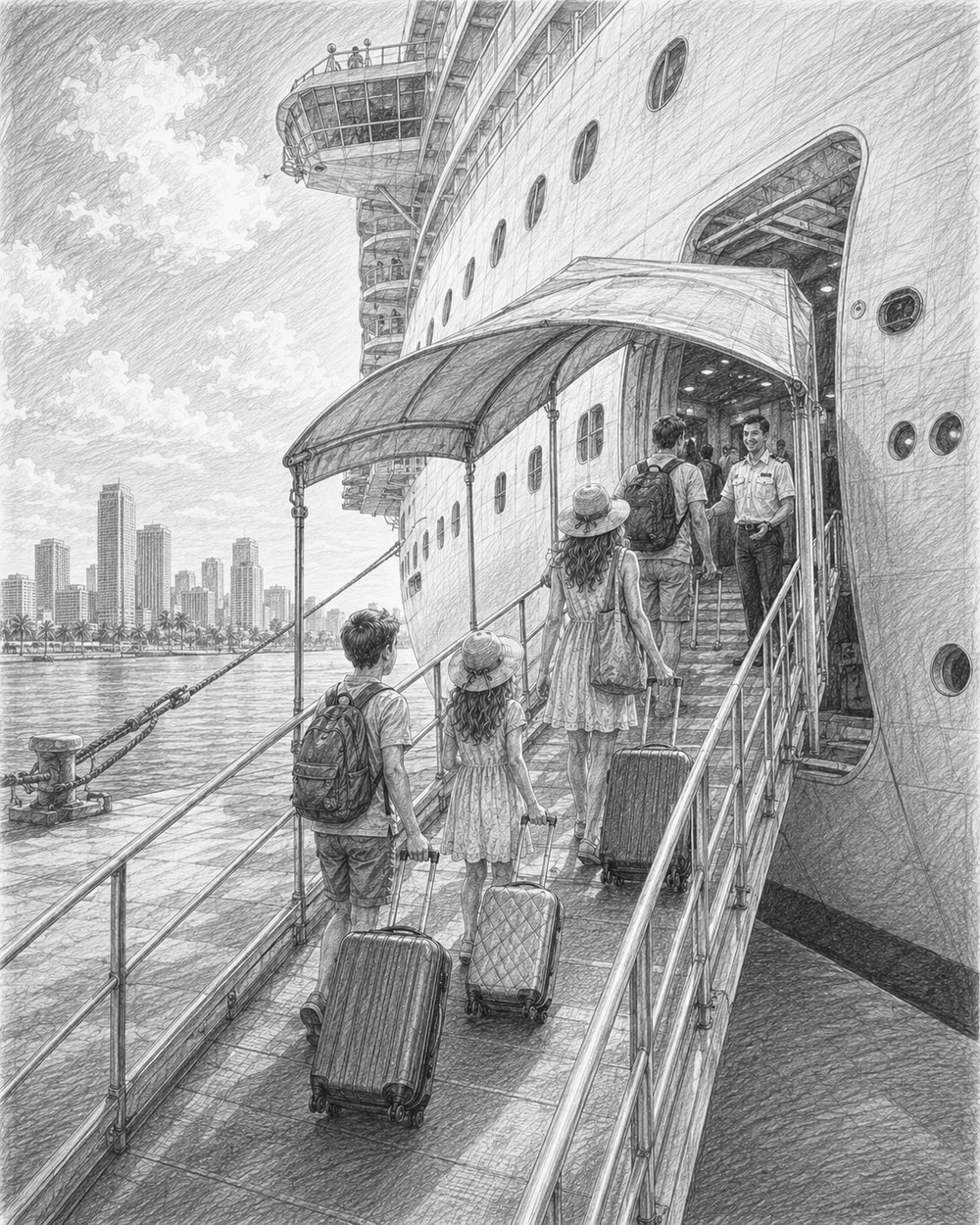
Is a short 3-to-5-night cruise on Independence of the Seas a good first cruise? Yes, and it might be the single easiest way to try cruising without committing a whole week. She sails warm-weather getaways from Florida to the Bahamas and Caribbean year-round, she is a big, busy, family-friendly ship with more to do than a short trip can hold, and the whole thing runs on a plastic card and a phone app. This guide walks a first-timer through booking, getting to the port, packing, embarkation day, how the onboard systems work, what documents you need, and the mistakes that trip up newcomers on a fast, fun short sailing.
Everything in this article and far more, deck by deck, in The Ultimate Guide to Sailing on Independence of the Seas.
Get the book →Why a short Independence of the Seas cruise is a smart first cruise
Independence of the Seas is the third Freedom-Class ship, a sister to Freedom and Liberty of the Seas, and she holds a small piece of Royal Caribbean history: she is the ship that started the line’s amplification program, the very first ship they amplified. That matters to a first-timer because it means she carries a family-thrilling feature set her sisters do not share, layered on top of the proven Freedom-Class layout. You get a ship of around 155,000-plus gross tons, roughly 15 guest decks, and about 4,375 guests at double occupancy (up to around 4,635 when she is completely full), sailing trips short enough to fit into a long weekend.
The short format is the appeal. A 3-, 4- or 5-night getaway lets you test whether cruising suits you without the cost or time of a seven-night voyage. If you love it, you graduate to longer sailings later. If you decide cruising is not for you, you have lost only a few days. The trade-off is pace: a short cruise is fast, with less downtime than a week-long trip, so the difference between a great first cruise and a frustrating one comes down to planning. For a fuller picture of the ship beyond the first-timer basics, the Independence of the Seas cruise guide covers her deck by deck.
Booking and choosing your sailing
The first real decision is which sailing to book, and on Independence that decision is mostly about home port and itinerary. She uses both Fort Lauderdale and Miami, and the two ports sail different routes, so where you fly and what you want to see should drive the choice.
Match the itinerary to what you want
From Fort Lauderdale, the short getaways typically run to Nassau and Perfect Day at CocoCay, Royal Caribbean’s private island in the Bahamas. From Miami, the short sailings lean Caribbean: Western routes to Falmouth in Jamaica and Nassau, and Eastern routes to Labadee, Royal Caribbean’s private peninsula in Haiti. Some Miami itineraries also fold in Cozumel and Key West. Shorter cruises simply visit fewer ports, so a 3-night trip may hit one stop while a 5-night trip fits two or three. Ports and lengths vary by sailing, so always confirm the exact itinerary before you book.
If your dream is a beach day, a Fort Lauderdale sailing built around CocoCay is hard to beat, and the deep dive on the Bahamas route from Florida is worth reading before you pick. If you would rather have a zip line over the water and an alpine coaster, look at an Eastern Caribbean sailing that includes Labadee, covered in detail in the Labadee, Haiti guide.
Choosing a cabin as a first-timer
Cabin categories run from Interior (including Promenade-view interiors that overlook the four-deck Royal Promenade) to Ocean View, Balcony, and suites up to the top tiers. On a 3- or 4-night trip, many first-timers do perfectly well in an Interior, because you spend so little waking time in the room. An Interior or Promenade-view Interior is the best value on a short getaway. If you want to spend a little more, a midship Balcony on the mid-decks is the best all-round choice for light, space and the steadiest ride.
A few rooms to avoid, which you can check on the deck plan before booking: cabins directly under the pool deck or the Windjammer, where early-morning noise carries; rooms over the Promenade venues or near the nightlife; forward high-deck rooms if anyone in your party is prone to motion; and lower-deck balconies where a lifeboat blocks the view. Prices shift constantly, so compare in the app rather than chasing a number, and read the best cabins guide if you want the full breakdown before you commit.
Getting to Fort Lauderdale or Miami
Both home ports are easy to reach, but confirm which one your sailing leaves from, because they are about an hour apart and it is a genuinely costly mistake to fly into the wrong city. Fort Lauderdale’s cruise port sits close to its own airport, and Miami has its own airport nearby too, so plan your flights and transfers around the correct port.
The single most important travel rule for a first cruise: fly in the day before. A short cruise leaves on schedule and will not wait for a delayed flight. Arriving the night before removes almost all of the stress and gives you a buffer against weather and mechanical delays. It also lets you enjoy the embarkation city a little. Fort Lauderdale has good beaches, the canals and water taxis, Las Olas Boulevard, and the Everglades nearby. Miami offers South Beach and Ocean Drive, Little Havana, the Art Deco district, and Wynwood. An extra night turns a pure logistics stop into a small bonus trip.
On sailing day, aim to arrive at the terminal within the check-in window you selected in the app. Getting to the port is straightforward by taxi, rideshare or a cruise-line transfer, and terminal staff will direct you through security and check-in.
What to pack for a short warm-weather trip
Packing for a 3-to-5-night Bahamas or Caribbean sailing is refreshingly simple. The climate is warm and sunny with high humidity and the chance of a passing tropical shower, so the goal is light, breathable clothing plus sun and water gear. Because the trip is short, you can pack light and still have everything you need.
- Light, breathable daytime clothing, plus one or two smarter outfits for a nicer dinner in the Main Dining Room.
- Swimwear (bring two so one can dry), a cover-up, and flip-flops or water shoes for the pools, the waterpark and beach days.
- Strong sun protection: sunscreen, a hat, and sunglasses. The sun at these latitudes is intense.
- A light rain layer or packable jacket for the occasional shower.
- A day bag for port stops and a small amount of US dollars for tips and small purchases.
- Any medication in your carry-on, plus motion-sickness remedies if you are unsure how you handle the sea.
US dollars work onboard and across the ports; the Bahamian dollar is pegged to the US dollar, and Labadee runs entirely on your SeaPass card, so you barely need cash there. Keep your embarkation-day essentials, documents and medication in a carry-on, because your checked bag is delivered to your cabin door later in the afternoon and may not arrive before the ship leaves.
Closed-loop cruises and your documents
These short getaways are closed-loop cruises, meaning they begin and end at the same US port. That has a real, practical effect on the paperwork. Because of it, US citizens can often sail with a passport or, in many cases, a birth certificate plus a government-issued photo ID. A passport is still strongly recommended, and it is required for some travelers.
Here is the honest advice: get a passport if you can. It is the cleanest document, it removes any ambiguity at check-in, and it is the thing that gets you home by air if you ever miss the ship in a foreign port. Rules can change, so check current US Customs and Border Protection guidance before you sail, and if you are not a US citizen, verify your specific entry requirements. Whatever document you carry, make sure the name on it exactly matches your booking. English is spoken throughout the Bahamas, Jamaica and Florida, so communication is not a barrier on these routes.
Embarkation day and your first hours aboard
Embarkation is smoother than most first-timers expect. You arrive at the terminal, pass through security, check in with your documents, and walk aboard, usually into the Royal Promenade or a nearby deck. Your cabin may not be ready the instant you board, so the trick is to have a plan for those first couple of hours rather than standing around with your carry-on.
A simple first-hours plan
Head up to the Windjammer Marketplace buffet for lunch, since it is open and rarely crowded right at boarding. While you are up there, walk the pool deck and get your bearings. Book anything time-sensitive early: a specialty dinner at Chops Grille, Giovanni’s Italian, or Izumi, and any show reservations. On CocoCay days, the Thrill Waterpark, the zip line, the balloon and the Coco Beach Club cabanas sell out, so reserve those as soon as you are aboard if not before. Then find your muster station for the safety drill, which is required before the ship sails.
Once your cabin is open, drop your bags, and remember your checked luggage will appear at the door later. By the time the ship pulls away from Florida, you will have eaten, oriented yourself, and locked in the reservations that matter. For a broader sense of the daily rhythm aboard, what to expect on Independence of the Seas is a good companion read.
How dining, the SeaPass card and the app work
Three systems run your onboard life, and understanding them early makes the whole cruise feel effortless.
The SeaPass card
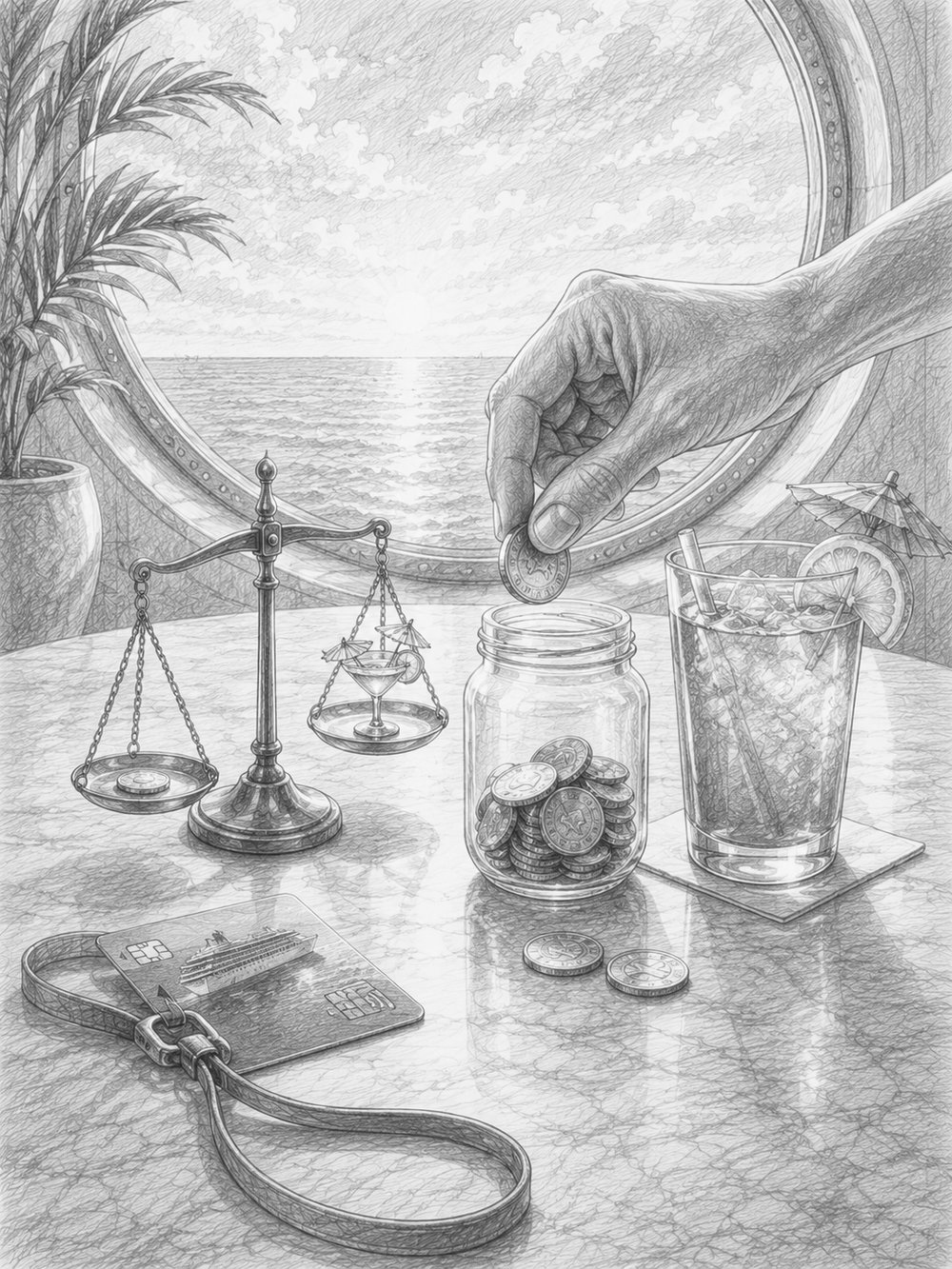
Your SeaPass card is your everything: room key, ID for getting on and off the ship, and your cashless onboard account. The cruise is essentially cashless, so you tap or hand over the card and charges post to your account, which you settle at the end. Keep it on you. In Labadee, the entire private peninsula runs on your SeaPass card, so you do not even need to carry cash ashore there. Daily gratuities are added to your account automatically, which covers the crew who look after you.
Dining
The core dining is included in your fare: the Main Dining Room for sit-down dinners, the Windjammer Marketplace buffet for casual meals, Sorrento’s for pizza, and Café Promenade for grab-and-go coffee and snacks on the Royal Promenade. On top of that sit the specialty restaurants, which cost extra: Chops Grille, Giovanni’s Italian (or its current equivalent), Izumi, and Playmakers Sports Bar. On a short cruise, one specialty dinner is a nice treat but not necessary; the included food is plentiful. Book any specialty meal early because a short sailing has fewer evenings and the good slots go fast.
The app
The Royal Caribbean app runs your day. It holds the daily schedule, deck plans, dining and show reservations, your account balance, and the venue list. Download it before you sail and use it to confirm your itinerary, check-in time, and any venue or port changes, since these can shift. Wi-Fi is a separate paid plan; the app itself works on the ship’s network for its core features. If you want to stay connected for messaging or work, buy a Wi-Fi plan, ideally before boarding when it is often cheaper.
| System | What it does | First-timer tip |
|---|---|---|
| SeaPass card | Room key, ID, cashless account | Carry it always; gratuities auto-added |
| Royal Caribbean app | Schedule, reservations, deck plans, balance | Download before sailing; confirm your itinerary |
| Wi-Fi plan | Internet for messaging and streaming | Paid add-on; buy before boarding to save |
Pacing a fast short cruise to fit the ship and the ports
This is where first-timers either shine or burn out. Independence has far more to do than a short cruise allows, so trying to see everything guarantees frustration. Pick your priorities and let the rest go.
Because she started the amplification program, Independence carries standout features her sisters do not have. The Sky Pad is a virtual-reality bungee-trampoline where you bounce in a harness while a VR headset drops you into a game, and its story is worth reading in the Sky Pad and amplified features guide. Battle for Planet Z is a glow-in-the-dark laser-tag arena that families and teens love. The Perfect Storm waterslides bring the dueling Cyclone and Typhoon racers. There is also the Observatorium, a Royal Escape Room puzzle adventure, and Splashaway Bay, a colorful kids’ aqua park.
Layered on top are the Freedom-Class signatures: the FlowRider surf-and-bodyboard simulator, which the Freedom Class first brought to sea; the four-deck Royal Promenade, the ship’s indoor social boulevard; Studio B, a real ice-skating rink with ice shows and open skating; plus a rock-climbing wall, pools, a sports court, mini-golf, a full theater, the adults-only Solarium, the Vitality Spa, Adventure Ocean for kids, and the Schooner Bar.
How to actually pace it
- On sea days, hit the headline attractions early before the queues build: the FlowRider, the Perfect Storm slides, the Sky Pad and laser tag.
- On port days, choose one thing per stop. At CocoCay, either relax on Chill Island and the Oasis Lagoon pool, both included, or splurge on the Thrill Waterpark and Daredevil’s Peak, the tallest waterslide in North America. In Nassau, pick Atlantis and Paradise Island, the forts, or the beaches, not all three.
- Book port tours early; the best ones, like Dunn’s River Falls from Falmouth or the Dragon’s Breath zip line at Labadee, sell out.
- Leave one evening completely unplanned. A short cruise runs hot, and an unhurried dinner and a show is often the best night.
Remember the short-cruise character: it is fast-paced and fun, with a huge share of first-time and family cruisers, so there is no pressure to be an expert. Confirm the latest schedule, ports and venue hours in the app, since a passing tropical system during hurricane season, which runs roughly June to November, can occasionally reshuffle an itinerary.
Common first-timer mistakes to avoid
- Flying in on sailing day. The ship will not wait. Arrive the night before, every time.
- Booking the wrong home port. Fort Lauderdale and Miami are an hour apart and sail different routes. Confirm which one your voyage leaves from.
- Skipping the passport. A closed-loop cruise may allow other documents, but a passport is the clean, recommended choice; check current CBP rules.
- Waiting to book attractions. CocoCay’s Thrill Waterpark, cabanas, zip line and popular tours sell out. Reserve as soon as you can.
- Overpacking. A short warm-weather trip needs light clothing, swimwear and sun protection, not a full wardrobe.
- Packing essentials in your checked bag. Keep documents, medication and swimwear in your carry-on; the checked bag arrives later.
- Trying to do everything. A short cruise cannot hold all of Independence. Pick priorities and enjoy the pace instead of fighting it.
- Forgetting the app. It runs your day; download it before you sail and check it often.
Get the complete Independence of the Seas playbook
Ready to plan every detail of your first sailing? “The Ultimate Guide to Sailing on Independence of the Seas” walks you through booking, cabins, dining, the ports and every onboard attraction with clear action steps in each chapter. It is part of the Ultimate Ship Guides series by Leo Sotropa, written to turn a nervous first-timer into a confident cruiser.
Frequently asked questions
Is a short Caribbean cruise a good choice for a first timer?
Yes. A 3-to-5-night getaway on Independence of the Seas is one of the easiest ways to try cruising. It is short enough to be low-commitment, the ship is packed with family-friendly attractions, and a huge share of the guests are first-timers and families, so you are in good company. The only real skill is pacing, since a short cruise moves fast.
Do I need a passport for a closed-loop cruise from Florida?
Because these are closed-loop cruises that start and end at the same US port, US citizens can often sail with a passport or, in many cases, a birth certificate plus a government photo ID. A passport is still strongly recommended and is required for some travelers, so get one if you can and check current US Customs and Border Protection rules. Non-US citizens should verify their own requirements.
Which is better, a Fort Lauderdale or Miami sailing?
It depends on the ports you want. Fort Lauderdale sailings typically run to Nassau and Perfect Day at CocoCay, ideal for a beach-focused trip. Miami sailings lean Caribbean, with Western routes to Falmouth in Jamaica and Eastern routes to Labadee in Haiti, and some add Cozumel or Key West. Match the home port to the itinerary you want, and confirm the exact route before booking.
What should I pack for a short warm-weather cruise?
Light, breathable clothing, swimwear (bring two), a cover-up, flip-flops, and strong sun protection like sunscreen, a hat and sunglasses. Add a light rain layer for the occasional tropical shower, one smarter outfit for a nicer dinner, and any medication in your carry-on. The trip is short, so you can pack light and still have everything.
How do payments and the SeaPass card work?
The cruise is cashless. Your SeaPass card is your room key, your ID for getting on and off, and your onboard account, with charges settled at the end. Daily gratuities are added automatically. US dollars work onboard and in the ports, and Labadee runs entirely on your SeaPass card, so you need very little cash.
Do I need the Royal Caribbean app and Wi-Fi?
The app is essential and free to use for core features on the ship’s network; it holds your schedule, reservations, deck plans and account balance, so download it before you sail. Wi-Fi for general internet is a separate paid plan. If you want to stay connected for messaging or streaming, buy a plan, ideally before boarding when it is often cheaper.
Can I really see everything on a short cruise?
No, and trying to is the classic first-timer mistake. Independence has more attractions than a 3-to-5-night trip can hold, from the Sky Pad and FlowRider to the Perfect Storm slides and laser tag. Pick a few priorities, hit the headline features early on sea days, choose one main thing per port, and leave room to simply relax.
Ready for the whole ship in one place? It is all in The Ultimate Guide to Sailing on Independence of the Seas.
Get the book →
Meet Leo: The Heartbeat Behind ‘A Country A Month’
Journeying through the pages of A Country A Month, you might often feel the rhythm of a storyteller’s heartbeat, pulsating through each line, each image, and each adventure shared. That heartbeat belongs to none other than our remarkable website editor, Leo.
With a lens in one hand and a pen in the other, Leo seamlessly marries his passions for photography and writing. His eye captures moments that words can barely describe, yet his eloquence brings those images to life, transcending borders and connecting us all through shared stories. An avid traveler, every country he’s visited has added another chapter to his expansive tale, and through our platform, he generously shares these chapters with us.