New to MSC and to the Mediterranean, and not sure what you have signed up for? Here is the short answer: your first big decision is the Experience you book alongside your cabin, and once that is settled a first-time MSC cruise Mediterranean week on MSC World Europa is simpler than it looks. You board one of the most advanced ships afloat, sail a seven-night loop between the great cities of Europe, and spend your days ashore in places like Barcelona and Naples. The trick is knowing where MSC differs from the US lines, and setting yourself up before you reach the port.
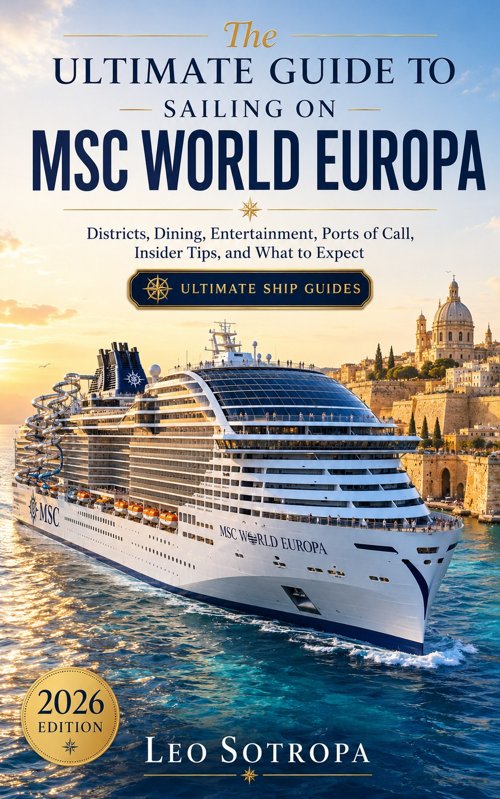
Everything in this article and far more, deck by deck, in The Ultimate Guide to Sailing on MSC World Europa.
Get the book →Choosing your Experience and cabin: the first real decision
On MSC you do not just book a cabin. You book a cabin and an “Experience,” and the Experience is the single choice that shapes your whole week. It sets your fare, how much control you have over your room, and which extras are bundled in. Get it wrong and you spend the cruise wishing you had understood it before you paid. Before you look at a deck plan, understand the four tiers.
- Bella is the entry Experience with the lowest fare. You get standard inclusions, but MSC assigns your cabin’s exact location. You choose the category, not the specific room.
- Fantastica lets you choose your cabin and your dining time, adds room-service breakfast and extra loyalty points, and gives you more flexibility overall.
- Aurea is the premium tier, with the best-located cabins, priority boarding, thermal spa access, and often a drinks package.
- Yacht Club is the private ship-within-a-ship: suites with a 24-hour butler and concierge, a private restaurant, lounge and bar, a private pool and sun deck, and premium all-inclusive drinks.
For most first-timers the sweet spot is Fantastica, and the reason is control. On a Bella fare you might be placed anywhere in your chosen category, which for a nervous first cruise can mean a room under the pool deck or forward where motion is felt most. Fantastica removes that gamble for a modest step up. Aurea folds in the spa and priority boarding, and Yacht Club is a different holiday altogether, gated and butlered. Exact inclusions shift by sailing, so confirm the current details. I dig deeper in this look at the MSC World Europa Experiences.
Picking the cabin itself
Once the Experience is set, choose the room. MSC World Europa offers Interior, Ocean View, Balcony, the smart-value Infinite Ocean View, premium Aurea cabins, and Yacht Club suites. For a first Mediterranean cruise the best value is an Interior or Infinite Ocean View on a Fantastica fare so you can pick the spot; the best all-round choice is a midship Balcony on the mid-decks for space, light, and the steadiest ride. Whatever you pick, check the deck plan and avoid rooms directly under the pool deck or aquapark, over or under the theater and the World Promenade nightlife, forward high-deck rooms if you are prone to motion, and any obstructed or unintended connecting rooms. For a full breakdown, see the guide to the best cabins on MSC World Europa.
Booking, and why you book the ship as much as the itinerary
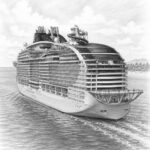
MSC World Europa is the ship that launched MSC Cruises’ flagship World Class, powered by liquefied natural gas, a greener fuel. She runs around 216,000 gross tons, carries more than 5,000 guests across roughly 20 decks, and is designed as seven themed districts. She currently sails a seven-night Western Mediterranean loop between the great cities of Europe. That scale matters: this is a destination in her own right, so you spend real time aboard, not just transiting to ports.
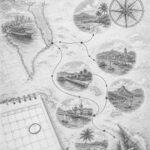
When you book, pay attention to where you actually board. The loop calls at Barcelona, Marseille, Genoa, Naples, Messina for Taormina in Sicily, and Valletta in Malta, and several of those double as embarkation ports. Depending on the sailing you might board at Barcelona, Genoa, or another port. Confirm your embarkation port and the exact sequence of calls for your week, because the same ship runs the loop in more than one direction. Always check the latest schedule in the MSC for Me app before you finalize flights.
Getting to your embarkation port, and the one flight rule that matters
Here is the rule that saves more first cruises than any other: fly in at least one day early. If your ship leaves from Barcelona or Genoa and you are flying from overseas, do not try to land the morning of embarkation. A delayed flight, a missed connection, or lost luggage can mean watching your ship sail without you. Arrive the day before, sleep near the port, and step aboard rested instead of frazzled.
That early arrival is also a gift. Embarkation ports like Barcelona are extraordinary cities, so spend your spare afternoon seeing the Sagrada Família or wandering the Gothic Quarter, then board fresh the next day. Book a hotel within reach of the cruise terminal, keep your passport in your carry-on, and give yourself generous layover time if you connect through a European hub. Tight connections are how people miss ships.
Embarkation day: what actually happens
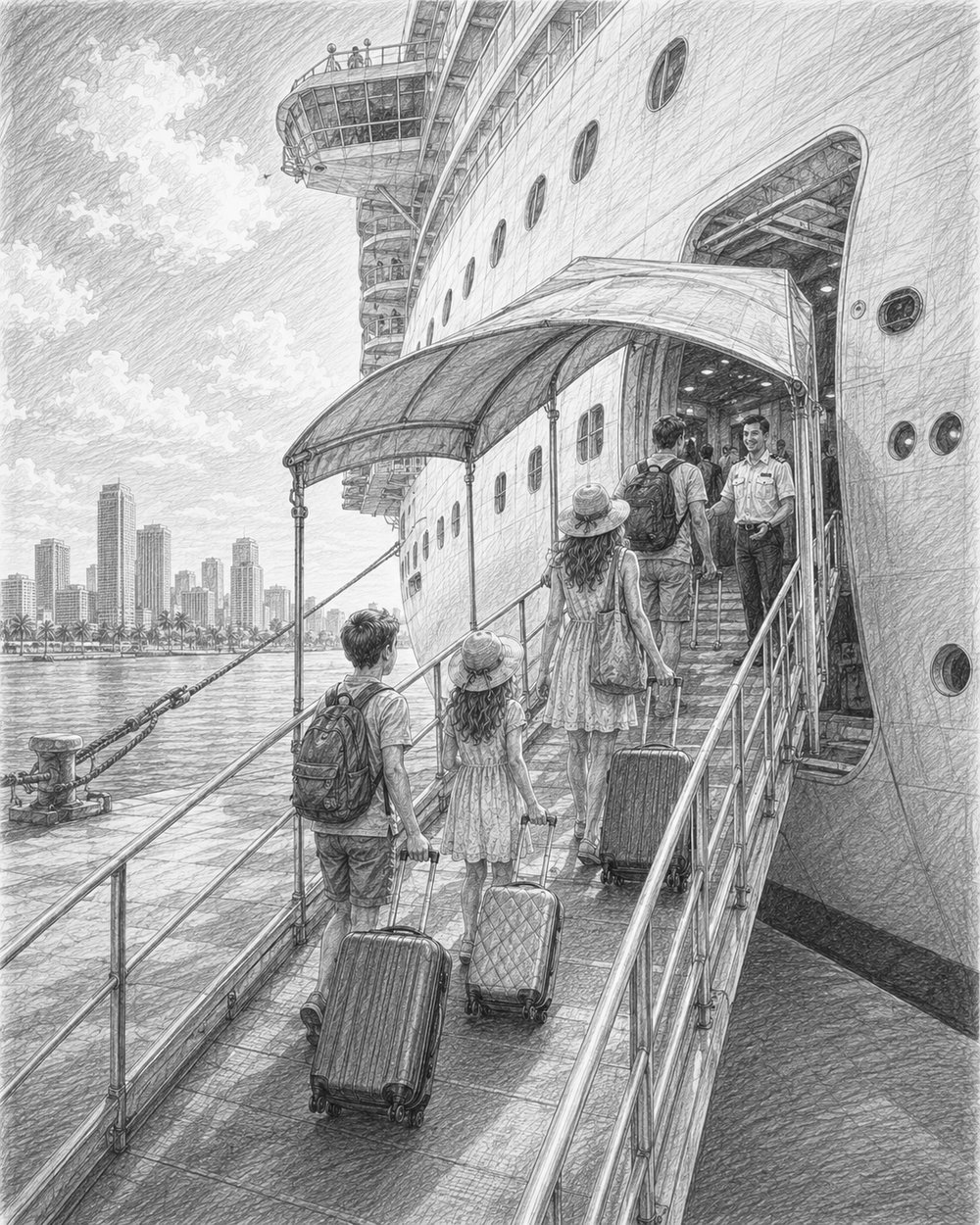
Embarkation is a sequence, not a scramble, once you know the order. You will have a boarding window tied to your Experience, and it is worth respecting rather than queuing for hours at opening. Complete your web check-in ahead of time, have your documents and passport ready, and arrive within your window. Priority boarding is one of the tangible perks of Aurea and Yacht Club.
At the terminal you drop your large bags with the porters, who deliver them to your cabin later, then move through security and check-in much like an airport. Keep medications, valuables, swimwear, and anything you need for the first few hours in your hand luggage, because your checked bags may not appear until dinnertime. Once aboard you will be pointed toward lunch while the cabins are finished, so go explore rather than waiting outside your door.
Set up the MSC for Me app before you do anything else
The MSC for Me app runs your day, and the first-timers who thrive set it up early. Download it before you travel, then connect to the ship’s Wi-Fi once aboard. The app shows the daily program, restaurant and show times, deck maps, your onboard account, and booking screens for specialty dining and excursions. On a ship of seven districts and 20 decks, it is your map and schedule.
Two practical notes. General Wi-Fi is a paid plan, so full internet ashore and at sea means buying a package; the app itself works on the ship network for onboard functions. And use the app to reserve popular experiences on day one, because specialty restaurants and marquee show slots fill quickly. Check it each evening for the next day’s plan so you are never guessing.
How MSC differs from the US lines you may know
This is the section that prevents most first-timer disappointment. MSC is a European line with a European style, and if you arrive expecting a US cruise you will misread things that are simply different, not worse.
Dining times and structure
MSC leans toward traditional assigned dining in the main dining rooms, with set seatings rather than the anytime free-for-all some US lines default to, and on a Fantastica or higher fare you have more say over your dining time. Dinner also runs on European hours, later than many Americans expect. If you like to eat early, request the earlier seating and confirm it, and lean on the buffet’s flexible hours when your schedule does not line up. The Chef’s Garden Kitchen, a restaurant by a Michelin-starred chef, and MSC’s specialty venues, including a sushi and teppanyaki spot, a steakhouse, and a taqueria, all cost extra.
Drinks packages
Drinks are not automatically included. MSC sells beverage packages at several tiers, from soft drinks up to premium spirits and wines by the glass, and Aurea and Yacht Club fares often bundle a package in. Decide honestly how much you drink: a couple who has one glass of wine at dinner rarely comes out ahead on the top package, while a poolside cocktail crowd usually does. If a package is already part of your Experience, use it rather than buying a second one.
Gratuities and service style
Daily gratuities are added to your onboard account automatically, so budget for them as a fixed cost rather than a surprise. The service style is more European and understated than the effusive, name-remembering approach some US lines cultivate. Crew are professional and warm, but the rhythm is more reserved, and that is a feature of the culture, not a lapse.
An international crowd and multilingual announcements
Perhaps the biggest adjustment is the passengers themselves. MSC draws a genuinely international crowd from across Europe and beyond, so English speakers are one nationality among many rather than the majority. Announcements are made in several languages, meaning the same message repeated a few times over the speakers; it feels long at first, then becomes background. Treat it as part of the Mediterranean experience and the whole trip opens up.
Your first hours aboard
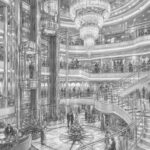
Spend your first hours learning the ship rather than sitting still. Walk the World Promenade, the lively indoor-outdoor main street that runs like a spine through the vessel and is home to the record-setting Venom Drop dry slide. Ride the glass elevators through the Galleria atrium to get your bearings. Find the Family District if you have kids and the adults-only Zen area, with its cantilevered whirlpools over the sea, for a quiet corner. Locate your muster station, main dining room, and nearest buffet, and you will be oriented by dinner.
Do the practical housekeeping too. Attend the mandatory safety drill, confirm your dining time in the app, book any specialty dinners and shows you care about, and scan the daily program for sea days versus port days. For more of these early habits, the collection of MSC World Europa tips is worth a scan.
Dining and shows through the week
Your fare includes the main dining rooms and the buffet, and you can eat very well without spending another euro. The main dining room gives you a proper multi-course dinner each night with table service; the buffet covers casual breakfasts, quick lunches, and late bites. Where you spend extra is the specialty scene: the Chef’s Garden Kitchen is the signature splurge, and the steakhouse, sushi and teppanyaki venue, and taqueria each offer something the included menus do not. Book these early, because seats are limited.
Evenings revolve around the theater productions, live music across the districts, and the bars, with a casino for those who want it. Show up early for the headline theater shows, especially on sea nights. A good rhythm is dinner, a show, a nightcap on the World Promenade, then an earlier night before a big port morning.
Money, gratuities, and what to wear
The ship runs cashless. Your cabin keycard is your room key and your charge account, and everything you buy aboard posts to it. Register a card at check-in and review your account in the app so there are no surprises on the last night. Remember the two ongoing costs beyond your fare: daily gratuities added automatically, and a paid Wi-Fi plan. Ashore you will want some euros for taxis, cafes, and market stalls that do not take cards.
Dress is more relaxed than first-timers fear. Daytime is resort casual, evenings are smart casual in the main dining room, and there are typically a couple of more formal or themed evenings across the week where guests dress up if they wish. Pack layers, because Mediterranean evenings on deck can turn cool, and bring genuinely comfortable shoes, because you will cover serious ground ashore.
| Situation | What works |
|---|---|
| Pool and aquapark | Swimwear, cover-up, sandals |
| Port day ashore | Comfortable clothes, sun protection, sturdy walking shoes |
| Main dining room, most nights | Smart casual |
| Formal or themed evening | Dress up if you wish; optional |
Running Mediterranean port days
Mediterranean port days are long and full, and the golden rule is to start early. The cities on this loop reward the guests who are off the ship soon after the gangway opens, not those who linger over a late breakfast. Each port has a signature you can plan around, so decide the night before what your one non-negotiable is at each stop.
- Barcelona, Spain: the Sagrada Família, Park Güell, La Rambla, the Gothic Quarter, and Gaudí architecture everywhere you look.
- Marseille, France: Notre-Dame de la Garde and the Vieux-Port, and a gateway to Aix-en-Provence.
- Genoa, Italy: the historic old town and aquarium, and a launch point for the Cinque Terre and Portofino.
- Naples, Italy: Pompeii and Mount Vesuvius, the Amalfi Coast, the island of Capri, and Neapolitan pizza.
- Messina and Taormina, Sicily: the clifftop town of Taormina with its ancient Greek theatre, and Mount Etna.
- Valletta, Malta: St. John’s Co-Cathedral, the Grand Harbour, and the walled old capital of Mdina nearby.
For your first cruise, decide between MSC’s organized shore excursions and going independent. The excursions cost more but guarantee you are back before the ship sails, a real comfort in a place like Naples where you might travel to Pompeii or the Amalfi Coast. If you go independent, book timed-entry sights ahead, note the all-aboard time, and build in a buffer for traffic. The ship leaves on schedule, and catching up is expensive. See the guide to the MSC World Europa ports and excursions to plan each stop in detail.
Disembarkation without the stress
The last morning follows its own routine. The night before, settle any account questions in the app and decide whether to self-carry your bags or use the luggage service. With the service, you place your tagged bags outside your cabin the evening before, keep an overnight kit and anything valuable with you, and collect the bags in the terminal the next morning. If you have an early flight and can manage your own luggage, self-disembarkation lets you walk off first without waiting for your color group.
Give yourself margin for the flight home just as you did on arrival. Clearing the terminal and reaching the airport in a busy Mediterranean port takes time, so do not book a flight soon after the ship docks. Have your passport in hand, know your luggage tag color and its called time, and enjoy a last unhurried breakfast.
First-timer mistakes to avoid
Most first-cruise regrets come from a handful of avoidable errors. Steer around these and you are ahead of most of the ship.
- Booking the cheapest Bella fare and then being unhappy with an assigned cabin under the pool deck. Choose Fantastica to control your location.
- Flying in on embarkation morning. Arrive a day early, every time.
- Expecting a US cruise. MSC is European in its dining hours, service style, and international crowd, and the multilingual announcements are normal.
- Assuming drinks and Wi-Fi are included. Both are extra; decide on packages deliberately.
- Skipping the app on day one and then missing specialty dining and show reservations that filled up.
- Lingering aboard on port mornings. Get off early and see more.
- Booking a tight flight home. Leave real margin after the ship docks.
Every one of these is easy to fix before you travel. For a broader orientation to the vessel itself, the overview of what to expect on MSC World Europa pairs well with everything here.
Get the complete MSC World Europa playbook
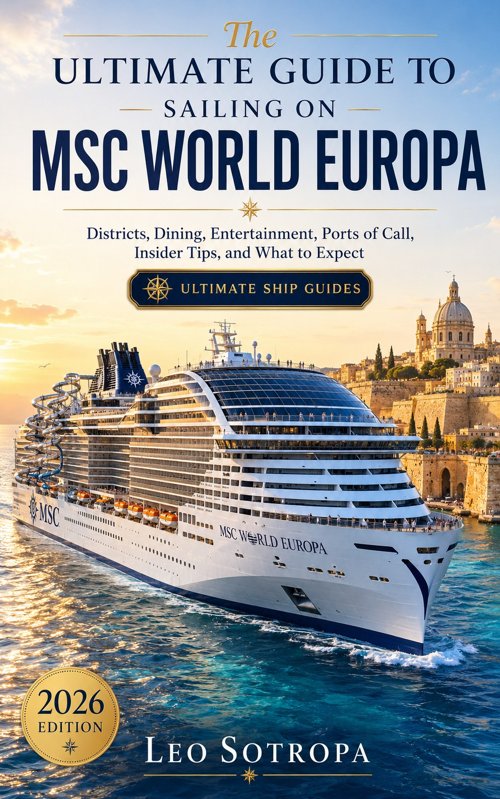
If you want every one of these decisions spelled out with clear action steps, “The Ultimate Guide to Sailing on MSC World Europa” walks a first-timer through booking, boarding, dining, and every port. It is part of the Ultimate Ship Guides series by Leo Sotropa, with a practical checklist in every chapter so nothing gets left to chance.
Frequently asked questions
What is an MSC Experience and which should a first-timer pick?
An Experience is the tier you book alongside your cabin, and it sets your fare, your control over your room, and your extras. The choices are Bella, Fantastica, Aurea, and Yacht Club. Most first-timers do best on Fantastica, which lets you choose your cabin and dining time for a modest step up. Aurea adds spa access and priority boarding, and Yacht Club is a private, butlered ship-within-a-ship. Inclusions vary by sailing.
Should I really fly in a day before the cruise?
Yes. Arrive at your embarkation port at least one day early, especially if flying from overseas. A delayed or missed flight on embarkation morning can mean losing the cruise, and the ship does not wait. Arriving early also lets you see the port city and board rested. Book a flight home with generous margin after disembarkation for the same reason.
Are drinks and Wi-Fi included on MSC World Europa?
Not automatically. Drinks packages are sold separately at several tiers, and Wi-Fi is a paid plan. Higher Experiences such as Aurea and Yacht Club often include a drinks package. Decide honestly how much you drink before buying one, and if a package is already bundled into your fare, use it rather than paying twice.
How is MSC different from US cruise lines?
MSC is a European line with European rhythms. Dining leans toward traditional assigned seatings on later hours, service is warm but more reserved, drinks and Wi-Fi are extra, and daily gratuities are added to your account. The passenger mix is genuinely international and announcements are made in several languages. None of this is a downside once you expect it.
Do I need to book dining and shows in advance?
For the specialty restaurants and headline shows, yes. The included main dining rooms and buffet need no booking, but venues like the Chef’s Garden Kitchen, the steakhouse, and the taqueria have limited seats and fill quickly. Reserve them in the app on your first day aboard, and arrive early for popular theater performances, especially on sea nights.
What should I wear on a Mediterranean cruise?
Daytime is resort casual, with swimwear for the pool and sturdy walking shoes for port days on cobblestones. Evenings in the main dining room are smart casual, with a couple of more formal or themed nights where you can dress up if you wish. Pack layers for cool evenings on deck and shoes you can walk miles in.
How do I make the most of Mediterranean port days?
Start early. Get off the ship soon after the gangway opens, decide your one must-see the night before, and always know the exact all-aboard time. For big trips like Pompeii or the Amalfi Coast from Naples, an organized excursion guarantees you are back before sailing, while independent travelers should book timed-entry sights ahead and leave a buffer for traffic. Confirm your ports and times in the app, as the loop runs in more than one direction.
Ready for the whole ship in one place? It is all in The Ultimate Guide to Sailing on MSC World Europa.
Get the book →
Meet Leo: The Heartbeat Behind ‘A Country A Month’
Journeying through the pages of A Country A Month, you might often feel the rhythm of a storyteller’s heartbeat, pulsating through each line, each image, and each adventure shared. That heartbeat belongs to none other than our remarkable website editor, Leo.
With a lens in one hand and a pen in the other, Leo seamlessly marries his passions for photography and writing. His eye captures moments that words can barely describe, yet his eloquence brings those images to life, transcending borders and connecting us all through shared stories. An avid traveler, every country he’s visited has added another chapter to his expansive tale, and through our platform, he generously shares these chapters with us.