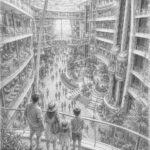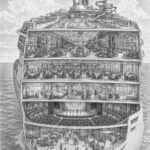
What does Freestyle Cruising actually mean for a first-timer on Norwegian Epic? In plain terms: there are no fixed dining times, no assigned tables, and no formal nights. You show up to dinner when you’re hungry, eat where you feel like eating, and dress the way you’d dress for a nice dinner ashore. If you’re coming from a traditional cruise line, or you’ve never cruised at all, that freedom is the single biggest thing to understand before you board this huge, one-off NCL megaship in Barcelona. Get how Freestyle works and the rest of the ship falls into place.
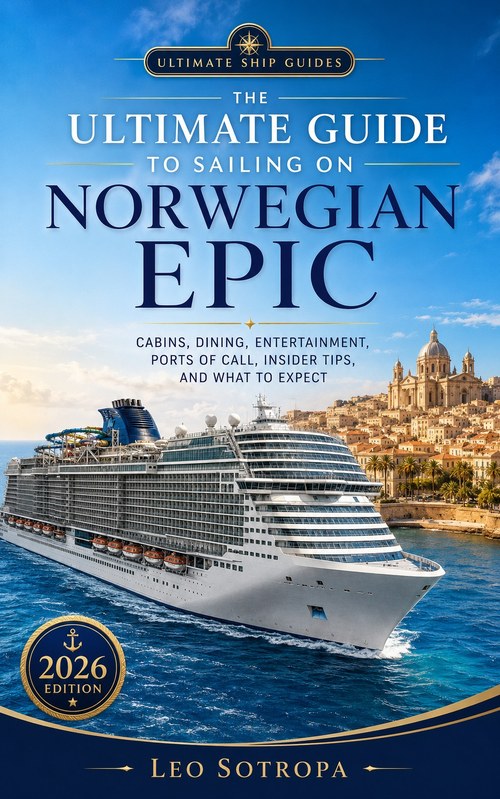
Everything in this article and far more, deck by deck, in The Ultimate Guide to Sailing on Norwegian Epic.
Get the book →Norwegian Epic is NCL’s boldest experiment — her own class, with no sister ships, built around Freestyle Cruising from the keel up. She carries roughly 4,100 guests at double occupancy across about 19 decks and 155,000-plus gross tons, and she pioneered ideas that later spread across the modern NCL fleet, from solo studio cabins to a ship-within-a-ship suite complex. This guide walks a first-time guest through exactly how the flexible dining and onboard account work, how to book and board a Western Mediterranean sailing, what to expect in those famously quirky cabins, and the mistakes new cruisers most often make.
Freestyle Cruising, explained for first-timers
Traditional cruising asks you to pick an early or late seating months in advance, sit at the same table every night, and pack a tuxedo for formal evenings. Freestyle Cruising throws all of that out. On Norwegian Epic, dinner is closer to being in a city with a couple dozen restaurants: you decide each evening when you want to eat, which room you’re in the mood for, and whether you want a table for two or a big group. No one assigns you a time or a seat, and there is no captain’s formal night you’re expected to dress for.
That freedom is the point, but it comes with one trade-off worth knowing on night one: popular spots get busy at popular hours. Show up to a main dining room at 7:30 on a sea day and you may get a pager and a short wait, the same way you would at a restaurant back home. The fix is simple once you know it — eat a little earlier or later than the crowd, or make a reservation. More on that below.
Complimentary dining vs specialty dining
Here’s the distinction that trips up almost every first-timer. Your cruise fare already includes a full range of sit-down and buffet dining at no extra charge. The complimentary restaurants on Epic are the two main dining rooms — Taste and the Manhattan Room — plus the Garden Café buffet. You could eat every meal of the week in these rooms and never pay a cent beyond your fare. The main dining rooms serve a proper multi-course dinner with a menu that changes nightly; the Garden Café is the casual, come-as-you-are buffet for any meal, and it’s the easiest place to grab breakfast before an early port morning.
Alongside those, Epic runs a lineup of specialty restaurants that carry an extra charge or run through a dining package. These are the à la carte and prix-fixe venues where the cover charge buys a more focused experience: Cagney’s Steakhouse for beef, Le Bistro for French, La Cucina for Italian, Teppanyaki for Japanese hibachi cooked at your table, Moderno Churrascaria for Brazilian carved meats, and Ocean Blue for seafood, among others. None of them are required. Plenty of guests sail a full week eating only in the complimentary rooms and have a wonderful time. The specialty venues are there for the nights you want to make dinner the event.
| Included in your fare | Extra charge or dining package |
|---|---|
| Taste (main dining room) | Cagney’s Steakhouse |
| Manhattan Room (main dining room) | Le Bistro (French) |
| Garden Café (buffet) | La Cucina (Italian), Teppanyaki (hibachi) |
| Room service basics and casual bites | Moderno Churrascaria, Ocean Blue (seafood) |
When reservations actually matter
You never need a reservation to eat on Epic — the complimentary rooms and the buffet will always feed you. Reservations help in two situations. First, at the specialty restaurants, where seating is limited and the best times fill up, especially Teppanyaki, which cooks in timed group seatings. Second, at the main dining rooms during the peak dinner rush on sea days, when booking a slot in advance saves you the pager wait. If you have a dining package, it’s worth opening the NCL app early in the week and locking in the specialty nights you care about, then leaving your casual nights open to wander. Barcelona embarkation day is often quieter for specialty dining because many guests are still exploring the ship — a good first night to try a paid venue if you were curious.
If you want the full breakdown of every restaurant and how the packages price out, the what to expect on Norwegian Epic guide goes venue by venue.
The key card runs everything
At check-in you’ll receive your NCL key card, sometimes called the Cruise Card. It’s a small piece of plastic that does an outsized amount of work, and understanding it early removes most first-day confusion. The card is your room key, your ID to get on and off the ship at each port, and — this is the part newcomers miss — your onboard wallet. Epic is a cashless ship. When you buy a cocktail at the Ice Bar, a cover charge at Le Bistro, or a souvenir in the shops, you tap or hand over the key card and it posts to your account. You settle the whole thing at the end of the voyage.
Two practical habits make the card painless. Keep it on you every time you leave the cabin, because you cannot re-board in port without it. And check your running account on the NCL app every couple of days so there are no surprises at the end. If you’re in The Haven or the solo Studios, your key card also unlocks keycard-only areas that other guests can’t enter — the private Haven complex and the Studio Lounge respectively.
Service charges and what “included” really means
This is the area where first-timers most often feel blindsided, so it’s worth being blunt. A daily service charge — the industry’s version of gratuities — is added to your onboard account for each guest, each day. It’s how the crew who look after you are paid, and it’s separate from your cruise fare. It will appear on the key card account whether or not you tip anyone directly. Budget for it from the start and it’s a non-event; forget about it and the final bill looks bigger than you expected.
A few other things are not included in the base fare and land on the same account: drinks beyond what your package covers, specialty dining cover charges, spa treatments, and Wi-Fi, which is a paid plan rather than free onboard. None of this is unusual for a big cruise line, but it adds up if you assume everything is free. The honest way to think about Epic is that your fare buys the cabin, the complimentary restaurants, the pools and waterslides, the shows, and getting to seven Mediterranean cities — and the extras are genuinely optional.
The NCL app runs your day
Download the NCL app before you leave home and log in with your booking. On board it becomes your daily planner. It holds the schedule of shows, activities, and port times; it lets you make and change dining reservations; it shows your key card account balance; and it’s where you confirm the current entertainment lineup, which changes over time. Because Epic’s itineraries and venue hours can shift, the app is also the right place to check your exact all-aboard time in each port rather than relying on memory.
The app itself usually works over the ship’s Wi-Fi without buying a full internet plan, but a paid plan is what you’ll want if you need to message home or work at sea. Set expectations accordingly: this is a way to run your cruise, not a substitute for planning your ports, which you should do before you sail.
Booking a Western Mediterranean sailing
Epic’s marquee season in this guide is the Western Mediterranean, and it’s an outstanding first cruise because the ports do so much of the work. She sails seven-night voyages round-trip from Barcelona and one-way between Barcelona and Rome (Civitavecchia), spring through autumn. Ports across these itineraries typically include Palma de Mallorca in the Balearics, Marseille or Toulon for Provence, Cannes on the French Riviera, Ajaccio in Corsica, Florence and Pisa from the port of Livorno, Rome from Civitavecchia, and Naples for Pompeii, Capri, and the Amalfi Coast. Exact ports vary by sailing, so confirm the specific stops on your voyage before you book.
The reason this itinerary rewards first-timers is the combination it delivers: beaches and Riviera glamour paired with some of the greatest art, history, and food anywhere — Gaudí in Barcelona, ancient Rome, Renaissance Florence, the ruins of Pompeii. All of it is reachable as a day trip from the ship, and the ship carries you between cities overnight so you wake up somewhere new without packing and repacking. One thing to note when comparing sailings: the round-trip from Barcelona and the one-way to Rome hit slightly different ports and change your flight logistics, so choose the pattern that fits how you want to fly home. The Norwegian Epic Western Mediterranean guide compares the routes in detail.
Choosing your cabin category
Epic offers the value Inside, the solo Studios with their private lounge, Oceanview, Balcony, Mini-Suites, Spa cabins, and The Haven suites. For a first-timer on a port-intensive Med cruise, a midship Balcony on the mid-decks is the best all-round choice — you get natural light, a private spot for morning coffee as you sail into port, and the steadiest ride on the ship. If you’re watching the budget, an Inside is genuinely fine on this itinerary because you’ll spend your days ashore, not in the cabin. Solo travelers have a real advantage here that few other ships offer, which brings us to the Studios.
NCL pioneered its solo studio cabins on Epic: compact rooms priced for one person, with keycard access to a private Studio Lounge where solo cruisers gather. They remove the single supplement that makes solo cruising expensive elsewhere. If you’re sailing alone, they’re worth understanding before you book anything else — the Norwegian Epic solo studio cabins guide covers how they work and who they suit.
Embarkation in Barcelona and your first hours aboard
Barcelona is a wonderful embarkation city, and the single best piece of advice for a first-timer is to arrive a day or two early. It protects you against flight delays that could make you miss the ship, and it gives you time to see the Sagrada Família, Park Güell, the Gothic Quarter, and Las Ramblas — sights that deserve more than the few hours you’d get on a rushed arrival day. Book timed tickets for Gaudí’s landmarks in advance, because they sell out.
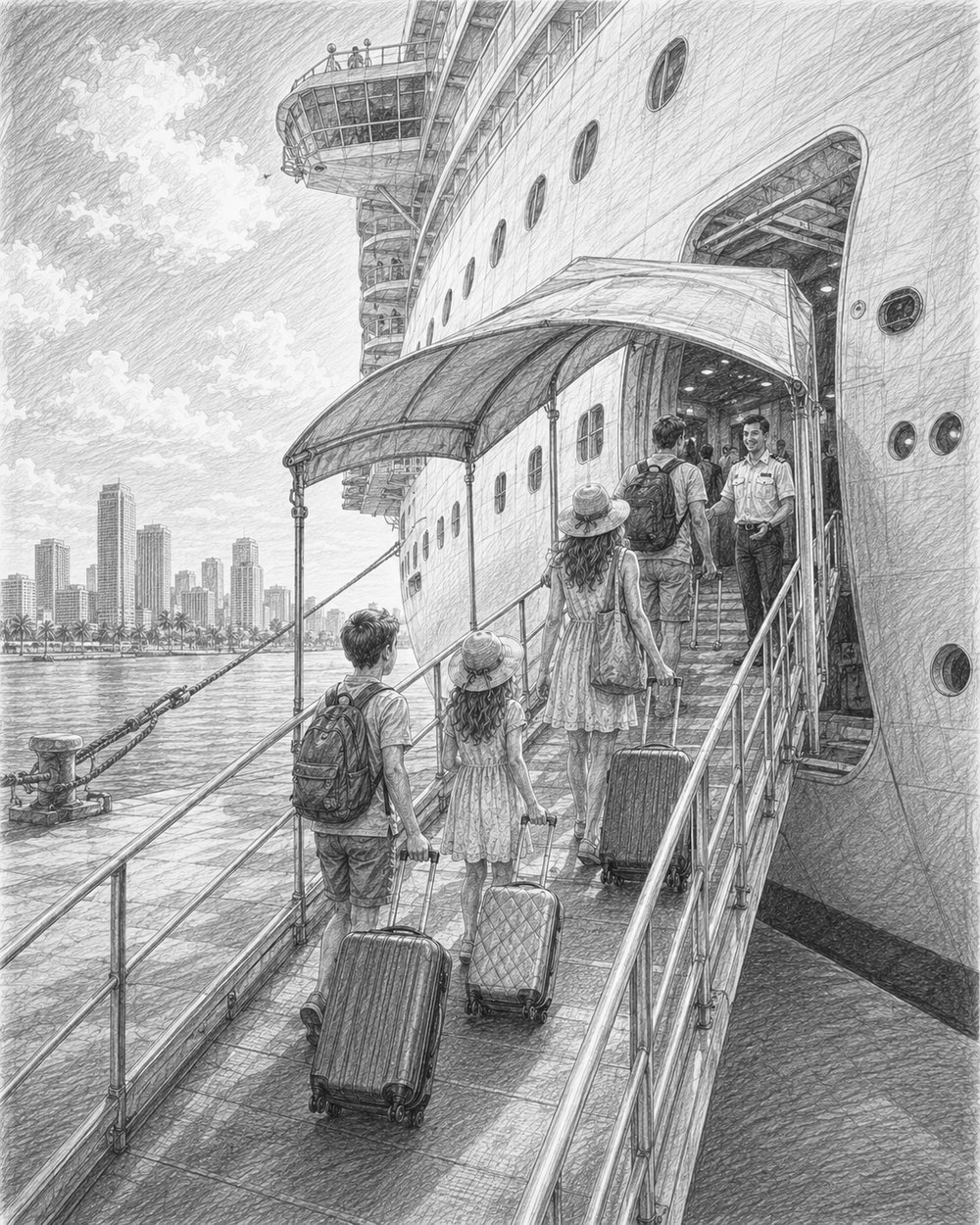
On boarding day, head to the cruise terminal, clear check-in, collect your key card, and go aboard. Your cabin may not be ready the moment you step on, and that’s normal — luggage is delivered to your door over the course of the afternoon. Rather than wait around, use the first few hours the way experienced cruisers do. Grab lunch at the Garden Café, walk the ship so you know where the pools, theater, and dining rooms are, and make any specialty reservations you want in the app while it’s quiet. Attend the safety drill when it’s called; it’s mandatory. By dinner you’ll already feel oriented, which is exactly the head start a first-timer wants.
The quirky cabin layout to expect
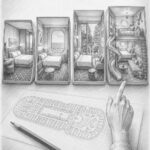
Epic has a design quirk that you should know about before you book rather than discover at 11 p.m. on night one. Many of her standard cabins have curved walls and a famous split “wave” bathroom, where the sink, toilet, and shower are separated into different compartments rather than sitting together behind one door. Some guests love the extra elbow room it creates; others find it odd, particularly the frosted-glass privacy of the arrangement when sharing a cabin. It is genuinely a love-it-or-laugh-at-it layout.
None of this is a reason to avoid the ship — it’s a reason to look at the actual layout diagram for your cabin category before you commit. If the split bathroom would bother you or the people you’re traveling with, check the deck plan and the cabin schematic when booking, and know that suite categories and The Haven have more conventional layouts. For a fuller tour of the cabin types and the ship’s signature spaces like the Aqua Park and the Epic Plunge bowl slide, see the Norwegian Epic Haven and Epic Plunge guide.
Packing for a hot, port-intensive Med cruise
The Western Mediterranean in season is warm and sunny, and hot in mid-summer. Because Freestyle Cruising has no formal nights, you can leave the tuxedo and ballgown at home — smart-casual covers even the specialty restaurants. What actually matters for this itinerary is gear for long, hot days on your feet in historic cities. Pack for the ports, not the ship.
- Comfortable, broken-in walking shoes for cobbled streets and the uneven ground at ruins like Pompeii and the Roman Forum
- A hat, sunglasses, and strong sunscreen for the intense midday sun
- Light, breathable clothing for daytime, plus a light layer for cool evenings and the ship’s air conditioning
- Modest cover-ups (shoulders and knees) for churches and cathedrals such as the Sagrada Família and La Seu in Palma
- A refillable water bottle and a small daypack for port days
- Some euro cash for small cafés, markets, and tips, even though cards are widely accepted across Spain, France, and Italy
Passports, Schengen, and getting back to the ship
A Western Mediterranean cruise visits multiple Schengen-area countries, so a passport is required, and non-EU travelers should check visa and entry rules — including the new European entry requirements — well before departure. Don’t leave this to the last minute; entry rules change and are your responsibility, not the cruise line’s. The currency across Spain, France, and Italy is the euro, and while cards work almost everywhere, a little cash smooths the small stuff.
The other critical practicality on this itinerary is the distance between the port and the headline sights. Several of the greatest attractions are inland: Florence and Pisa from Livorno, Rome from Civitavecchia, and Pompeii and the Amalfi Coast from Naples. That means an organized ship tour or a carefully planned independent train or transfer, and it means returning to the ship before all-aboard is non-negotiable. If you’re on your own and a train is delayed, the ship can sail without you — the buffer you build into your day matters as much as the sightseeing itself. For a port-by-port plan of how to reach each inland sight and get back safely, the Norwegian Epic Mediterranean ports guide lays it out.
Common first-timer mistakes on Epic
Most first-cruise regret comes down to a handful of avoidable errors. Knowing them in advance is worth more than any single tip on this page.
- Flying in on embarkation morning. One delay and you miss the ship. Arrive in Barcelona a day or two early.
- Assuming everything is free. Service charges, specialty dining, drinks, spa, and Wi-Fi are extra and post to your key card. Budget for them.
- Only eating at 7:30 on sea days. That’s the rush. Shift your dinner earlier or later, or reserve, and the wait disappears.
- Booking a cabin without checking the split-bathroom layout. Look at the schematic first so the design isn’t a surprise.
- Wandering off in an inland port without a plan or a return buffer. Distances are long and the ship won’t wait.
- Skipping the app. It holds your all-aboard times, show schedule, reservations, and account balance.
- Overpacking dressy clothes. There are no formal nights; smart-casual is enough, even for specialty dining.
Get those right and Freestyle Cruising does what it’s designed to do — it gets out of your way. For the complete overview of the ship end to end, the Norwegian Epic cruise guide ties it all together.
Get the complete Norwegian Epic playbook
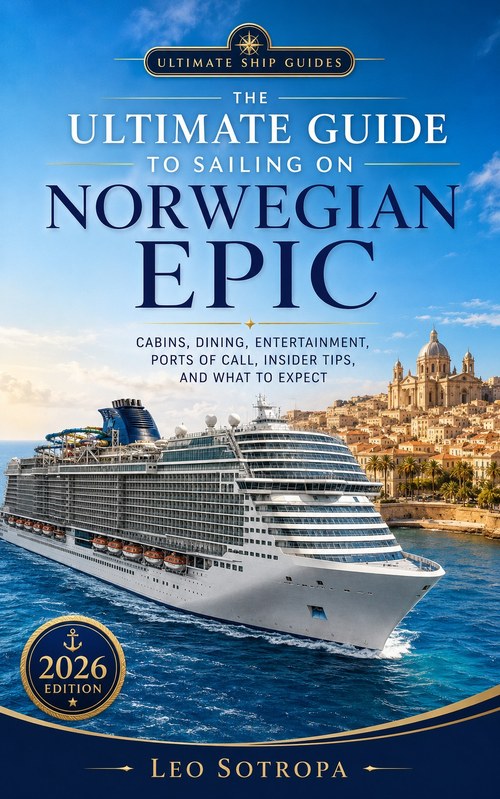
“The Ultimate Guide to Sailing on Norwegian Epic” takes everything on this page further, with clear action steps in every chapter to plan your Freestyle cruise from booking to disembarkation. It’s part of the Ultimate Ship Guides series by Leo Sotropa.
Frequently asked questions
What is Freestyle Cruising on Norwegian Epic?
Freestyle Cruising is NCL’s flexible approach: no fixed dining times, no assigned tables, and no formal dress codes. You dine when, where, and with whom you like across a large range of restaurants, and you dress smart-casual. It’s the core difference between NCL and traditional cruise lines, and it’s built into Epic from top to bottom.
Do I have to pay extra to eat on Epic?
No. Your fare includes the two main dining rooms, Taste and the Manhattan Room, plus the Garden Café buffet, and you could eat every meal there at no extra charge. Specialty restaurants like Cagney’s, Le Bistro, and Teppanyaki carry a cover charge or run through a dining package, but they’re entirely optional.
Are there formal nights on Norwegian Epic?
No. Freestyle Cruising has no formal nights, so you don’t need to pack a tuxedo or gown. Smart-casual clothing works throughout the ship, including in the specialty restaurants. This makes packing much lighter, which helps on a hot, port-intensive Mediterranean itinerary.
What does the key card do?
The NCL key card, or Cruise Card, is your room key, your ID for getting on and off the ship in each port, and your onboard wallet on a cashless ship. Everything you buy posts to the card and you settle the account at the end of the voyage. Keep it with you whenever you leave the cabin.
Do I need reservations for dinner?
Not to eat — the main dining rooms and buffet will always seat you. Reservations help at the specialty restaurants, where the best times fill up, and at the main dining rooms during the peak dinner rush on sea days. Use the NCL app to book early in the week if there are specific venues or times you want.
Do I need a passport for a Western Mediterranean cruise?
Yes. The itinerary visits multiple Schengen-area countries in Spain, France, and Italy, so a passport is required. Non-EU travelers should check visa and entry rules, including the new European entry requirements, well before departure, as these are your responsibility to sort out ahead of time.
What’s the biggest first-timer mistake to avoid?
Flying into Barcelona on embarkation morning. A single flight delay can cost you the entire cruise. Arrive a day or two early, which also lets you enjoy the Sagrada Família and the Gothic Quarter properly. A close second is assuming everything onboard is free when service charges, drinks, and Wi-Fi are extra.
Ready for the whole ship in one place? It is all in The Ultimate Guide to Sailing on Norwegian Epic.
Get the book →
Meet Leo: The Heartbeat Behind ‘A Country A Month’
Journeying through the pages of A Country A Month, you might often feel the rhythm of a storyteller’s heartbeat, pulsating through each line, each image, and each adventure shared. That heartbeat belongs to none other than our remarkable website editor, Leo.
With a lens in one hand and a pen in the other, Leo seamlessly marries his passions for photography and writing. His eye captures moments that words can barely describe, yet his eloquence brings those images to life, transcending borders and connecting us all through shared stories. An avid traveler, every country he’s visited has added another chapter to his expansive tale, and through our platform, he generously shares these chapters with us.