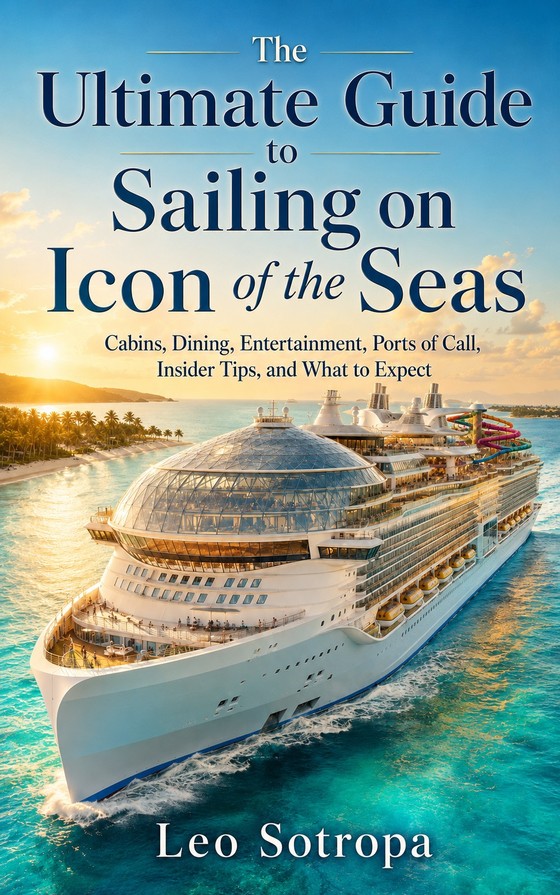
Is there a book that actually prepares you for Icon of the Seas before you step aboard? Yes. The Ultimate Guide to Sailing on Icon of the Seas by Leo Sotropa is an independent, deck-by-deck handbook to Royal Caribbean’s largest ship in the world, written for the traveler who wants to walk on knowing where things are, what to book, and what to skip. This page explains exactly what the Icon of the Seas book covers, who it helps most, and why a guide built around one specific ship works better than a general cruise primer when the ship in question carries around 7,600 guests across twenty decks.
The short version: Icon of the Seas is enormous, and enormous is wonderful once you understand it and overwhelming until you do. This guide is the bridge between those two states. It turns a 248,663-gross-ton megaship with eight themed neighborhoods, seven pools, and the largest waterpark at sea into a vacation you can navigate like someone who has sailed her before. The travelers who come home raving are almost always the ones who understood the ship first. This book is designed to make you one of them.
What this book actually is
It is an independent, unofficial handbook to one specific ship, part of the Ultimate Ship Guides series. That word “specific” matters. This is not a book about cruising in general with a chapter tacked on for Icon of the Seas. Every page is about this vessel: her layout, her cabins, her restaurants, her shows, her thrills, and the exact Caribbean ports she typically visits. When a recommendation appears, it points at a real venue on a real deck, not a generic idea of “the buffet” or “a specialty restaurant” that could apply to any ship on the ocean.
The book comes in two formats, Kindle and a 6×9 paperback, and the interior is illustrated with graphite chapter illustrations that give it a calmer, more considered feel than a stack of screenshots. The defining structural choice is that every chapter closes with clear, practical Action Steps. You are never left with interesting information and no idea what to do about it. You read a chapter, you reach the end, and you have a small list of concrete moves to make, most of them before you ever board.
Because it is independent, the author has no incentive to sell you the most expensive option. The tone is honest about where the money is worth it and where it is not, which is exactly what you want from a guide rather than a brochure. And because it is unofficial, it can say the things a cruise line’s own materials never will, like which cabins to avoid and which upcharges quietly inflate the final bill.
What is inside
The book is organized the way you would actually plan a cruise, moving from the big picture of the ship down to the details of a single sea day. Here is what each major section delivers.
The eight neighborhoods and how to navigate twenty decks
Icon of the Seas is divided into eight themed neighborhoods spread across twenty decks, and the single most common mistake first-timers make is wasting vacation hours simply figuring out where they are. The book opens with a tour of all eight neighborhoods, explaining what each one is for, when it is busy, and how to move between them without backtracking through the whole ship. Once you understand the neighborhood structure, the vessel stops feeling like a maze and starts feeling like a small city with distinct districts. That mental map is the difference between a relaxed morning and one spent lost between elevators.
If you want a preview of how the ship is laid out before you buy, the free companion piece on what to expect on Icon of the Seas covers the same ground in lighter form. The book goes considerably deeper, but the article will tell you whether the approach suits you.
The cabin guide: which to book and which to avoid
This is the chapter most readers say pays for the book on its own. The cabin guide names the exact staterooms to avoid for noise, motion, and obstructed views, and it points you toward the best-value rooms to book instead. On a ship this large, two cabins with nearly identical prices can deliver very different vacations, one quiet and well-placed, the other above a late-night venue or under a pool deck that scrapes chairs at dawn. The book walks through the trade-offs by category so you can match a room to how you actually travel, whether that means a light sleeper who needs quiet, a family that wants to be near the pools, or a couple chasing a view worth the upgrade.
For a taste of this thinking, the article on the best cabins on Icon of the Seas shows the kind of practical, location-by-location judgment the book applies across the whole ship.
The dining guide: included, splurge, and what to reserve first
Dining on a ship this size is genuinely confusing at first, because there are venues you have already paid for and venues that cost extra, and it is not always obvious which is which. The dining guide sorts this out. It explains which restaurants are included in your fare, which specialty venues are actually worth the splurge, and, crucially, what to reserve before boarding. The most popular tables and time slots go quickly, and the book is direct about which reservations to secure early and which you can safely leave to chance. That single piece of timing advice can save you from the disappointment of hearing “fully booked” on the first night.
The guide treats the buffet, the main dining room, and the casual quick spots as tools for different moments rather than ranking them against each other, which is a more useful way to think about eating well across a week at sea.
Shows, slides and thrills, with timing that beats the lines
Icon of the Seas is built around its signature attractions, and the book gives them a chapter of their own. Category 6, the largest waterpark at sea, and the AquaDome are the headline experiences, and both reward good timing. The guide shares insider timing to beat the lines at Category 6 and the AquaDome so you spend your day riding and watching rather than queuing. The same chapter covers the shows and how to plan around them, because on a ship with this much entertainment the constraint is never “is there something to do,” it is “how do I fit in the things I actually care about without exhausting myself.” The book helps you choose.
Ports of call: destination guides and must-do shortlists
An in-depth ports of call chapter covers the Caribbean stops Icon of the Seas typically visits: Perfect Day at CocoCay, Royal Caribbean’s private island, plus Cozumel, Costa Maya, Roatán, St. Maarten, and St. Thomas. For each, the book offers destination guides, top excursions, and must-do shortlists, so a day in port becomes a decision you have already thought through rather than a scramble at the gangway. Ports are where a lot of cruise budgets quietly evaporate on excursions that could have been done independently, and the book helps you tell the difference between an excursion worth booking and one you can happily do on your own.
The free article on Icon of the Seas ports and excursions gives you a preview of the destinations if you want to see how the port coverage feels before committing.
Honest money advice
This is where the independence of the book earns its keep. The money chapter lays out what is already included in your fare, when drink and Wi-Fi packages actually pay off versus when they do not, and how to avoid the upcharges that inflate the final bill. Prices change, so the book keeps its advice relative and principle-based rather than quoting numbers that would age badly. The point is to help you decide, based on how you and your travel party really behave, whether a given package is a good deal for you specifically. Some people save meaningfully with a drink package and some lose money on it, and the book helps you know which one you are before you commit.
Family know-how and adults-only escapes
Icon of the Seas is designed to work for very different travelers at once, and the book respects that. There is dedicated family know-how for parents planning around kids, naps, and the daily logistics of keeping everyone fed and happy on a floating resort, and there are adults-only escapes for the quieter corners of the ship where you can actually hear yourself think. Both audiences get honest guidance, which is unusual, since most guides pick one and neglect the other. If you are traveling with children, the Icon of the Seas family cruise guide on the site is a good companion to this chapter.
Embarkation strategy and a chapter of pro tips
The first day sets the tone for the whole cruise, and boarding a ship of this scale can either be smooth or frustrating depending on what you know. The book includes an embarkation-day strategy so your first hours aboard are spent enjoying the ship rather than standing in the wrong line. It closes with a chapter of pro tips, common pitfalls, and FAQs, the accumulated small lessons that usually take a couple of cruises to learn the hard way. Throughout, readers are reminded to confirm current details in the Royal Caribbean app, because venues, hours, and offerings do shift, and the app is always the live source of truth.
The Action Steps that end every chapter
It is worth saying again, because it is the feature that makes the book usable rather than merely interesting. Every chapter ends with Action Steps: a short, concrete list of what to do with what you just read. This is what separates a guide you finish and forget from one that actually changes how your cruise goes. By the time you board, following the Action Steps means you have booked the right cabin, reserved the right tables, planned your port days, and made your money decisions with your eyes open. The stress that usually hangs over the weeks before a big cruise mostly comes from unmade decisions, and Action Steps exist to get those decisions made calmly, in advance.
Who this book is for
Four kinds of reader get the most out of it.
- First-time cruisers who feel a little nervous about a ship this big. The book replaces vague anxiety with a clear picture of what the days will look like and what to do first.
- Families planning the trip together, who need to coordinate kids, dining, pools, and downtime without anyone melting down. The family know-how and the logistics chapters are built for exactly this.
- Seasoned cruisers who want to skip the trial and error. Even if you have sailed a dozen times, Icon of the Seas is different enough that a ship-specific guide saves you the first-cruise learning curve you would otherwise repeat.
- Gift buyers. If someone you know has a sailing booked, this is a thoughtful, useful present that reduces their pre-cruise anxiety, and the paperback with its graphite illustrations makes a polished keepsake rather than a disposable pamphlet.
If you are specifically a first-timer, the article on your first-time cruise on Icon of the Seas is a gentle place to start, and the book takes it from there.
Why a ship-specific guide beats a generic cruise primer
General cruise books are fine for the basics that apply everywhere: how tipping works, what to pack, what a muster drill is. But they cannot tell you which cabin on deck fifteen sits under a noisy venue, which specialty restaurant on Icon is worth the surcharge, or how to time your morning to ride Category 6 before the crowd arrives. Those answers only exist for a specific ship, and Icon of the Seas is specific in the extreme. She is the largest cruise ship in the world, with a layout and a set of attractions that have no exact equal. A generic primer treats her like any other ship. This book treats her like the singular vessel she is.
There is also a real emotional payoff, and it is the honest reason many people buy a guide like this. Booking a cruise on a ship this size can quietly generate a lot of low-grade stress in the weeks beforehand: the sense that you might be missing reservations, choosing the wrong cabin, overpaying for packages, or arriving unprepared for the ports. A ship-specific guide reduces that stress by converting open questions into decisions you have already made. You are not trying to memorize the whole ship. You are following a plan built by someone who has thought it through, and you can relax into the vacation instead of managing it.
The book is also realistic about its own limits, which is part of what makes it trustworthy. It does not pretend to be the live schedule. It tells you the durable, ship-specific things that do not change week to week, and it repeatedly sends you to the Royal Caribbean app for the details that do. That division of labor, a guide for judgment and the app for live logistics, is the right way to use both.
About the author and the series
The book is written by Leo Sotropa and is part of the Ultimate Ship Guides series, a growing collection of independent, ship-specific handbooks that each take on one vessel in depth rather than covering cruising in the abstract. The series has a companion website, acountryamonth.com, where you will find free articles for this ship and others. Those free guides are a genuine part of the offer, not a teaser: if you want to read before you buy, start with the companion pieces linked throughout this page, including the collection of Royal Caribbean Icon of the Seas tips, and see whether the voice and the practicality suit you. If they do, the book is the complete version of that same thinking, organized start to finish and built to carry with you from planning through your last morning aboard.
Get The Ultimate Guide to Sailing on Icon of the Seas
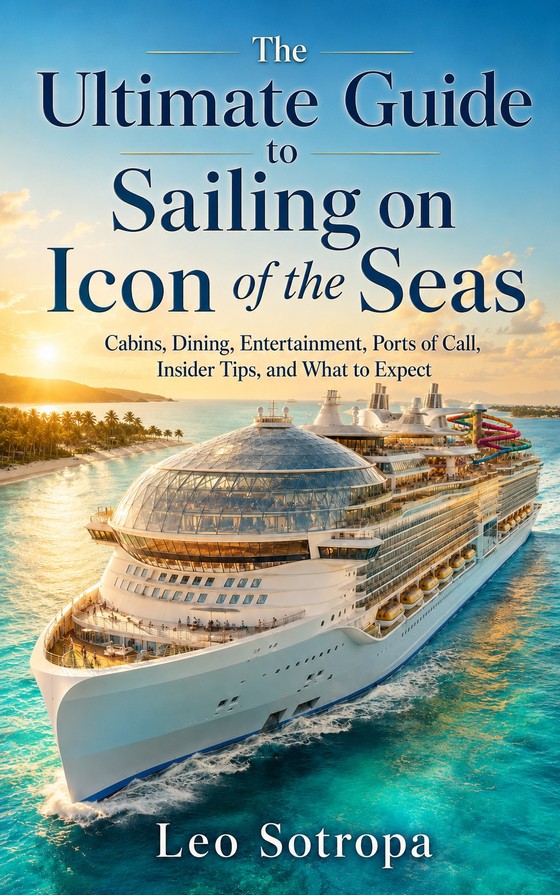
The Ultimate Guide to Sailing on Icon of the Seas by Leo Sotropa, part of the Ultimate Ship Guides series, is an independent, deck-by-deck handbook to Royal Caribbean’s largest ship, available on Kindle and paperback with clear Action Steps in every chapter. It turns a 7,600-guest megaship into a vacation you can navigate like an insider.
Frequently asked questions
Is this an official Royal Caribbean book?
No. It is an independent, unofficial guide, and that is deliberate. Because it is not published by the cruise line, it can be honest about which cabins to avoid, which specialty venues are worth paying for, and which upcharges are easy to skip. It complements Royal Caribbean’s own materials rather than replacing them.
Should I get the Kindle version or the paperback?
Both contain the same guidance, so it comes down to how you like to read. The Kindle edition is convenient to carry on your phone and search while you are aboard. The 6×9 paperback, with its graphite chapter illustrations, is nicer to plan with at home and makes a better gift. Plenty of readers use the ebook for reference on the ship and keep the paperback for planning.
Is the book up to date?
The guide focuses on the durable, ship-specific knowledge that does not change week to week, like the layout of the neighborhoods, the character of the cabins, and how to approach the ports, and this is the latest edition. For details that do shift, such as venue hours, current menus, and prices, the book consistently points you to the Royal Caribbean app as the live source of truth. Using the two together keeps you current.
Does it cover the specific ports Icon of the Seas visits?
Yes. There is a full ports of call chapter with destination guides, top excursions, and must-do shortlists for the stops this ship typically visits: Perfect Day at CocoCay, Cozumel, Costa Maya, Roatán, St. Maarten, and St. Thomas. It helps you decide which port days are worth a booked excursion and which you can do well on your own.
Is it good for first-time cruisers?
Especially so. First-timers tend to feel most overwhelmed by the sheer scale of Icon of the Seas, and the book is built to replace that overwhelm with a clear plan. The Action Steps at the end of each chapter mean you are never left wondering what to do next, so you can board confident rather than anxious.
Does it make a good gift?
It does. If someone you know has a sailing on Icon of the Seas booked, the book is a genuinely useful present that eases their pre-cruise nerves, and the illustrated paperback reads as a thoughtful keepsake rather than a throwaway pamphlet. It is an easy gift for the traveler who is hard to shop for.
Does the book replace the Royal Caribbean app?
No, and it is not meant to. The app is your live tool for schedules, reservations, and daily logistics on board. The book is your planning and judgment tool: it explains what to prioritize, what to book early, and what to skip, so that when you open the app you already know what you are looking for. They work best as a pair.

Meet Leo: The Heartbeat Behind ‘A Country A Month’
Journeying through the pages of A Country A Month, you might often feel the rhythm of a storyteller’s heartbeat, pulsating through each line, each image, and each adventure shared. That heartbeat belongs to none other than our remarkable website editor, Leo.
With a lens in one hand and a pen in the other, Leo seamlessly marries his passions for photography and writing. His eye captures moments that words can barely describe, yet his eloquence brings those images to life, transcending borders and connecting us all through shared stories. An avid traveler, every country he’s visited has added another chapter to his expansive tale, and through our platform, he generously shares these chapters with us.