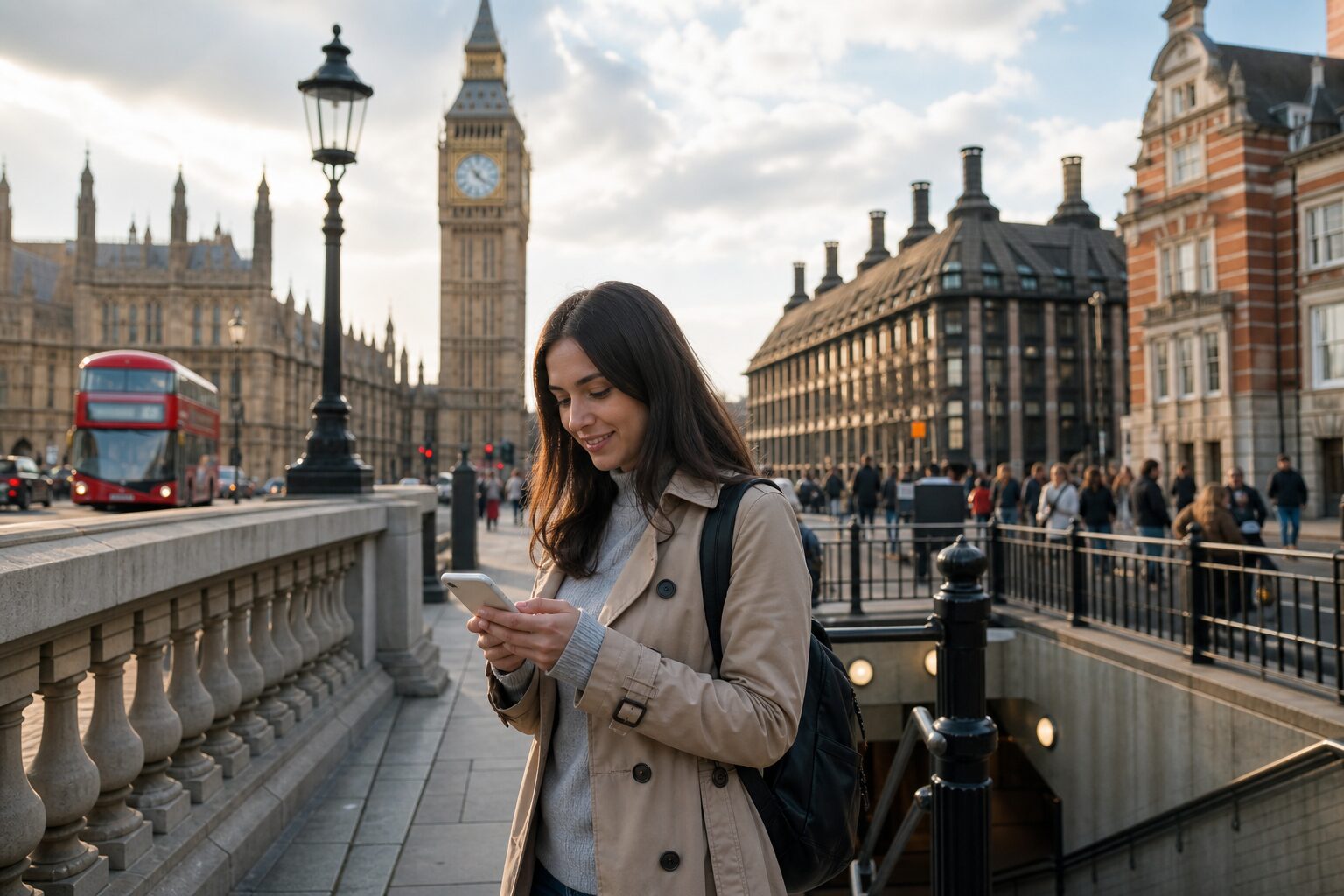
London becomes easier once you understand its scale, payment system, and daily rhythm. These first-time tips remove the most common friction.
Planning
- Count full sightseeing days, not nights.
- Group attractions by neighborhood.
- Book only must-do paid sights and theatre.
- Check museum reservations even when admission is free.
- Confirm royal ceremony schedules officially.
Transport
- Use one contactless card, device, or Oyster consistently.
- Each traveler needs a separate payment method.
- Touch in and out where required.
- Stand on the right of escalators and keep the left clear.
- Let passengers leave before boarding.
- Check the final airport journey before departure day.
Daily life
- Look right, then left, and follow road markings before crossing.
- Expect four seasons in one day and carry a light waterproof layer.
- Wear shoes tested for long walking.
- Ask whether pub orders are placed at the bar.
- Check restaurant bills for service charge.
- Use a queue; Londoners notice when you do not.
Sightseeing and safety
- Secure phones near roads and crowded station doors.
- Ignore unsolicited approaches that create urgency or distraction.
- Do not overload a day simply because museums are free.
- Use buses for views when time is flexible.
- Download offline maps and reservation details.
- Allow extra time in large rail and Underground stations.
- Carry a backup payment method separately.
- Leave one part of each day unplanned.
Frequently asked questions
Is London difficult for first-time visitors?
No. Signage and transport are extensive, but understanding contactless rules and city scale helps.
How much cash is needed?
London is highly card-oriented. Carry a small backup but expect many businesses to prefer or require cards.
Is the Tube safe?
It is widely used; apply normal city awareness and monitor official service updates.
Turn these tips into a route with our three-day itinerary and London travel guide.
Turn the checklist into a calmer trip
The central challenge in London is not a lack of things to do but deciding what belongs together. Put every essential reservation on one map, assign a neighborhood cluster to each day, and keep at least a quarter of the schedule uncommitted.
Save confirmations, insurance information, passport copies where appropriate, and accommodation details securely offline. Keep emergency funds and a backup payment method separate from the main wallet. These small preparations reduce the consequences of an ordinary mistake.
Arrival-day strategy
Know the name of the airport or station, terminal, and final transfer before departure. Download the route, because connectivity may not work immediately. Reject unsolicited transport offers and use the clearly identified official system.
After checking in, stay near the hotel. Locate the station entrance, a simple meal, drinking water, and any essentials. Set an alarm appropriate to the new time zone and resist turning the first evening into a full sightseeing day.
Using public transport confidently
In practical terms, the Underground, buses, rail, DLR, and selected river services; contactless payment or Oyster is usually simpler than buying individual tickets. Keep the payment method consistent, watch the destination and direction, and step away from gates before studying the map. Station staff can help more effectively when you show the written destination.
Service changes happen. Check the route shortly before leaving, especially early, late, or on weekends. If an app proposes several transfers to save only a few minutes, choose the simpler journey unless time is genuinely critical.
Escalators, stairs, long corridors, and crowded platforms add fatigue. Travelers with luggage, strollers, or mobility limitations should identify elevators and accessible entrances in advance and allow for temporary outages.
Phones, data, and navigation
Choose roaming, an eSIM, local SIM, or shared hotspot based on device compatibility and group needs. Download offline maps, reservations, translation data, and the accommodation address. A portable battery is one of the most useful items in a sightseeing bag.
Do not stand at a curb or station gate while absorbed in the phone. Step aside, confirm the route, then move. Save places by neighborhood so the map helps simplify the day rather than tempt you into unnecessary detours.
Money and avoiding avoidable fees
Carry more than one payment method and understand the foreign transaction and cash-withdrawal fees before travel. When a terminal offers to convert the charge into your home currency, compare carefully; the convenient-looking conversion may use an unfavorable rate.
Use bank or reputable cash machines and shield the keypad. Keep only the day’s likely cash accessible. Current tipping and service-charge customs belong in the food plan, and receipts help resolve mistakes.
Crowds, valuables, and personal safety
Busy visitor areas require ordinary urban awareness. Close bags, keep phones away from platform edges and traffic, and avoid displaying the full wallet. Pressure, distraction, or an offer that seems designed to stop you is a reason to keep moving.
Safety varies by exact place and time, not by broad stereotypes. Ask accommodation staff about the immediate late-night route, use licensed transport when tired, and leave any situation that feels wrong without worrying about politeness.
Respectful behavior
Observe queues, noise levels, photography signs, worship, and residential space. Ask before photographing people. A few greetings and a sincere attempt at local courtesy matter, even when the conversation continues in English or through translation.
Do not treat a functioning market, train, religious site, or neighborhood as a stage set. Buy when sampling a vendor’s work, keep entrances clear, and follow instructions from staff. Responsible behavior also produces a more relaxed experience.
Health, weather, and stamina
Prepare for changeable weather in every season, long summer evenings, short winter daylight, and busy school-holiday periods. Carry only what the day’s forecast requires, use sun protection and water in heat, and add traction and layers in cold or rain. Know how to obtain routine medicine and what insurance expects in an emergency.
Foot discomfort ruins ambitious itineraries. Bring tested shoes, change socks when useful, sit before exhaustion, and alternate exposed walking with indoor or shaded time. Schedule a lighter fourth day after three intense ones.
A final pre-departure check
Confirm passport validity and entry rules from official government sources, transportation times, insurance, prescriptions, card access, reservations, and the first transfer. Recheck the weather and any known service disruptions. Leave a copy of the broad itinerary with a trusted contact.
Keep critical details offline
Save the hotel address, insurance contact, transport confirmations, and essential reservations where they remain available without data. Keep a portable battery and one backup payment method separate.
Use station space well
When navigating London, step away from gates, stairs, and platform edges before checking the phone. Confirm direction and destination, then move with the flow rather than stopping abruptly.
Respond to disruption
A delay or closure does not require rescuing the original schedule. Check the official notice, select the simplest nearby alternative, and notify a reservation only when necessary.
Protect sleep
Do not let a late night in Bloomsbury destroy the following morning unless that evening is a deliberate priority. The area offers museums, garden squares, literary history, and useful access to several rail terminals; choose the part that matches your energy.
Carry less
A light day bag reduces fatigue and makes valuables easier to control. Bring only the weather layer, water, medication, charger, payment, and documents needed for that day.
Know the way back
Before an evening begins, save the last practical transit option and a licensed alternative. Low phone battery, alcohol, and unfamiliar streets are a poor combination for improvisation.
Ask clearly
Show a written place name or address when pronunciation is difficult. Begin politely, ask one concise question, and confirm the answer on a map without blocking the person helping you.
Watch the forecast
Conditions in London can change the comfort of long walks. Recheck each morning and move exposed routes, viewpoints, or gardens to the best available period.
Keep documents secure
Carry only the identification required for the day’s reservations and follow local requirements. Store backups securely rather than in the same bag as every original.
Leave margin
The easiest way to look confident is to stop planning as though every connection will be perfect. Arrive with a buffer, know what can be removed, and make decisions before fatigue makes them harder.
Keep critical details offline
Save the hotel address, insurance contact, transport confirmations, and essential reservations where they remain available without data. Keep a portable battery and one backup payment method separate.
Use station space well
When navigating London, step away from gates, stairs, and platform edges before checking the phone. Confirm direction and destination, then move with the flow rather than stopping abruptly.
Respond to disruption
A delay or closure does not require rescuing the original schedule. Check the official notice, select the simplest nearby alternative, and notify a reservation only when necessary.
Protect sleep
Do not let a late night in Shoreditch and Spitalfields destroy the following morning unless that evening is a deliberate priority. The area offers street art, markets, independent businesses, food, and later nights; choose the part that matches your energy.
Carry less
A light day bag reduces fatigue and makes valuables easier to control. Bring only the weather layer, water, medication, charger, payment, and documents needed for that day.
Know the way back
Before an evening begins, save the last practical transit option and a licensed alternative. Low phone battery, alcohol, and unfamiliar streets are a poor combination for improvisation.
Ask clearly
Show a written place name or address when pronunciation is difficult. Begin politely, ask one concise question, and confirm the answer on a map without blocking the person helping you.
Watch the forecast
Conditions in London can change the comfort of long walks. Recheck each morning and move exposed routes, viewpoints, or gardens to the best available period.
Keep documents secure
Carry only the identification required for the day’s reservations and follow local requirements. Store backups securely rather than in the same bag as every original.

Meet Leo: The Heartbeat Behind ‘A Country A Month’
Journeying through the pages of A Country A Month, you might often feel the rhythm of a storyteller’s heartbeat, pulsating through each line, each image, and each adventure shared. That heartbeat belongs to none other than our remarkable website editor, Leo.
With a lens in one hand and a pen in the other, Leo seamlessly marries his passions for photography and writing. His eye captures moments that words can barely describe, yet his eloquence brings those images to life, transcending borders and connecting us all through shared stories. An avid traveler, every country he’s visited has added another chapter to his expansive tale, and through our platform, he generously shares these chapters with us.