Messina is the gateway to eastern Sicily, and your cruise day here comes down to one big decision: do you head out to clifftop Taormina, climb toward Mount Etna, or stay in Messina itself? The good news is that the ship docks right beside the city’s walkable center, so even without boarding a bus you can fill a satisfying day on foot. This Messina Sicily cruise port guide covers the docking setup, the three main ways to spend your hours, how to reach Taormina without missing all-aboard, and what is honestly worth skipping.
Where your ship docks in Messina
Messina is a genuinely convenient port. Ships tie up along the waterfront right on the edge of the city center, and from the pier it is a short, flat walk into town. There is no tender to wait for and no long shuttle to reach anything worthwhile. Within roughly ten to fifteen minutes on foot you can be standing in front of the Duomo and the main piazza, which makes Messina one of the easier Mediterranean calls to do independently.
That said, the port area itself is functional rather than pretty, and the walk out passes through working streets before it opens up into the historic core. Taxis and drivers wait near the terminal gate, and excursion coaches gather here for the trips inland. Always confirm your exact berth and the location of your ship’s meeting point in your cruise line’s app the night before, since the terminal can handle more than one ship at a time.
Top things to do on a port day
The three choices below are more or less mutually exclusive on a single port day, so pick one as your anchor. Trying to combine Taormina, Etna, and Messina in one call is how people end up rushing everything and enjoying none of it.
Taormina and its ancient Greek theatre
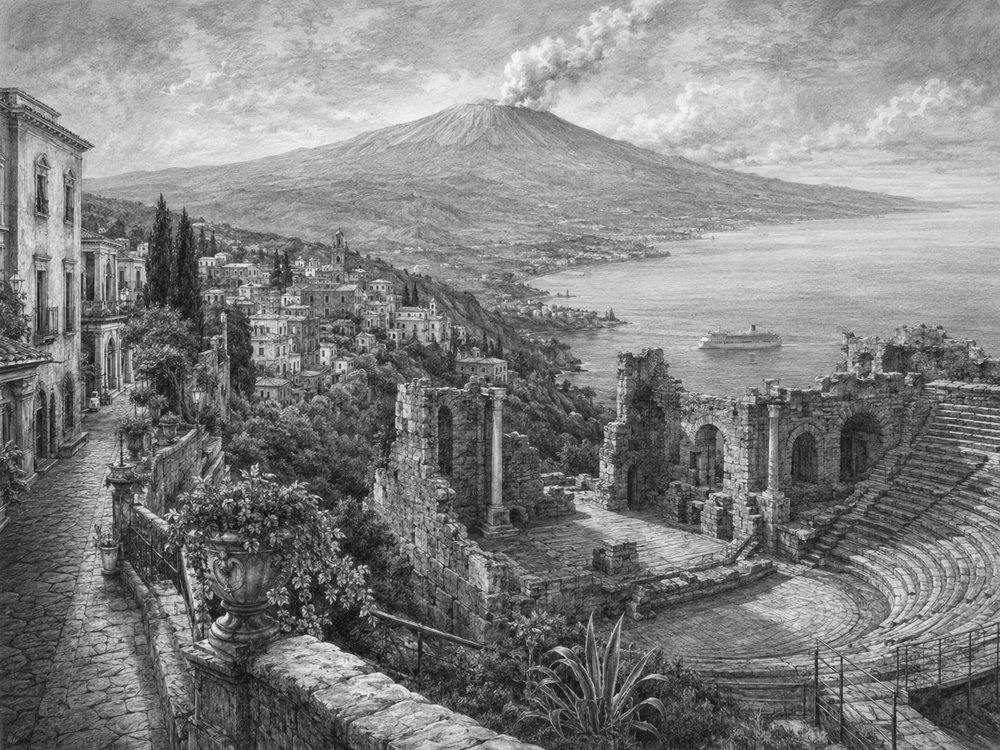
Taormina is the top draw from Messina, and for most first-time visitors it is the right call. The town sits high on a cliff above the Ionian Sea, a scenic drive of roughly forty-five minutes to an hour south of the port. Its centerpiece is the ancient Greek theatre, a stone amphitheatre carved into the hillside with the stage framing a view out to the sea and, on a clear day, the smoking cone of Mount Etna behind it. It is one of the most photographed classical ruins in the Mediterranean, and from the upper tiers it is easy to see why.
Beyond the theatre, Taormina rewards slow wandering. The main pedestrian street, Corso Umberto, runs the spine of the town lined with cafes, ceramic shops, and small piazzas that open to sudden sea views, with plenty of terraces for a drink or a granita, the Sicilian ice locals eat with a brioche. You do not need a plan beyond arriving, seeing the theatre, and letting the streets do the rest.
Mount Etna, Europe’s active volcano
Mount Etna is the other headline excursion, and a genuinely different experience from Taormina. Etna is one of the most active volcanoes in Europe, and organized trips usually drive you up to the accessible lower crater areas, where the landscape turns to black lava fields, old craters, and steaming vents. You are not summiting the active top on a cruise day, but even the lower slopes feel otherworldly, and the drive up through vineyards and lava-stone villages is part of the appeal.
Etna is best done as an organized tour rather than improvised, since reaching the upper areas independently is slow and conditions change with weather and volcanic activity. Bring a layer even in summer; it is cooler and windier up top, and closed shoes beat sandals on the loose grit. Some tours pair a shortened Etna visit with Taormina, but be honest about how much driving you want in one day.
Staying in Messina: the Duomo, the clock, and the Fountain of Orion
Staying in town is an underrated option, especially if you have visited Sicily before or do not want to spend half your day on a coach. Messina’s cathedral, the Duomo, dominates the main square and is worth timing your morning around. Its bell tower houses one of the largest astronomical clocks in the world, and at noon it comes to life: a sequence of gilded mechanical figures moves in a display that draws a crowd into the piazza. Arrive well before twelve to claim a spot with a clear view of the tower.
In the same square stands the Fountain of Orion, a beautifully carved Renaissance fountain. From the Duomo you can wander the surrounding streets, find an espresso, and try Sicilian specialties like arancini or a fresh cannolo. It is a low-stress way to experience real Sicilian city life without the all-aboard anxiety of heading far inland, and a fine choice if you have already seen Taormina on a previous cruise.
Getting to Taormina: ship tour, train, or private driver
Because Taormina is the most popular choice, it is worth understanding your three ways to get there and the tradeoffs of each.
- Ship excursion: the lowest-stress option. The coach leaves from the pier, a guide handles logistics, and crucially the ship will not sail without a tour that it operates if that tour runs late. You pay a premium and you move on the group’s schedule, but you never have to watch the clock.
- Train: Messina has a train station within reach of the port, and regional trains run down the coast toward the Taormina-Giardini stop. It is inexpensive and scenic along the water, but the station at Taormina sits far below the clifftop town, so you then need a local bus or taxi up the hill, which adds time in both directions.
- Private driver or taxi: the most flexible independent choice. A driver meets you at the port, takes you directly up to Taormina, and can collect you at an agreed time. It costs more than the train but saves the transfers, and a good driver keeps a firm eye on getting you back to the ship.
Whichever independent option you choose, the all-aboard risk is real. If a train is delayed or traffic snarls on the coast road, the ship is under no obligation to wait for you. Note your all-aboard time from the app, build in a generous buffer, and aim to be back at the pier at least an hour before the deadline. If that margin makes you nervous, book the ship’s tour and enjoy the day instead of the clock.
How much time you need
A typical Messina call gives you most of a day in port, enough for one of the three anchor experiences done well. Taormina realistically eats the better part of your day once you account for the drive each way, the theatre, and a wander through town, and Etna is similar or longer given the climb and descent. Messina on foot needs far less: you could see the Duomo clock at noon, the fountain, and the main streets in a few unhurried hours and still have lunch.
If your itinerary also includes mainland Italy, it is worth thinking about how Messina fits the bigger picture. Many Mediterranean sailings pair Sicily with a call farther north, so if you would rather save the ancient ruins and city sightseeing for later, you can lean into Taormina’s theatre here and plan a fuller day around Rome when you reach Civitavecchia.
What to skip and watch out for
The main thing to skip is the temptation to do everything. Coaches to Taormina and Etna cover a lot of ground, and cramming both into one call means most of your day is spent on the road. Choose one inland trip or stay in town.
A few practical notes. Sicilian summers are hot, and Taormina’s stepped streets and Etna’s exposed slopes both demand water, sun protection, and comfortable shoes. Churches expect modest dress, so bring something to cover shoulders for the Duomo. Keep an eye on your belongings in crowded squares and on busy trains, and confirm the noon clock timing and any tour details in your cruise line’s app, since schedules shift with the season.
Cruise ships that visit Messina
Messina is a regular stop on Mediterranean itineraries, and a wide range of ships call here through the season. If your sailing includes it, these guides cover the vessels that visit and what to expect on board.
Frequently asked questions
Is Taormina worth it from the Messina cruise port?
For most first-time visitors, yes. Taormina is the top draw from Messina: a clifftop town with an ancient Greek theatre that frames the sea and Mount Etna in one view. It is a scenic drive of roughly forty-five minutes to an hour each way, so plan for it to fill most of your day.
Can I visit both Taormina and Mount Etna in one day?
Some tours combine a shortened Etna visit with a stop in Taormina, but you will spend a large share of the day driving between them. To genuinely enjoy either one, it is better to pick a single anchor experience.
How do I get from the ship into Messina?
You walk. Ships dock right beside the city center, and it is a flat ten to fifteen minute stroll from the pier to the Duomo and the main piazza. There is no tender and no long shuttle, so Messina is easy to explore on your own.
What is the astronomical clock in Messina?
The Duomo’s bell tower holds one of the largest astronomical clocks in the world. At noon a sequence of gilded mechanical figures moves in a display that draws a crowd into the square. Arrive well before twelve for a clear view of the tower.
Should I book a ship tour or go independently?
A ship tour is the lowest-stress choice because the ship waits for its own excursions if they run late. Going independently by train or private driver is cheaper and more flexible, but you carry the all-aboard risk yourself, so leave a generous buffer and aim to be back at least an hour early.
Is there anything to do if I stay in Messina?
Yes. Messina’s Duomo, its noon astronomical clock, and the Renaissance Fountain of Orion sit in the main square within an easy walk of the ship, surrounded by cafes serving arancini, cannoli, and granita. It is a relaxed way to experience real Sicilian city life with no all-aboard anxiety.
Does Messina pair well with other Italian ports?
It does. Many Mediterranean sailings combine Sicily with mainland calls farther north, so you can enjoy Taormina’s theatre here and save a fuller day of city sightseeing for a stop like Naples. Check your own itinerary to see how the ports line up.

Meet Leo: The Heartbeat Behind ‘A Country A Month’
Journeying through the pages of A Country A Month, you might often feel the rhythm of a storyteller’s heartbeat, pulsating through each line, each image, and each adventure shared. That heartbeat belongs to none other than our remarkable website editor, Leo.
With a lens in one hand and a pen in the other, Leo seamlessly marries his passions for photography and writing. His eye captures moments that words can barely describe, yet his eloquence brings those images to life, transcending borders and connecting us all through shared stories. An avid traveler, every country he’s visited has added another chapter to his expansive tale, and through our platform, he generously shares these chapters with us.