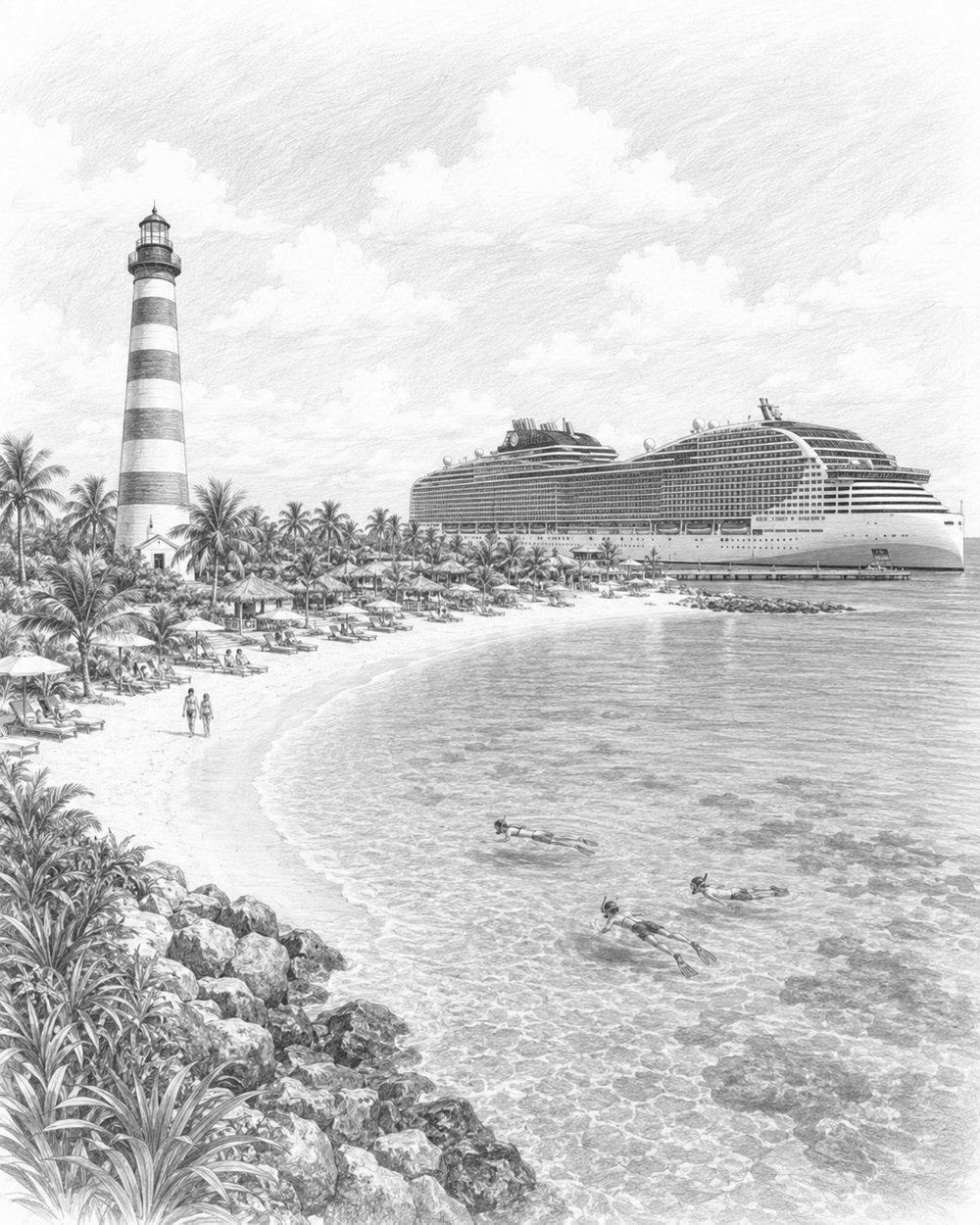
Where does MSC World America actually take you, and what makes Ocean Cay worth caring about? Every seven-night Caribbean week sails round-trip from PortMiami and calls at MSC’s own private island, Ocean Cay MSC Marine Reserve, no matter which itinerary you pick. Beyond that, the route splits: some weeks lean east toward Puerto Plata and San Juan, others west toward Cozumel, Costa Maya and Roatan. This guide walks through the island that appears on every voyage, then each Caribbean port you might see, with honest calls on when to book a ship excursion and when to strike out on your own.
Everything in this article and far more, deck by deck, in The Ultimate Guide to Sailing on MSC World America.
Get the book →The seven-night Caribbean weeks from PortMiami
MSC World America is the largest, newest MSC ship based in the United States, and PortMiami is her home. She runs seven-night Caribbean weeks, and the pattern to understand before you book is that the ports rotate. One category of week points toward the eastern Caribbean and typically features Dominican and Puerto Rican calls; another points west toward Mexico and Honduras. The one constant across all of them is Ocean Cay, which sits close enough to Florida that it usually anchors either the first or last full day of the cruise.
Because the line adjusts deployments by season, treat the specific port list as something to confirm rather than assume. When comparing sailings, look at the day-by-day itinerary for the exact departure date you want, then double-check it in the MSC for Me app once you have booked. If you are still deciding whether the ship itself suits you, the broader MSC World America cruise guide covers the districts, dining and onboard rhythm that shape your days at sea between these stops.
Ocean Cay MSC Marine Reserve: the island on every voyage
Ocean Cay is the reason MSC’s Caribbean weeks feel different from a standard island-hopping cruise. It is MSC’s private Bahamas island, and it is on every single voyage, so whatever else your itinerary includes, you will spend a day here. What sets it apart is its origin: this was once an industrial sand-dredging island, stripped and worked for decades, that MSC restored and reopened as a marine reserve. That backstory is not marketing filler. It shapes the layout, the planting, and the conservation-minded tone of the whole place.
What Ocean Cay actually is
Think of it less as a theme park and more as a low-key beach reserve wrapped around a central lagoon. The island is ringed by several stretches of sand, connected by walking paths and a shuttle for anyone who does not want to hike from one end to the other. Because the footprint is generous and the beaches are spread out, it rarely feels as packed as the guest count would suggest, especially if you are willing to walk a few minutes past the first beach you reach. A tall lighthouse stands at the heart of the island and doubles as its landmark and its evening centerpiece.
The ship docks directly at Ocean Cay rather than anchoring offshore, which is a real advantage. You walk off whenever you like, wander back for lunch or a cold shower, and head out again without waiting on tender boats.
The beaches and the lagoon
The beaches are the main event, and they vary in character. Some face open water with a bit more wave action; others sit protected and calm, which is where families with young swimmers tend to settle. The central lagoon offers the sheltered, shallow water that makes for easy floating and unhurried snorkeling near the shore. Loungers and shade are available around the sand, and the marine-reserve status means the water clarity is generally excellent for spotting fish without going anywhere special.
A practical tip: pick your beach based on what you want rather than grabbing the closest one. If you want quiet, walk. If you want facilities and shuttle stops, stay central. If you have kids, aim for the calmest, most protected stretch. Bring or rent snorkel gear, because the reserve rewards even a casual float over the shallows.
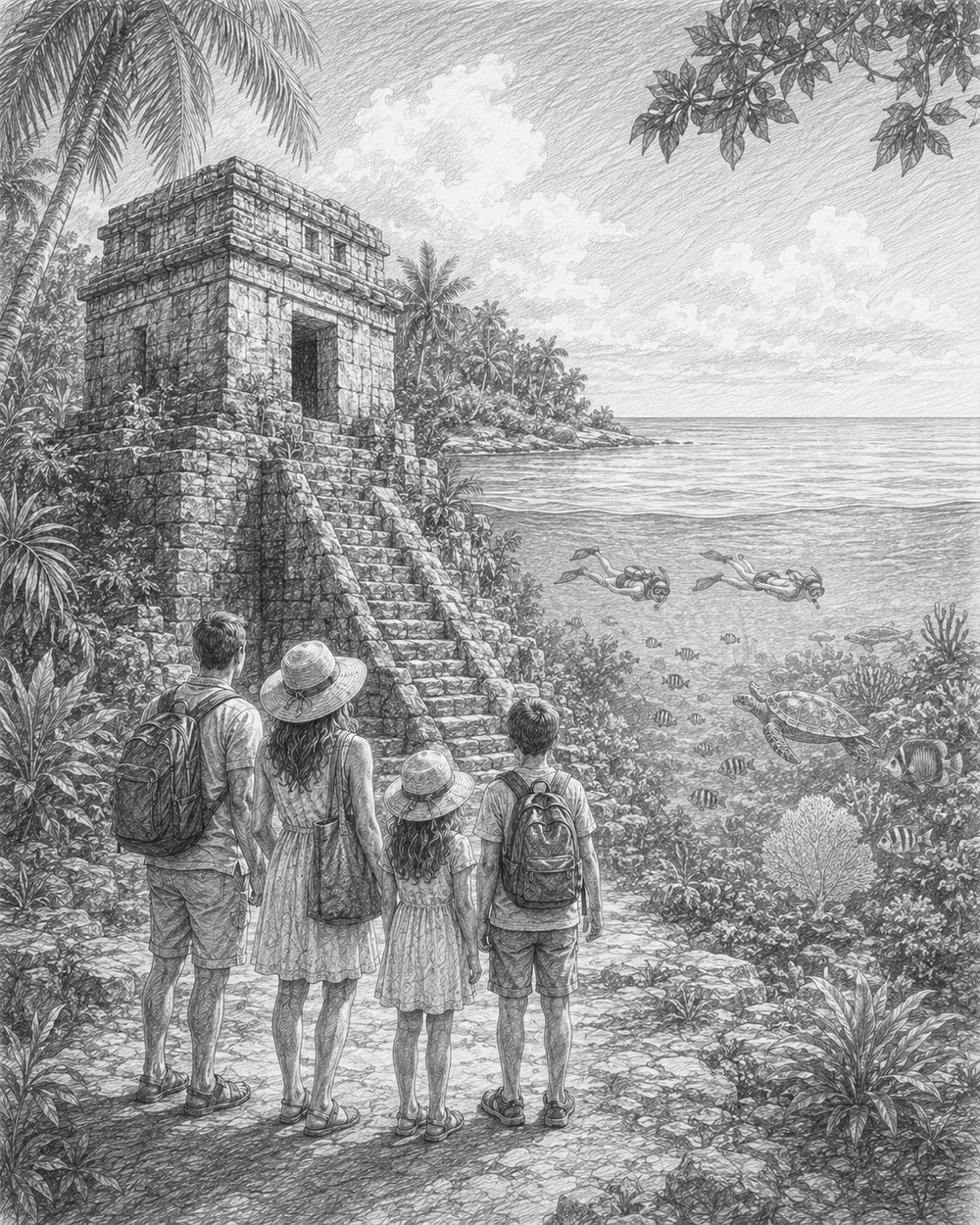
The evening lighthouse light show
Ocean Cay’s signature moment is that on many sailings the ship stays late, so you get the island after dark. As the sun drops, the central lighthouse becomes the stage for an evening light show, the tower lit and choreographed against the night sky. Instead of a rushed midday departure, you get a full beach day that rolls into sunset and a show, then a short walk back to the ship. If your sailing includes the late stay, do not treat the afternoon as the end of the visit. Have dinner, then come back out for the lighthouse.
What is included versus what costs extra
The core of the island is included. Access to the beaches, the sand, the lagoon and the general facilities comes with your cruise, so you can have a complete, satisfying day here without spending a cent ashore. What costs extra are the add-ons: organized excursions, certain premium beach experiences, equipment rentals, and food or drinks beyond what your cruise fare and package already cover. If you sail on a fare with a drinks package, check whether it extends to the island bars before you assume it does.
- Included: beach access, the lagoon, walking paths and the island shuttle, and the general public areas.
- Usually extra: booked excursions, premium or private beach experiences, gear rentals, and some food and beverage.
- Confirm: whether your drinks or dining package applies ashore, since this varies by fare and promotion.
The honest bottom line on Ocean Cay is that the free version is genuinely good. Treat the island as your easy, low-cost beach day. For a fuller sense of how the onboard fare tiers shape what is included, the guide to MSC World America Experiences explains how Bella, Fantastica and Aurea change your inclusions.
The Caribbean ports, one by one
Beyond Ocean Cay, the ports you see depend on whether your week runs east or west. Here is what each is known for, a couple of ways to spend the day, and the call on booking through the ship versus doing it yourself.
Puerto Plata, Dominican Republic
Puerto Plata is the Dominican Republic’s north-coast port, known for green mountains meeting the sea and the Amber Cove area near where ships tie up. The headline sight is the Mount Isabel de Torres cable car, which climbs to a lookout with wide views over the coast, and the beaches that stretch along this stretch of shoreline. It is a lush, scenic stop rather than a historic-city one.
Two easy ways to spend the day: ride the cable car up Mount Isabel de Torres for the panorama, or settle in at a nearby beach and let the day stay slow. The ship-versus-independent call here leans toward booking a ship excursion for anything that involves distance or timing, because the north coast spreads out and you do not want to gamble on getting back late. For a beach day close to the port area, you have more freedom to go your own way. If you want the cable car specifically, an organized tour removes the guesswork on transport and queues.
San Juan, Puerto Rico
San Juan is the standout for anyone who likes history and walkable streets. The ship docks close to Old San Juan, a compact colonial quarter of blue cobblestones, pastel facades and two great fortresses: El Morro, guarding the harbor entrance, and Castillo San Cristobal on the landward side. This is the one port where you may not need an excursion at all, because the best of it is within walking distance of the pier.
Spend the morning walking the ramparts of El Morro, then wander the old town toward Castillo San Cristobal, ducking into plazas and shaded streets along the way. Because so much is on foot from the ship, San Juan is the classic case for going independent: set your own pace, stop where you like, and keep an eye on the clock. Book a ship tour here only if you specifically want a guided history walk or a trip out to a beach or the rainforest beyond the city, where transport and timing start to matter.
Cozumel, Mexico
Cozumel is a Mexican island off the Yucatan and one of the Caribbean’s great snorkeling and diving destinations, thanks to the reef system just offshore. It is also lined with beach clubs, and it holds the San Gervasio Mayan site inland for anyone who wants a dose of history with their beach day. This is a busy, well-oiled cruise port that knows exactly how to fill a day.
The two obvious plays are water and ruins: book reef snorkeling or diving to see why the island is famous, or take a trip to the San Gervasio Mayan site for a quieter, cultural morning. On the ship-versus-independent question, the reef excursions are worth booking through the ship or a reputable operator because the good sites are offshore and you want a boat, gear and a guide who knows the currents. A beach club day, by contrast, is easy to arrange on your own from the pier. Save the DIY approach for the beach and let the professionals handle anything involving a boat.
Costa Maya, Mexico
Costa Maya sits farther south on the Mexican mainland and is a more purpose-built cruise stop with a genuine draw inland: some of the region’s best Mayan ruins. Chacchoben and Kohunlich are the two names to know, both reachable on a day trip and both offering the jungle-wrapped temple experience without the crowds of the biggest sites. Closer to port, the village of Mahahual gives you a laid-back beach and a slower pace.
Pick your lane: an archaeology day out to Chacchoben or Kohunlich, or a simple beach afternoon at Mahahual. Here the ship-versus-independent call tilts clearly toward booking for the ruins. They are a real drive inland, the timing is tight against all-aboard, and a ship excursion guarantees you are back on board. Mahahual, being close and easy, is fine to do independently if you just want sand and a swim. When the destination is far and the clock is unforgiving, the ship tour buys you peace of mind.
Roatan, Honduras
Roatan is a Honduran island fringed by part of the second-largest barrier reef in the world, which makes it a snorkeling and diving destination on par with Cozumel. West Bay Beach is the marquee stretch of sand, and the island also has nature parks where you can meet local wildlife. It is small, green and reef-rich, and a little more rustic than the polished Mexican ports.
The classic day here is West Bay Beach with a snorkel over the reef, which comes right up close to shore in places, or a nature-park visit for the wildlife. On booking, Roatan is a good candidate for a ship excursion or a well-reviewed local operator, particularly for reef trips and anything that involves getting across the island, since roads and transfers can eat into your day. If you are aiming for West Bay specifically, an organized transfer takes the stress out of getting there and back. For pure beach time near the pier, independent works.
An excursion booking strategy that saves money and stress
The recurring theme across these ports is simple: book through the ship when distance and timing create real risk, and go independent when the best of a port is close to the pier. A ship excursion costs more, but it guarantees the ship waits for you if the tour runs late. That guarantee is worth paying for at Costa Maya’s inland ruins or a far-flung Roatan beach. It is much less necessary in walkable San Juan or for a beach club a short ride from the Cozumel pier.
- Book through the ship for anything far inland, time-sensitive, or dependent on a boat and guide, like the Mayan ruins or offshore reef trips.
- Go independent for walkable ports and near-pier beaches, where you can control your own clock and save money.
- Book early in the MSC for Me app for the popular tours, which sell out, and review the meeting times the moment you board.
- Match your excursions to your energy: front-load the active, physical days and leave a lighter stop for later in the week.
One more money-saver: you do not need a paid excursion at every stop. Ocean Cay is a free beach day by design, and San Juan is essentially a free walking day. First-time cruisers especially tend to over-book; the first-time cruiser guide to MSC World America is a good reality check on how much you actually need to plan in advance.
Docking versus tendering, and all-aboard timing
Whether you walk straight off the ship or ride a small boat ashore changes the rhythm of your port day. At Ocean Cay the ship docks at the island, so you come and go freely all day. Most of the major Caribbean ports on these itineraries have deep-water piers where large ships tie up alongside, meaning you step off onto a pier and walk into port. When a port requires tendering, the ship anchors offshore and ferries guests in on tenders, which adds waiting time at both ends and can bunch up around popular hours.
The practical difference is time. A docked port lets you pop back to the ship midday; a tendered port rewards planning your time ashore in a single block. Check your itinerary in the app for how each stop is handled, and factor tender time in if it applies.
All-aboard is the number that governs everything. The ship publishes an all-aboard time that is earlier than the actual departure, and it is not a suggestion. If you are on a ship excursion and the tour runs late, the ship waits; if you are on your own and miss it, the ship leaves, and catching up to the next port is your problem and your expense. Build a generous buffer, set an alarm on your phone, and remember that some ports sit in a different time zone from ship’s time, which is always the clock that matters. When in doubt, be back early.
Money and tipping ashore
Onboard, your daily gratuities are added to your account automatically and your spending runs on your cruise card, so tipping crew is handled without cash. Ashore is different. US dollars are widely accepted across these Caribbean ports, which spares you the hassle of changing money for a single day, but carry small bills. Vendors and drivers rarely have change for large notes.
- Bring a stash of small US bills for taxis, beach vendors, guides and tips ashore.
- Tip local guides and drivers directly and in cash; a modest amount is customary and appreciated.
- Agree on taxi fares before you get in, since many drivers do not use meters at cruise ports.
- Keep a card for larger purchases, but do not rely on card acceptance at small stalls or remote beaches.
The gratuities added to your account cover the crew who serve you on the ship; they do not cover the people who help you ashore. Tour guides, drivers and beach staff at each port work for tips, and cash in hand is the norm. Budget a little extra beyond your excursion price for these. If you are weighing whether a higher fare tier smooths out onboard costs too, the breakdown of the MSC Yacht Club shows what the top-tier all-inclusive experience folds into one price.
Get the complete MSC World America playbook
For a port-by-port plan plus a full walkthrough of the ship’s districts, dining and cabins, “The Ultimate Guide to Sailing on MSC World America” pulls it all together. It is part of the Ultimate Ship Guides series by Leo Sotropa, with clear action steps in every chapter so you arrive at each stop knowing exactly what to do.
Frequently asked questions
Does every MSC World America cruise stop at Ocean Cay?
Yes. Ocean Cay MSC Marine Reserve, MSC’s private Bahamas island, is on every seven-night Caribbean voyage from PortMiami. The other ports rotate depending on whether your week runs east or west, but Ocean Cay is the one constant, so you can count on a day there regardless of which itinerary you choose.
Is Ocean Cay free, or does it cost extra?
The core of the island is included in your cruise: beach access, the lagoon, the walking paths and the shuttle. What costs extra are booked excursions, certain premium beach experiences, equipment rentals, and some food and drink. You can have a full, enjoyable beach day without spending anything ashore, so save your budget for ports where an excursion unlocks something you cannot reach on foot.
What is the Ocean Cay lighthouse light show?
On sailings where the ship stays into the evening, the island’s central lighthouse becomes the stage for a nighttime light show, with the tower lit and choreographed after dark. If your voyage includes the late stay, plan to have dinner and then head back out for it rather than leaving the island in the afternoon. Confirm the timing for your specific sailing in the MSC for Me app.
Which ports should I book a ship excursion for?
Book through the ship when distance and timing create risk, such as the inland Mayan ruins near Costa Maya, offshore reef trips at Cozumel or Roatan, and getting across the island to a far beach. Go independent where the best of a port is walkable or close to the pier, like Old San Juan or a near-port beach day, where you control your own clock and save money.
What happens if I miss the all-aboard time?
If you are on a ship-booked excursion that runs late, the ship waits for you. If you are exploring on your own and miss all-aboard, the ship leaves, and getting yourself to the next port becomes your responsibility and expense. Always build in a buffer, watch that some ports sit in a different time zone from ship’s time, and aim to be back early.
Do I need local currency at these ports?
US dollars are widely accepted across these Caribbean ports, so you generally do not need to change money for a single day ashore. Carry small bills for taxis, beach vendors, guides and tips, since change for large notes is often scarce. Keep a card for bigger purchases, but do not rely on card acceptance at small stalls or remote beaches.
How do I know which ports my specific cruise visits?
Check the day-by-day itinerary for your exact departure date when you book, then confirm it again in the MSC for Me app afterward. Ports vary between eastern and western weeks and can occasionally shift for weather or operational reasons, and the app is where any change appears first, along with your excursion meeting times and all-aboard details.
Ready for the whole ship in one place? It is all in The Ultimate Guide to Sailing on MSC World America.
Get the book →
Meet Leo: The Heartbeat Behind ‘A Country A Month’
Journeying through the pages of A Country A Month, you might often feel the rhythm of a storyteller’s heartbeat, pulsating through each line, each image, and each adventure shared. That heartbeat belongs to none other than our remarkable website editor, Leo.
With a lens in one hand and a pen in the other, Leo seamlessly marries his passions for photography and writing. His eye captures moments that words can barely describe, yet his eloquence brings those images to life, transcending borders and connecting us all through shared stories. An avid traveler, every country he’s visited has added another chapter to his expansive tale, and through our platform, he generously shares these chapters with us.