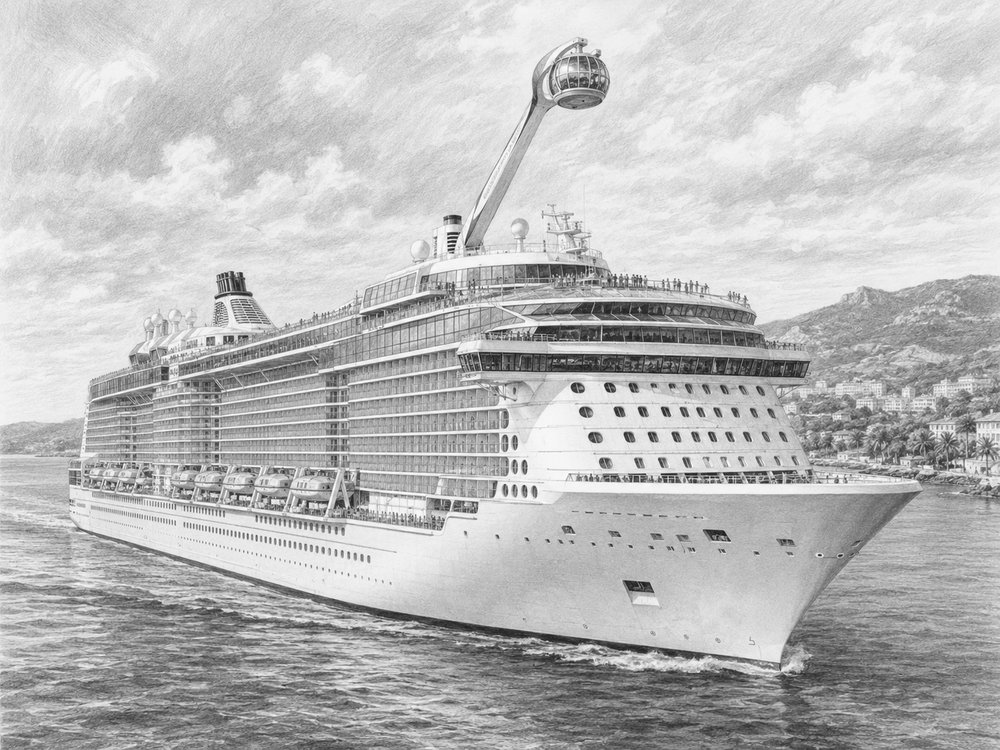
Quantum of the Seas is the ship that started an entire class, and if you are trying to decide whether she is right for your next cruise, the short answer is this: she suits travelers who want a genuinely different day at sea. She was the first Quantum-Class ship Royal Caribbean built, the one that introduced the North Star observation capsule, the RipCord by iFly skydiving simulator, the SeaPlex activity hall, the Two70 venue and the robot-run Bionic Bar. Today she sails the West Coast, based in Los Angeles for Baja and Mexican Riviera cruises, which puts El Arco in Cabo San Lucas and the tacos of Ensenada within a short, warm-water sailing of Southern California. This guide walks through who she suits, her signature thrills, how her dining and cabins work, where she goes, and how to plan a smooth trip.
Everything in this article and far more, deck by deck, in The Ultimate Guide to Sailing on Quantum of the Seas.
Get the book →Why Quantum of the Seas matters: the original Quantum-Class ship
Cruise lines usually build a lead ship and then refine the design across sister vessels. Quantum of the Seas is that lead ship. She was the first to carry the ideas that now define Quantum-Class cruising, and every headline feature you have heard about on her newer sisters made its debut here. That matters for two reasons. First, everything is proven; these are not experimental attractions but the venues Royal Caribbean has run for years and copied across the fleet. Second, she carries the full set. When you sail Quantum of the Seas you get the North Star, RipCord by iFly, SeaPlex, Two70 and the Bionic Bar all on one ship, not a stripped-down version.
She is a large ship without being one of the mega-resort giants. She measures around 168,000 gross tons across roughly 16 guest decks, and she carries about 4,180 guests at double occupancy, rising to nearly 4,900 when every berth is filled. That scale gives her the space for indoor attractions you simply do not find on smaller ships, while keeping her a little more manageable to learn than the largest vessels afloat. Within a day or two most people have the layout memorized: the Royal Esplanade promenade running through the middle of the ship, the pool deck and Solarium up top, and the entertainment venues clustered where they are easy to reach.
Who Quantum of the Seas suits
The clearest way to know if this ship fits you is to think about how you want to spend a sea day. Quantum of the Seas is built for people who like the idea of doing something rather than only lying by the pool. On the Los Angeles-based Baja and Mexican Riviera routes there are real sea days on the open Pacific, and this ship fills them better than almost anything in her size range.
She suits active families especially well. Kids and teens gravitate to SeaPlex for bumper cars and basketball, to the FlowRider surf simulator, and to the rock wall, while Adventure Ocean gives younger children a supervised program. She suits couples who want variety, from a quiet morning in the adults-only Solarium to a North Star ride at sunset and a specialty dinner at night. She suits first-time cruisers because the app-driven daily planning keeps everything organized, and she suits solo travelers thanks to dedicated Studio cabins built for one. If your ideal vacation is total stillness on a tiny ship, she is not that. If you want a warm-weather cruise with genuine things to do between ports, she is a strong match. First-timers in particular may want to read a dedicated first-time guide to Quantum of the Seas before booking, since knowing how reservations and the app work changes how much you get out of the ship.
The signature thrills that define her
North Star
North Star is the single feature people remember most. It is a jewel-shaped glass capsule mounted on a mechanical arm that lifts you roughly 300 feet above the sea, well above the top deck, for slow 360-degree views. On a clear sea day you can watch the ship’s wake stretch to the horizon in every direction, and as you approach a port the raised vantage turns arrival into an event of its own. It is often complimentary on sea days, which is when demand is highest, so reserve your slot early through the app or at the venue. Rides are gentle and suitable for most ages, and the capsule is glass on all sides, so bring a camera and pick a time near golden hour if you can.
RipCord by iFly and FlowRider
RipCord by iFly is a skydiving simulator, a vertical wind tunnel that suspends you on a column of moving air so you experience the sensation of freefall without leaving the ship. An instructor is with you the entire time, first-timers are welcome, and a short training briefing covers the body position before you step in. It is one of the most popular bookings on board, so reserve it early in the cruise. On the sport side, the FlowRider surf simulator lets you try bodyboarding or stand-up surfing on a continuous sheet of water, with staff coaching every rider. Both are the kind of attraction that gives non-swimmers and landlubbers a taste of an extreme sport in a controlled setting.
SeaPlex
SeaPlex is the largest indoor active space at sea, and it is the reason sea days never drag for families. Across the day it transforms from bumper cars to roller skating to a basketball court, with an arcade and Xbox stations alongside. Because it is indoors and climate-controlled, it keeps working no matter what the Pacific weather is doing, which is a real advantage on this ship’s open-water stretches. Check the daily schedule in the app, because the different activities run at set times rather than all at once.

Two70 and the Bionic Bar
Two70 is the ship’s most inventive space. By day it is a calm, light-filled lounge with a two-story wall of glass looking out over the ship’s wake; by night it becomes a theater where the glass gives way to Vistarama projections and Roboscreens, movable screens on robotic arms that combine with live performers for a show unlike anything else at sea. It is worth visiting in both modes. The Bionic Bar nearby is exactly what it sounds like: two robotic arms mix your drink from a tablet order, a genuinely fun novelty and a good spot for a photo. Elsewhere the Royal Esplanade indoor promenade ties the ship together, the Music Hall hosts live bands, and the Vitality Spa handles the quieter end of the day.
Because these venues all take some planning to enjoy fully, it is worth reading up on how to sequence your days. A closer look at what to expect on Quantum of the Seas covers the rhythm of a typical day and helps you avoid the crowds at the most popular attractions.
Dining on board
Your cruise fare already includes a full range of dining. The Main Dining Room is the classic sit-down experience with a changing menu each night, the Windjammer is the sprawling buffet for casual meals at any pace, Café Promenade handles quick bites and coffee on the Esplanade, and Sorrento’s serves pizza when you want something simple. You can cruise on Quantum of the Seas without spending an extra dollar on food and eat very well.
The specialty restaurants cost extra and are where the ship shows off. Wonderland is the most theatrical, an imaginative menu built around a sense of playful surprise. Jamie’s Italian brings rustic Italian cooking, Chops Grille is the steakhouse, Izumi covers Japanese and sushi, and the Chef’s Table is a multi-course wine-paired dinner for a small group. Johnny Rockets adds an American diner option. If you want to try more than one, a dining package bought before you sail is usually cheaper than paying per meal, and popular tables like Wonderland book up fast, so reserve early in the cruise.
Two practical notes tie your whole experience together. The Royal Caribbean app runs your day, holding your reservations, the daily schedule, deck plans and dining times, so download it and log in before you board. Your SeaPass card is your room key and your cashless account for everything on board; daily gratuities are added automatically, and Wi-Fi is a separate paid plan you can add if you need to stay connected.
Cabins: a quick overview
Quantum of the Seas offers the full range of accommodation, and the right choice depends on your budget and how much time you plan to spend in the room. Here is how the categories break down.
| Category | Best for |
|---|---|
| Virtual Balcony interior | Value seekers; a floor-to-ceiling real-time ocean screen brings the view inside |
| Ocean View | A real window without the cost of a balcony |
| Balcony | Outdoor space and sea air; all outward-facing views |
| Studio | Solo travelers, with cabins designed for one |
| Suites (up to the Royal Loft Suite) | Space and perks, up to the two-deck Royal Loft Suite |
The best value on the ship is a Virtual Balcony interior on a short getaway. You get a real-time ocean screen the full height of the wall, which keeps the room from feeling closed in, at the lowest fare on board, and on a three- or four-night sailing you spend little enough time in the cabin that it makes sense. The best all-round choice is a midship Balcony on the mid-decks. That location gives you space and natural light, and it sits over the ship’s center of gravity where the ride is steadiest, which genuinely helps on the open-Pacific stretches between Los Angeles and the Mexican coast.
A few rooms are worth avoiding, and you can spot them on the deck plan before you book. Cabins directly under the pool deck or SeaPlex can pick up noise from dragged chairs and activity overhead. Rooms near Two70 or the Music Hall sit close to the nightlife. Forward high-deck rooms feel motion the most, which matters if anyone in your party is prone to seasickness, and some lower-deck balconies have their views partly blocked by lifeboats. None of this is a dealbreaker, but it is easy to sidestep with a minute on the deck plan. For a full breakdown by location and category, the guide to the best cabins on Quantum of the Seas goes deck by deck.
Where Quantum of the Seas sails
On the West Coast, Quantum of the Seas sails round-trip from Los Angeles, with the cruise terminal located in San Pedro. Her itineraries run the range from short Baja getaways to longer Mexican Riviera voyages, so you can match the length to your schedule. She has sailed other regions and home ports in other seasons, so always confirm your specific voyage, but the Baja and Mexican Riviera pattern is her signature West Coast season.
Short and mid-length sailings focus on Baja California and the near Mexican Riviera. A common list of ports includes Cabo San Lucas, often as an overnight call, Ensenada, and Santa Catalina Island at Avalon, a tender port just off the Southern California coast. Trips range from three-night Ensenada getaways to five-, six- and seven-night Baja and Mexican Riviera cruises. Longer Mexican Riviera voyages extend down the coast to add Mazatlán and Puerto Vallarta. Ports and lengths vary by sailing, so confirm your itinerary in the app before you plan any excursions.
One detail worth knowing early: Cabo San Lucas and Catalina are tender ports, meaning the ship anchors offshore and small boats ferry you to land. Tenders start early and the first ones fill up, so plan your morning accordingly, especially on the overnight Cabo call when you have the luxury of two days but still want an early start on day one.
The ports, briefly
- Los Angeles / San Pedro (embarkation): the Battleship USS Iowa and the Cabrillo Marine Aquarium are right by the port, with easy reach of downtown LA, Hollywood and Long Beach. Fly in a day early, because LA traffic is heavy and you do not want it between you and the ship.
- Cabo San Lucas (often overnight, tender): El Arco at Land’s End, Medano Beach, Lover’s Beach, water taxis, sport fishing, and whale watching in season. The overnight call gives you a rare evening in port.
- Ensenada: the La Bufadora blowhole, the wineries of the Valle de Guadalupe, and a strong taco and street-food scene in town.
- Santa Catalina Island / Avalon (tender): the landmark Casino building, glass-bottom boats, snorkeling at Lover’s Cove, golf carts to get around, and the botanic garden.
- Mazatlán (Mexican Riviera sailings): the historic Centro, the malecón boardwalk, the El Faro lighthouse, and the beaches of Stone Island.
- Puerto Vallarta (Mexican Riviera sailings): the Malecón, the Church of Our Lady of Guadalupe, the Zona Romántica, and beaches like Playa Los Muertos.
If you are weighing a short Baja run against a full Mexican Riviera loop, the trade-off is simple: the short sailings are about warm-water sea days and a couple of easy ports, while the longer voyages trade some sea time for the deeper Mexican culture of Mazatlán and Puerto Vallarta. Our deeper looks at the Baja Mexico itineraries and the longer Mexican Riviera sailings break down each route port by port.
How to plan a smooth cruise
A little planning turns Quantum of the Seas from busy to effortless. Start with the flight. Because she sails from San Pedro and LA traffic is unpredictable, fly in the day before rather than the morning of embarkation. That single decision removes the biggest source of stress from the whole trip.
Next, book the marquee attractions early. North Star and RipCord by iFly are the two that sell out, and the best sea-day slots go first. Open the app as soon as your reservation window allows and lock those in, then add specialty dining, especially Wonderland, before the popular times disappear. Think of your sea days as the time for the ship’s headline experiences and your port days as the time ashore, and the schedule mostly plans itself.
Pack for range. Southern California and Mexico are warm, so bring swimwear, sunscreen and comfortable walking shoes for the ports, but also a light layer for the air-conditioned indoor venues and breezy top decks, plus something a step dressier for a specialty dinner. If anyone is prone to motion sickness, bring remedies and lean toward a midship cabin on a lower guest deck, since the open Pacific can have swell. Finally, decide before you sail whether you need Wi-Fi; if you do, buying a plan in advance is usually cheaper than adding it on board. For more of these small decisions that add up, our roundup of Royal Caribbean tips for Quantum of the Seas collects the ones that make the biggest difference.
Plan your ports of call
Make the most of every day ashore with our in-depth port guides for the stops on this ship’s itineraries:
Get the complete Quantum of the Seas playbook
If you want every reservation window, cabin choice and port plan laid out step by step, “The Ultimate Guide to Sailing on Quantum of the Seas” walks you through the whole trip. It is part of the Ultimate Ship Guides series by Leo Sotropa, with clear action steps in every chapter so you always know exactly what to do next.
Frequently asked questions
What makes Quantum of the Seas special compared to other Royal Caribbean ships?
She is the original Quantum-Class ship, the class lead that introduced the North Star observation capsule, the RipCord by iFly skydiving simulator, the SeaPlex activity hall, the Two70 venue and the Bionic Bar to Royal Caribbean. Every one of those signature features debuted on her, and she carries the complete set on a single ship of around 168,000 gross tons.
Where does Quantum of the Seas sail from?
On the West Coast she sails round-trip from Los Angeles, with the cruise terminal in San Pedro, on Baja and Mexican Riviera itineraries. She has sailed other regions and home ports in other seasons, so always confirm your specific voyage and its ports in the Royal Caribbean app before you book flights or excursions.
Which ports does she visit?
Typical ports include Cabo San Lucas, often an overnight call, Ensenada, and Santa Catalina Island at Avalon. Longer Mexican Riviera voyages add Mazatlán and Puerto Vallarta. Trips range from three-night Ensenada getaways to five-, six- and seven-night Baja and Mexican Riviera cruises, and the exact ports vary by sailing.
Do I need to reserve the North Star and RipCord in advance?
Yes, reserve them early. Both are among the most popular experiences on board, and the best sea-day slots fill up fast. North Star is often complimentary on sea days, which is when demand is highest, so book through the Royal Caribbean app or at the venue as soon as you can.
What is the best cabin on Quantum of the Seas?
For value, a Virtual Balcony interior on a short getaway gives you a floor-to-ceiling real-time ocean screen at the lowest fare. For the best all-round experience, choose a midship Balcony on the mid-decks; the space and light are excellent and the ride is steadiest there, which helps on the open Pacific. Avoid cabins under the pool deck or SeaPlex and forward high-deck rooms if motion is a concern.
Are Cabo San Lucas and Catalina tender ports?
Yes. At both Cabo San Lucas and Santa Catalina Island the ship anchors offshore and small tender boats take you ashore. Tenders start early and the first departures fill quickly, so plan an early start, especially on the overnight Cabo call where you can spread your time across two days.
Is Quantum of the Seas good for families and first-time cruisers?
Very much so. Families have SeaPlex, the FlowRider, the rock wall and Adventure Ocean for kids, while first-time cruisers benefit from the app that organizes reservations, dining and the daily schedule. Solo travelers are covered too, with dedicated Studio cabins built for one, and the warm-water round-trip Los Angeles itineraries make for an easy introduction to cruising.
Ready for the whole ship in one place? It is all in The Ultimate Guide to Sailing on Quantum of the Seas.
Get the book →
Meet Leo: The Heartbeat Behind ‘A Country A Month’
Journeying through the pages of A Country A Month, you might often feel the rhythm of a storyteller’s heartbeat, pulsating through each line, each image, and each adventure shared. That heartbeat belongs to none other than our remarkable website editor, Leo.
With a lens in one hand and a pen in the other, Leo seamlessly marries his passions for photography and writing. His eye captures moments that words can barely describe, yet his eloquence brings those images to life, transcending borders and connecting us all through shared stories. An avid traveler, every country he’s visited has added another chapter to his expansive tale, and through our platform, he generously shares these chapters with us.