If your cruise lists Rome, your ship actually ties up in Civitavecchia, a working port town on the coast about 45 miles northwest of the capital. That gap is the whole story of a Rome port day: the city is roughly 90 minutes away by train or road, so the best plan is to commit early, move fast, and pick two headline sights rather than trying to see everything. This Rome Civitavecchia cruise port guide covers how to get from the pier to Rome, a realistic one-day plan, the honest risk of missing the ship, and why a slow day in Civitavecchia itself is a perfectly good choice.
Where your ship docks
Civitavecchia is a large commercial and ferry port, and cruise ships berth at dedicated piers rather than tendering. The terminals sit some distance from the town center and the train station, so you rarely walk straight off the ship into the action. Most cruise lines run a complimentary or low-cost port shuttle from the pier to a drop-off near the port gate or town, from which it is a short walk or taxi to Civitavecchia’s railway station. Check your cruise line’s app for the shuttle’s stops and running times, because the walk from the berth to the gate can be long and is not always pedestrian-friendly.
Getting from Civitavecchia to Rome
The train (the independent traveler’s default)
Regional trains run frequently between Civitavecchia station and central Rome, and the ride takes roughly an hour to 90 minutes depending on the service. Two Rome stations matter: Roma San Pietro, closest to the Vatican, and Roma Termini, the central hub with metro connections to the rest of the city. Buy tickets at the station machines or counter, and remember that regional tickets usually need to be validated before you board — miss that step and you can be fined. Trains are the cheapest way in and immune to road traffic, their great advantage on an all-aboard clock.
The catch is the two transfers on either end: pier to station in Civitavecchia, and station to your first sight in Rome. Build those into your timing. Fast intercity trains also serve the route and shave off time, but run less often and cost more; buy a return before you set off so you are not queuing for a homebound ticket with the clock running.
Ship transfers and organized transport
Every line selling a Rome call offers transfers and guided tours, and here they are worth taking seriously. A ship-run “Rome on your own” bus transfer drops you in the city and brings you back, removing the train juggling and, crucially, guaranteeing the ship waits if the coach is delayed. That single guarantee is why many people who would normally travel independently make an exception at Civitavecchia.
Private drivers
Licensed private drivers meet cruise passengers at the port and offer door-to-door service, often with a car-and-guide package that hits several sights in a day. This is the most comfortable and flexible option and the priciest; it suits small groups splitting the cost. Book a reputable operator that specializes in cruise passengers, and build a hard return time around all-aboard.
A realistic one-day Rome plan
Rome is enormous and you have, in practice, four to six hours in the city once travel is accounted for. The mistake is trying to see it all. Pick two of the marquee experiences below, cluster them geographically, and treat the rest as a bonus.
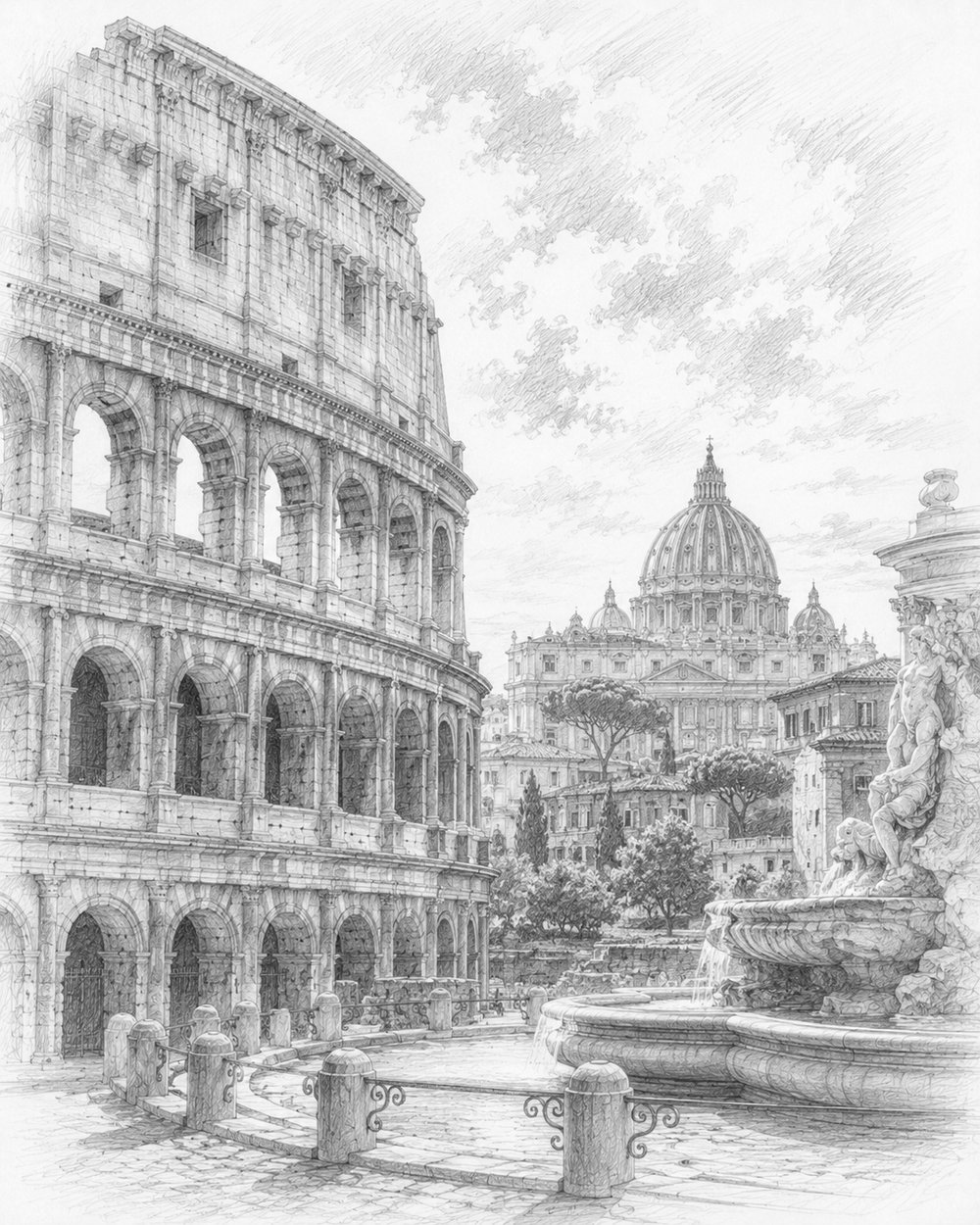
The Colosseum and Roman Forum
The Colosseum and the adjacent Roman Forum and Palatine Hill are usually sold on one combined ticket, and they sit together on the east side of the center, reachable by metro from Termini. Book a timed entry ahead — this is one of the most visited sites on earth and same-day tickets are unreliable. Give the pairing two to three hours, the amphitheater first, then the Forum’s ruined temples and the Palatine’s hilltop. Wear real shoes; the ground is uneven ancient stone.
The Vatican Museums and St. Peter’s Basilica
The Vatican Museums, ending at the Sistine Chapel, plus St. Peter’s Basilica make the other great half-day, and they are closest to Roma San Pietro station. This is the sight to book timed tickets for weeks ahead — walk-up lines can swallow an entire port day. The Vatican Museums close on most Sundays, and St. Peter’s is free but subject to security queues and a strict dress code (shoulders and knees covered).
Note that the Colosseum and the Vatican sit on opposite sides of the historic center. Doing both in one cruise day is possible but leaves no margin, and margin is exactly what you want when the ship is 90 minutes away.
The Pantheon, Trevi Fountain, and Spanish Steps
If you would rather skip the big-ticket interiors and their timed tickets, the classic open-air walk strings together the Pantheon, the Trevi Fountain, and the Spanish Steps within an easy stroll of one another. The Pantheon — a nearly 2,000-year-old temple with an open oculus — is the highlight and free or low-cost to enter. Toss a coin at Trevi, climb the Spanish Steps, and duck into a cafe. This route needs no booking and gives you the postcard Rome in the time you actually have.
Ship tour versus independent
For most ports the independent route wins on flexibility and cost. Civitavecchia is where that calculus tips: the distance, the fixed all-aboard time, and the reality that a single missed connection can cost you the ship all argue for structure.
- Take a ship excursion or ship transfer if this is your first time in Rome, you are anxious about timing, or you want the guarantee that the ship waits for a late-returning tour.
- Go independent by train if you have visited Rome before, you are comfortable with public transport, and you are disciplined about turning back early. The savings and freedom are real — but so is the risk.
- Hire a private driver if you are a small group wanting comfort and a custom route, and can build a firm return time into the plan.
The all-aboard risk — take it seriously
This is the most important paragraph in this guide. Because Rome is 90 minutes each way and the sights are crowded and ticket-gated, this is one of the classic ports where independent travelers miss the ship. Work backward from all-aboard, typically 30 to 60 minutes before departure: subtract the train ride, the transfers, and a generous buffer, then set a hard “turn around now” time and honor it even mid-sight. Trains run late and one missed regional train can put you an hour behind. If you sail on an independent ticket and miss the departure, getting to the next port is entirely on you.
Staying in Civitavecchia for a slow day
Not every Rome call needs to be about Rome. If you have seen the city before, or do not want to spend six hours on trains and queues, Civitavecchia rewards a slower approach. The town has a seafront promenade, a historic center with cafes and trattorias, and Forte Michelangelo, the Renaissance fortress guarding the harbor. Eat an unhurried lunch of local seafood and pasta, browse the market, and stroll back to the ship on foot. There is no shame in choosing it over a frantic dash to the Colosseum.
What to skip and what to watch out for
- Skip trying to do the Colosseum and the Vatican in the same day. On a cruise clock it turns a great day into a stressful one.
- Skip un-booked visits to the Vatican Museums and Colosseum. Without a timed ticket you can lose your day in line — book weeks ahead.
- Watch the validation rule on regional train tickets and keep your return ticket in hand.
- Mind the dress code at St. Peter’s and other churches: covered shoulders and knees, or you will be turned away.
- Guard your belongings on crowded trains and around the major sights; pickpocketing is common.
- Do not linger over one last sight. The biggest Civitavecchia mistake is losing track of time in a city 90 minutes from your bed.
If your itinerary includes other Italian calls, pair Rome with a very different day ashore in Naples, where Pompeii and the Amalfi Coast are the draws.
Cruise ships that visit Rome (Civitavecchia)
Civitavecchia is one of the busiest cruise ports in the Mediterranean, anchoring Western Mediterranean and Greek Isles itineraries. Many ships that call here use it as a turnaround port, so your embarkation day may be a Rome day too. Here are guides to some of the ships that visit:
Frequently asked questions
How far is Rome from the Civitavecchia cruise port?
Rome is about 45 miles (roughly 70 kilometers) northwest of Civitavecchia, around 90 minutes each way by train or road. That distance is the single most important thing to plan around on a Rome cruise day.
How do I get from the ship to Rome?
Take the port shuttle to the town or port gate, walk or taxi to Civitavecchia station, and catch a regional or intercity train to Roma San Pietro (best for the Vatican) or Roma Termini. Alternatively, book a ship transfer, excursion, or private driver for door-to-door service. Confirm times in the app.
Can I see the Colosseum and the Vatican in one port day?
Technically yes, but it is a rushed, high-risk plan because the two sit on opposite sides of the center and both require timed tickets. With Rome 90 minutes from the ship, anchor your day on one and treat the other as a future trip.
Do I need to book tickets in advance?
For the Vatican Museums and the Colosseum, absolutely — reserve timed-entry tickets weeks ahead, because walk-up lines can consume your entire day. The Pantheon, Trevi Fountain, and Spanish Steps need no booking, which is why that open-air route is a good low-stress alternative.
Is it risky to visit Rome independently on a cruise day?
The distance makes Civitavecchia one of the classic ports where independent travelers miss the ship. Trains you book yourself will not wait, so set a hard turn-around time and honor it. If you want the guarantee that the ship waits, take a ship-organized transfer or excursion instead.
Is it worth just staying in Civitavecchia?
Yes, if you have seen Rome or want a relaxed day. Civitavecchia has a seafront promenade, a historic center with good trattorias, and Forte Michelangelo on the harbor — a low-stress port day without the trains and queues.
What time do I need to head back to the ship?
Work backward from all-aboard, usually 30 to 60 minutes before departure. Subtract the roughly 90-minute journey, the transfers, and a buffer, then set a firm “leave Rome now” time and stick to it. Confirm your exact all-aboard time in the cruise line’s app.

Meet Leo: The Heartbeat Behind ‘A Country A Month’
Journeying through the pages of A Country A Month, you might often feel the rhythm of a storyteller’s heartbeat, pulsating through each line, each image, and each adventure shared. That heartbeat belongs to none other than our remarkable website editor, Leo.
With a lens in one hand and a pen in the other, Leo seamlessly marries his passions for photography and writing. His eye captures moments that words can barely describe, yet his eloquence brings those images to life, transcending borders and connecting us all through shared stories. An avid traveler, every country he’s visited has added another chapter to his expansive tale, and through our platform, he generously shares these chapters with us.