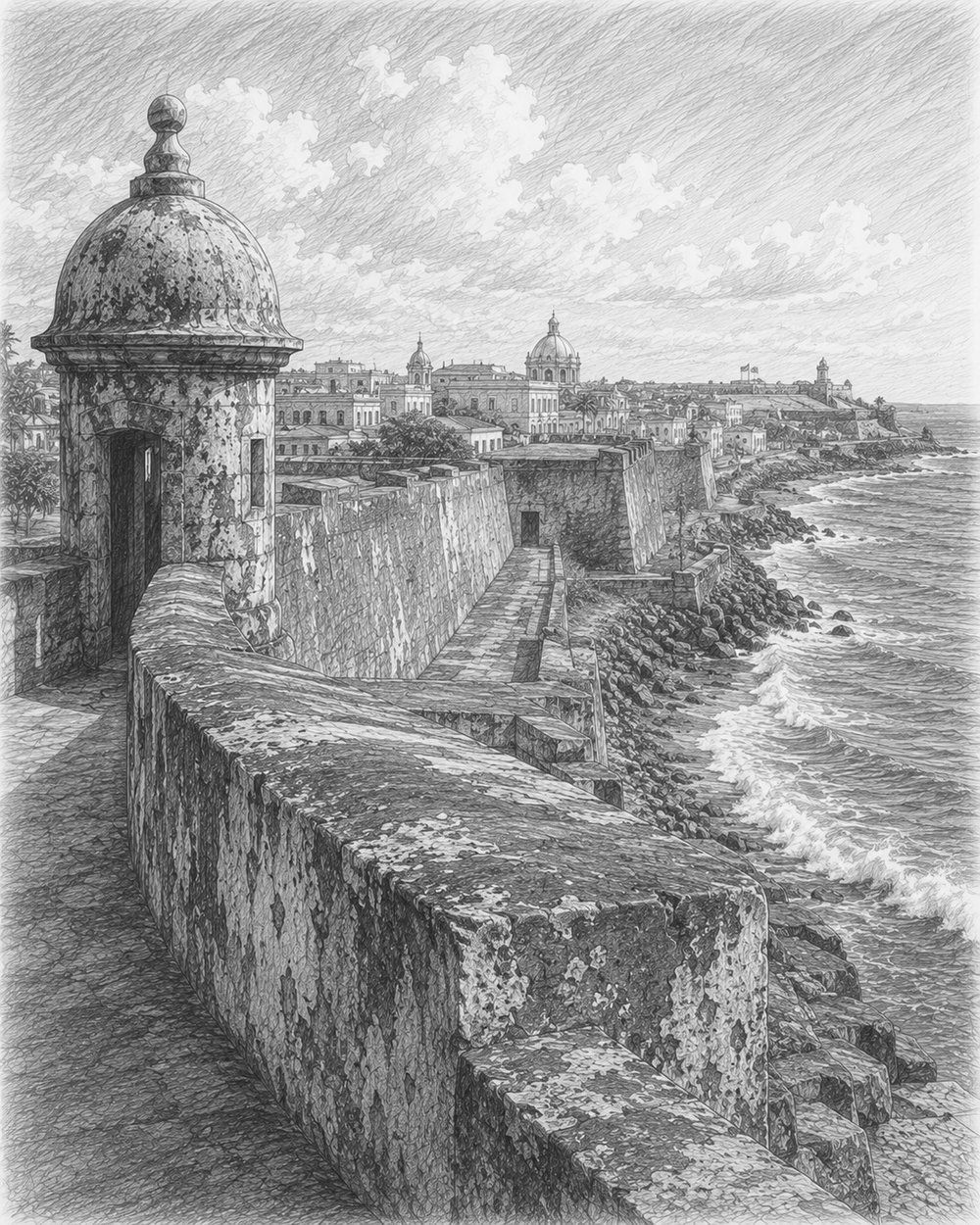
San Juan is one of the easiest ports in the Caribbean to enjoy on foot. If your ship docks in Old San Juan, you walk straight off the gangway into a 500-year-old walled town of blue cobblestones, pastel houses, and two massive Spanish forts. The best way to spend a cruise day here is simple: wander Old San Juan on foot, climb El Morro, and pick one bigger thing — a second fort, a beach, the rainforest, or the rum — depending on your time. This San Juan cruise port guide covers where you dock, what to see, and how to plan the day.
San Juan is the capital of Puerto Rico, a US territory, which makes it smooth for American travelers: you spend US dollars, English is widely spoken alongside Spanish, and US citizens do not need a passport. As a major hub, some sailings begin, end, or overnight here rather than just passing through — which can give you an evening in the old town, something few Caribbean ports offer.
Where your ship docks
San Juan has two cruise areas, and which one you use changes your day. Most ships tie up at the Old San Juan piers along the south edge of the historic district. From here you walk right off the ship into the old town — no shuttle, no taxi, no tender — and within a few minutes you are among the colorful streets, with the forts a walk up through the neighborhood.
The largest ships sometimes use the Pan American pier, across the bay on the Isla Grande side. It is a short taxi or shuttle ride from the historic center rather than a walk — not far, but not walkable in the way the old-town piers are. Because assignments shift by sailing and vessel size, confirm your exact berth in your cruise line’s app before you plan the morning; it is the single detail that most changes how you start the day.
San Juan is a docked port, not a tender port, so you will not be waiting for small boats to ferry you ashore — one of the lower-stress arrivals in the Caribbean.
Top things to do on a port day
El Morro (Castillo San Felipe del Morro)
El Morro is the sight most people picture when they think of San Juan: a six-level Spanish fortress on the headland at the tip of the old town, guarding the harbor entrance for centuries. Walk out across the wide green lawn to the gate — locals fly kites there — then explore the ramps, tunnels, sentry boxes, and cannon-lined ramparts. The views back over the town and out to the Atlantic are the best in the city. It is run by the US National Park Service, so entry is a modest fee (confirm on arrival), and it is a gentle walk from the old-town piers. Wear real shoes for the stone ramps and bring sun protection — the fort is fully exposed.
Castillo San Cristóbal
On the other side of the old town sits San Cristóbal, the larger of the two forts and the biggest the Spanish ever built in the Americas. It defended the city from land attack, so it has a different feel from El Morro — a maze of tunnels, dungeons, and lookouts. A single National Park Service ticket typically covers both forts the same day, so history buffs should do the pair; if you only have time for one, most first-timers choose El Morro for the views.
The blue cobblestones and colorful streets of Old San Juan
Between the two forts is the reason a lot of people cruise here at all. Old San Juan is a compact grid of narrow lanes paved in adoquines — bluish cobblestones once carried as ships’ ballast — and lined with buildings painted in bright blues, yellows, pinks, and greens. It is one of the most photogenic old towns in the Caribbean and small enough to explore without a map. Start walking uphill from the pier; Calle del Cristo is the classic route.
La Fortaleza and the Catedral
La Fortaleza is the governor’s mansion — the oldest continuously used executive residence in the Americas — set behind blue gates on Calle Fortaleza, with a striking view down the street even when the interior is closed to visitors. A few minutes away, the Catedral de San Juan Bautista is one of the oldest cathedrals in the New World and holds the tomb of the explorer Ponce de León — a cool, quiet stop on a hot walking day.
Paseo de la Princesa
For an easy, flat stroll, the Paseo de la Princesa is a tree-shaded promenade along the base of the old city walls near the piers. It leads to the Raíces fountain and curves toward the harbor with views of the water and the fortifications above, often with craft vendors on weekends. If the hills of the old town are wearing you out, this is the gentle option, right where the ships dock.
Beaches and bigger excursions
Old San Juan itself does not have a beach, but two good ones sit a short taxi ride east. Condado is the closer, more urban beach — lined with hotels and restaurants — while Isla Verde, farther out toward the airport, has a broader stretch of sand and a resort-row feel. Either works for a few hours of swimming, though on a cruise day the trade-off is real: time on the sand is time you are not spending in the old town. If you already know the forts from a past sailing, a beach afternoon is a fine call.
Two excursions pull people out of the city entirely. El Yunque is the only tropical rainforest in the US National Forest System, about an hour east — waterfalls, lookout towers, and short trails under a dense canopy. It eats most of your port time and afternoon rain is common, so it suits longer calls. The Bacardi distillery across the bay in Cateño is the other big draw: a tour of the “Cathedral of Rum” with tastings, reachable by a quick ferry-and-taxi hop or organized trip.
Ship tour vs. doing it yourself
For Old San Juan, skip the tour. The town is small, safe, and completely walkable from the pier, and the two forts are self-guided with National Park Service tickets — go independent and save your money. A ship excursion makes more sense for the far-flung stuff: El Yunque and Bacardi involve a drive or a boat, and a booked tour removes the transport hassle and guarantees the ship waits if the group runs late. For beaches, an independent taxi is cheap enough to split. A good middle path is to walk the old town and forts in the morning, then decide whether a beach or afternoon trip is worth it.
How much time you need
A standard San Juan call runs the better part of a day, plenty to do the old town well: the two forts, the colorful streets, the cathedral, La Fortaleza, and the Paseo de la Princesa fit into four to six hours of relaxed walking with a stop for lunch. To add El Yunque or Bacardi, you really want a full day or an overnight, because those trips swallow a big block of time on their own.
Watch the heat and the hills. The old town is hilly and the forts are fully exposed, so carry water, wear a hat, and pace yourself — midday is punishing. Keep an eye on all-aboard time, typically half an hour before departure; if you head out to a beach or the rainforest independently, build in a buffer for traffic back into the city. Confirm your exact call time, berth, and any tour meeting point in your cruise line’s app, since these details vary by sailing.
San Juan pairs naturally with the rest of an eastern Caribbean loop — many of the same itineraries also call at nearby islands, so it is worth reading up on a stop like St. Thomas to plan the whole trip.
Cruise ships that visit San Juan
San Juan is a regular stop — and sometimes a home port or overnight — for a range of major ships. Guides to some vessels that call here:
- Allure of the Seas
- Harmony of the Seas
- Icon of the Seas
- MSC World America
- Norwegian Luna
- Oasis of the Seas
- Star of the Seas
- Symphony of the Seas
- Wonder of the Seas
Frequently asked questions
Can you walk into Old San Juan from the cruise ship?
Yes — from the Old San Juan piers you walk straight into the historic district in a few minutes, no shuttle needed. The exception is the Pan American pier across the bay, used by some of the largest ships, where you take a short taxi or shuttle in. Check your berth in the cruise line’s app.
Do I need a passport for San Juan?
Puerto Rico is a US territory, so US citizens do not need a passport here and the currency is the US dollar. Most cruise lines still recommend a passport for the sailing overall, but San Juan itself involves no border formalities for Americans.
Is one fort enough, or should I do both?
A single National Park Service ticket usually covers both El Morro and San Cristóbal on the same day, so history buffs should do the pair. If you are short on time, most first-timers pick El Morro for its headland setting and harbor views, then spend the rest of the day in the streets.
Should I book a ship excursion or explore on my own?
For Old San Juan and the forts, go independent — it is walkable, safe, and self-guided, so a tour adds cost without much benefit. Ship excursions make more sense for El Yunque or Bacardi, which need transport out of the city and where a booked tour means the ship waits for your group.
Are there beaches near the San Juan cruise port?
Old San Juan has no beach of its own, but Condado is a short taxi ride east and Isla Verde a bit farther, both with plenty of sand and places to eat. Both are easy to reach independently, though a beach afternoon trades away time in the old town.
How much time do I need in San Juan?
Four to six hours covers the old town well — both forts, the colorful streets, the cathedral, and a promenade stroll — which fits a typical port day. Adding El Yunque or Bacardi calls for a full day or an overnight.
Do cruises ever start or stay overnight in San Juan?
Yes. San Juan is a home port as well as a stop, so some sailings begin or end here and others overnight. An overnight is a real bonus, giving you an evening to enjoy Old San Juan after the day-trippers have left. Check whether your itinerary turns around or stays late.

Meet Leo: The Heartbeat Behind ‘A Country A Month’
Journeying through the pages of A Country A Month, you might often feel the rhythm of a storyteller’s heartbeat, pulsating through each line, each image, and each adventure shared. That heartbeat belongs to none other than our remarkable website editor, Leo.
With a lens in one hand and a pen in the other, Leo seamlessly marries his passions for photography and writing. His eye captures moments that words can barely describe, yet his eloquence brings those images to life, transcending borders and connecting us all through shared stories. An avid traveler, every country he’s visited has added another chapter to his expansive tale, and through our platform, he generously shares these chapters with us.