What does a full Inside Passage cruise actually look like on Star Princess? Over a seven-night, round-trip loop from Seattle you get a rhythm of port mornings and scenic-cruising afternoons: a mix of Ketchikan, Juneau, Skagway, Sitka and Icy Strait Point, one full day of glacier viewing, and a closing call at Victoria, British Columbia before you sail back to Pier 91. The exact ports and the featured glacier vary by sailing, so this guide gives you the shape of the week and how to make each day count rather than a fixed hour-by-hour script. Check your own itinerary in the Princess app the moment you book, because that is where the real order of your days lives.

Everything in this article and far more, deck by deck, in The Ultimate Guide to Sailing on Star Princess.
Get the book →Star Princess is Princess Cruises’ newest ship and the second of the SPHERE Class, the largest ships the line has built and its first to bring this design to Alaska. At around 177,000 gross tons across 21 decks, carrying roughly 4,300 guests, she pairs the most modern ship in the fleet with the oldest wilderness on the itinerary. That contrast is the whole appeal: effortless, Medallion-powered convenience by day, and glaciers and rainforest coastline out the window. If you want the ship itself broken down room by room, the Star Princess cruise guide covers her venues; here we stay focused on the itinerary.
The seven-night Inside Passage shape
Star Princess runs about twenty of these seven-night round-trip Inside Passage voyages across the short Alaska summer, all leaving from and returning to Seattle. The framework is consistent even when the specifics shift. You embark in Seattle, spend a day at sea heading north up the coast of British Columbia and southeast Alaska, then string together three to four Alaskan port calls with a dedicated glacier-cruising day folded in, and finish with Victoria before the run home.
Because the ports rotate, two sailings a week apart can hit different combinations of Ketchikan, Juneau, Skagway, Sitka and Icy Strait Point, and the scenic glacier day might feature Endicott Arm and Dawes Glacier, Tracy Arm, or Glacier Bay. None of that changes how you should prepare. What matters is understanding what each stop offers so you can book the right excursions early and pack for the right day. Here is the typical cast of the week.
| Day type | What happens | Your job |
|---|---|---|
| Embarkation (Seattle) | Board at Pier 91, sail late afternoon | Arrive a day early, be OceanReady |
| Sea day | Cruising north up the coast | Learn the ship, book anything still open |
| Port days (3–4) | Ketchikan, Juneau, Skagway, Sitka or Icy Strait Point | Pre-booked excursions, layered clothing |
| Scenic glacier day | Endicott Arm, Tracy Arm or Glacier Bay | Stay aboard, dress warm, watch from deck or The Dome |
| Victoria, BC | Evening call in Canada | Passport, short focused outing |
| Return sea day | Cruising south to Seattle | Pack, settle the account |
Embarkation in Seattle and the sea days
The week begins and ends at Pier 91 in Seattle, and the smartest thing you can do for the whole trip is fly in a day early. Alaska sailings leave in the afternoon, and an early flight the same morning leaves no margin for a delay; arriving the night before also gives you a chance to see Seattle itself. Pike Place Market, the Space Needle, the waterfront, and Mount Rainier on a clear day are all worth a few unhurried hours, and a relaxed embarkation morning beats a frantic dash to the pier.
Do the work before you leave home so boarding is quick. Download the Princess app, complete the OceanReady check-in, add a payment method, and order your Ocean Medallion in advance; guests who arrive fully OceanReady move through the terminal noticeably faster. The northbound sea day that follows embarkation is not dead time. It is when you learn the ship, find The Dome and the dining rooms, and lock in any excursion or specialty restaurant that is still open, so you are not sorting logistics on a port morning.
The ports, day by day
The Alaskan calls are the heart of the week. A separate deeper dive lives in the Juneau, Skagway and Ketchikan ports guide, so this is the lighter overview: enough to plan your excursions and know what each town is for.
Ketchikan
Ketchikan is the totem-pole capital and usually the rainiest stop, sitting in the heart of the coastal rainforest. The historic Creek Street boardwalk, the totem parks, and floatplane or boat trips out to Misty Fjords are the signature draws. It is a compact, walkable town, so even if you skip a formal tour you can spend a satisfying morning on foot along the creek. If you want one splurge here, Misty Fjords by air is the classic, but it books out and weather can cancel it, so treat it as a bonus rather than a certainty.
Juneau
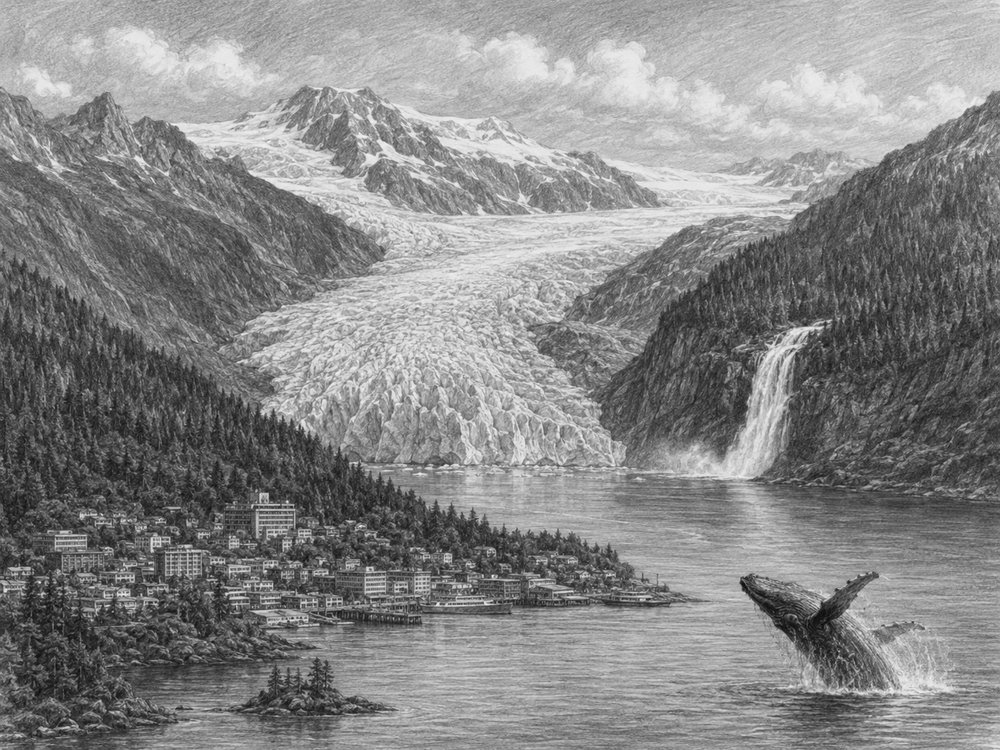
Alaska’s capital is the big-menu port. The Mendenhall Glacier sits a short drive from town, whale-watching boats work the nearby waters, and the Mount Roberts Tramway climbs straight up from the dock for a fast alpine view. Many people combine a whale-watch with a glacier visit in a single half-day tour, which is a smart use of the hours. Juneau tends to have the longest port stay of the week, so it is worth building your most ambitious plan here.
Skagway
Skagway is the gold-rush town, its frontier main street preserved almost as a museum you can walk through. The White Pass & Yukon Route railway is the reason most people are here: a narrow-gauge train that climbs the pass the stampeders once struggled over, with valley and gorge views that are hard to beat. The rail excursion is the single most-booked thing in Skagway, so reserve it as soon as your booking opens.
Sitka
Sitka is the Russian-Alaska stop, set on the outer coast rather than the sheltered inner channels. The onion-domed St. Michael’s Cathedral, Tlingit totems, and outer-coast wildlife are the character here. Because Sitka’s harbor is shallow for a ship this size, expect this to be a tender port on many sailings, which shapes your morning.
Icy Strait Point (Hoonah)
Icy Strait Point, at the Tlingit village of Hoonah, is the most nature-forward call: some of the best whale-watching on the itinerary, bear viewing, cultural programming, and the world’s largest ZipRider for anyone who wants the adrenaline version of the scenery. It is a purpose-built destination rather than a town, so tours are the point here.
The scenic glacier day
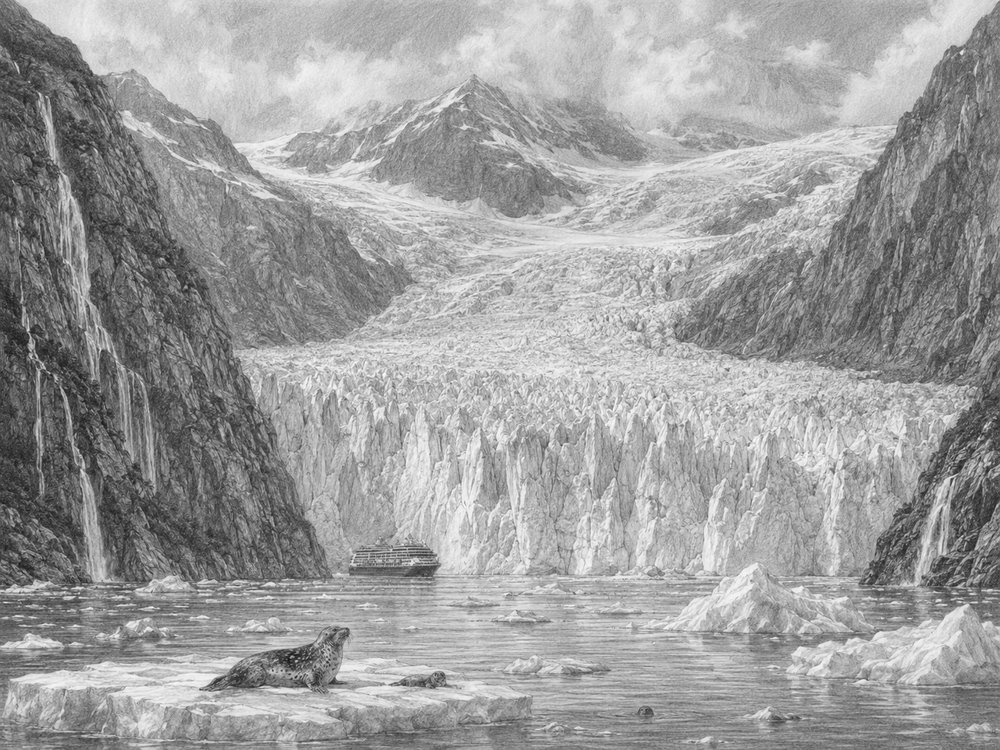
One full day of the week has no port at all. Instead the ship threads slowly into a glacier-fed arm and holds position in front of a tidewater glacier. Depending on your sailing that is Endicott Arm with Dawes Glacier, Tracy Arm, or Glacier Bay National Park. This is often the day people remember most, and the plan is simple: stay aboard and watch.
This is where Star Princess’s newest-in-the-fleet spaces genuinely earn their keep. The Dome, the geodesic glass-enclosed retreat atop the ship, gives you a warm, glass-roofed vantage over the pools and the ice whatever the weather is doing outside, which in front of a glacier is often cold and damp. When the ship is holding station, the captain typically rotates her so both sides get the view, so you do not need a balcony on a particular side to see the glacier. That said, an aft or covered balcony is a lovely place to stand with a hot drink. For a fuller tour of these signature spaces, the Sphere Class ship guide walks through The Dome, the Piazza and the suspended Sphere.
Glacier days are cold days. Even when the port stops felt mild, the air rolling off the ice drops the temperature sharply, so this is the day your warmest layer comes out on deck. Bring binoculars: you will want them for calving ice, seals hauled out on floes, and eagles overhead. Princess has carried more travelers to Alaska than any other line and staffs these voyages with naturalists, so listen for the onboard narration that tells you what you are looking at.
Tendering and getting ashore
Most of your stops are alongside docks where you simply walk off, but some, Sitka in particular, are often tender ports where the ship anchors offshore and small boats ferry you in. Tendering is routine, but it adds time and it means the shore day starts a little slower. Guests on ship-booked excursions and Sanctuary Collection guests generally get priority tender access, which is one practical reason booking your tours through the line can smooth a tender morning. If you are doing a tender port independently, collect a tender ticket early and be patient in the first hour.
Everything ashore and aboard runs off your Ocean Medallion, the quarter-sized wearable every guest gets. It unlocks your stateroom hands-free, speeds boarding and re-boarding at each port, locates your travel companions if you split up in town, and handles touchless payments on the ship. Through OceanNow you can order food and drinks to wherever you are aboard, and Dine My Way lets you reserve flexible dining times or keep a traditional set seating. If the Medallion system is new to you, the MedallionClass first-timer guide walks through setup start to finish.
Book excursions early — Alaska sells out
The single most important planning move for this itinerary is booking your shore excursions well before you sail. Alaska’s marquee tours run on small boats, small planes and limited train seats, and the good ones fill weeks out. The White Pass railway in Skagway, whale-watching in Juneau or Icy Strait Point, and Misty Fjords flights from Ketchikan all have hard capacity limits and sell out early in the season.
- Reserve the headline tour in each port as soon as your booking window opens in the Princess app.
- Prioritize the weather-dependent, capacity-limited experiences (flightseeing, small-boat wildlife) over things you can do on foot.
- Leave at least one port unstructured so you have a buffer if an earlier day runs long or a tour cancels for weather.
- Confirm meeting times and tender arrangements the night before each port from the daily schedule in the app.
Booking through the line has a real advantage on a port-heavy Alaska week: if a ship-sponsored tour runs late, the ship waits for it. An independent operator running long is your problem, not the captain’s, and missing the ship in a remote Alaskan port is a genuinely bad day. That trade-off is worth weighing port by port.
Wildlife and glacier viewing from the ship
A lot of the wildlife on this itinerary is free and happens while you are simply standing on deck. Humpback and orca whales, sea otters rafting in kelp, bald eagles, harbor seals, and salmon runs are all visible from the ship at the right moments, not just on paid tours. The between-port scenic stretches, gliding up narrow channels walled with rainforest, are prime viewing, so it pays to spend time on the forward decks and in The Dome rather than staying in your cabin.
This is where the ship’s warm spaces change the experience. On a cold, wet stretch you can watch for whales from behind The Dome’s glass with a coffee from the International Café instead of shivering at the rail. Keep binoculars and a camera within reach at all times, because the best sightings are rarely announced with enough warning. If you want to understand the daily onboard rhythm around all this, the what-to-expect walkthrough covers how the sea days and enrichment fit around the ports.
The itinerary also shows up on your plate. Fresh Alaskan seafood features in season across the ship, and The Catch by Rudi is built for exactly this coastline, so a port-day haul of halibut or salmon tastes different when you are looking at the water it came from. Pairing the scenery-cruising days with a seafood dinner is one of the quiet pleasures of an Alaska week, and it is worth planning at least one specialty meal around a scenic evening rather than a busy port night.
Weather and layering
The Alaska summer is short, intense and changeable. Expect mild days, cooler mornings and evenings, frequent rain in the rainforest ports, and genuine cold near the glaciers, sometimes all in the same day. The upside is long northern daylight that stretches your port time well into the evening. This is not a warm-weather packing list, and the most common first-timer mistake is dressing for a cruise instead of for the coastal northwest.
Layering is the whole strategy. Build outfits you can add to and shed as the day swings from a mild town to a cold glacier arm.
- A base layer, a warm mid-layer (fleece or light down), and a waterproof, windproof shell as your outer layer.
- Comfortable waterproof shoes — you will be walking wet boardwalks and gangways.
- A hat and gloves for the glacier day, even in high summer.
- Binoculars and a camera for glaciers, whales, bears, sea otters, eagles and salmon.
- A small daypack so you can carry layers you peel off during a warm afternoon ashore.
Victoria and the passport requirement
The final call is Victoria, British Columbia, usually a shorter evening stop as the ship makes its way back toward Seattle. Victoria is a gentler, more polished port after the wilderness: the Inner Harbour, the famous Butchart Gardens, and the tradition of afternoon tea. With limited hours you cannot do everything, so pick one focus, gardens or harbour, rather than rushing between them.
Because this cruise sails from a US port but calls in Canada at Victoria, a passport is required for this itinerary. This is not optional, and it is the detail that trips up first-timers who assume a domestic-feeling Alaska trip does not need one. Follow the ship’s immigration guidance for the Victoria call, carry the identification the ship specifies, and make sure everyone in your party, children included, has a valid passport before you leave home. In Victoria you are spending Canadian dollars, though cards are widely accepted; the Alaskan ports and Seattle run on US dollars, and everything onboard runs on the Medallion in US dollar accounts.
Choosing where to sleep for this itinerary
Cabin choice matters a little differently in Alaska than on a warm-weather cruise. A balcony earns its keep more than usual here, giving you a private vantage for glaciers and wildlife from your own room. But because so much of the cold-weather viewing happens in The Dome and on the forward decks, an interior cabin is genuinely good value on this itinerary too, since you will spend your days out in the shared spaces anyway. If you do want a balcony, a covered or aft one is more usable on cold, wet days, and a midship balcony on the mid-decks gives the steadiest ride and reliable scenery. The full cabin breakdown, including which rooms to avoid, is in the Alaska-from-Seattle guide.
One more option worth knowing about before you lock in the seven-night loop: Princess runs its own wilderness lodges and glass-domed rail cars, and you can pair this cruise with a Princess cruisetour that carries you by rail and lodge into the interior toward Denali. If seeing the coastline leaves you wanting the interior too, that add-on is the way to get it.
Get the complete Star Princess playbook

If this itinerary is on your calendar, “The Ultimate Guide to Sailing on Star Princess” turns the whole week into a step-by-step plan, from booking the right excursions to working the Medallion and the glacier day. It is part of the Ultimate Ship Guides series by Leo Sotropa, with clear action steps in every chapter.
Frequently asked questions
How long is the Inside Passage cruise on Star Princess?
It is a seven-night round-trip voyage from Seattle’s Pier 91, running across the short Alaska summer. The week combines a sea day, three to four Alaskan port calls, one full scenic glacier day, and a final call in Victoria, British Columbia before the return to Seattle.
Do I need a passport for this cruise?
Yes. Although the cruise starts and ends in the United States, it calls in Canada at Victoria, so a passport is required for everyone in your party. Follow the ship’s immigration guidance for the Victoria call and make sure children have valid passports too.
Which glacier will we see?
It varies by sailing. The scenic glacier day features Endicott Arm and Dawes Glacier, Tracy Arm, or Glacier Bay, depending on your specific voyage. Confirm your itinerary in the Princess app, since the featured glacier and exact ports differ from week to week.
When should I book shore excursions?
As early as possible. Alaska’s best tours run on small boats, planes and trains with hard capacity limits, and the headliners like the White Pass railway and whale-watching sell out weeks ahead. Reserve them through the Princess app the moment your booking window opens.
Are any ports tender ports?
Some can be. Sitka in particular is often a tender port on this itinerary, meaning the ship anchors offshore and small boats bring you in. Guests on ship-booked excursions generally get priority tender access, so factor that into how you plan a tender morning.
What should I pack for the weather?
Warm layers with a waterproof, windproof shell and comfortable waterproof shoes. The Alaska summer is cool and changeable, with frequent rain in the rainforest ports and real cold near the glaciers, so this is not a warm-weather packing list. Add a hat, gloves and binoculars for the glacier day.
Can I see wildlife without booking a tour?
Yes. Whales, sea otters, eagles and seals are all visible from the ship during scenic cruising and on the glacier day, no excursion required. Keep binoculars and a camera handy and spend time on the forward decks and in The Dome, where you can watch in comfort even in cold, wet weather.
Ready for the whole ship in one place? It is all in The Ultimate Guide to Sailing on Star Princess.
Get the book →
Meet Leo: The Heartbeat Behind ‘A Country A Month’
Journeying through the pages of A Country A Month, you might often feel the rhythm of a storyteller’s heartbeat, pulsating through each line, each image, and each adventure shared. That heartbeat belongs to none other than our remarkable website editor, Leo.
With a lens in one hand and a pen in the other, Leo seamlessly marries his passions for photography and writing. His eye captures moments that words can barely describe, yet his eloquence brings those images to life, transcending borders and connecting us all through shared stories. An avid traveler, every country he’s visited has added another chapter to his expansive tale, and through our platform, he generously shares these chapters with us.