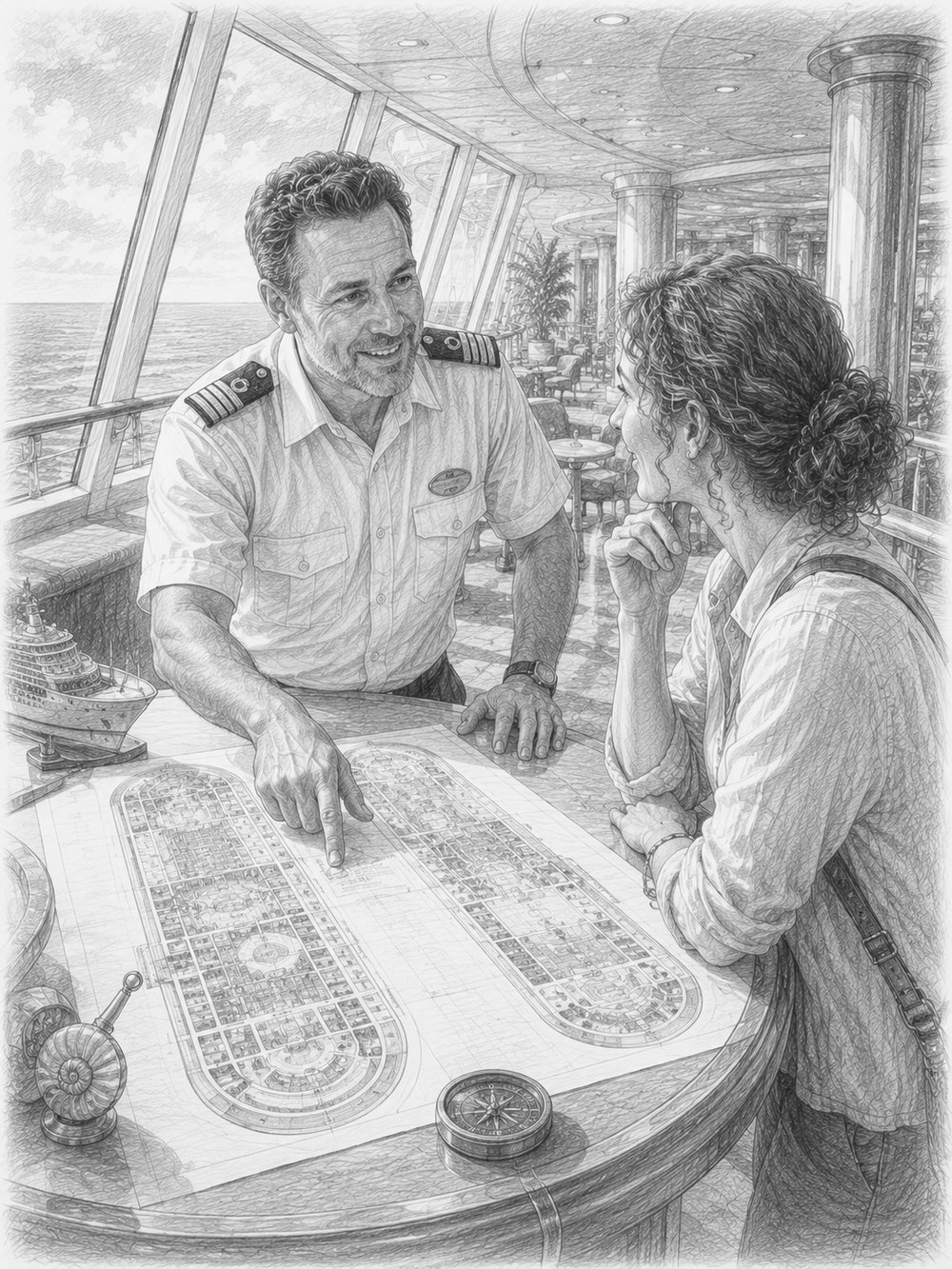
What are the best Royal Caribbean Los Angeles cruise tips for a Quantum of the Seas sailing? Book the North Star, RipCord by iFly and specialty dining the moment your reservation opens, fly into LAX at least a day early because LA traffic can turn a short drive into a missed ship, download the Royal Caribbean app before you leave home, and plan ahead for the tender ports at Cabo San Lucas and Santa Catalina Island. Quantum of the Seas is a big, feature-packed ship sailing out of the San Pedro terminal, and the guests who have the smoothest week are the ones who make a handful of decisions before they ever set foot on the pier. This guide walks through exactly what to do, in the order that matters.
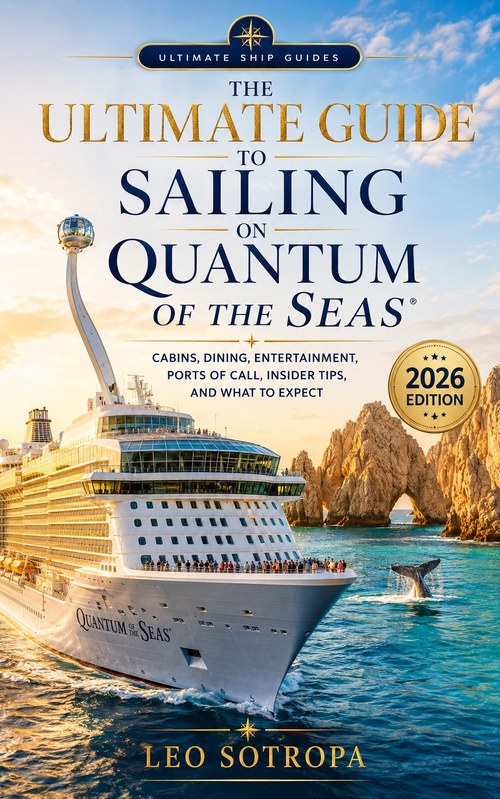
Everything in this article and far more, deck by deck, in The Ultimate Guide to Sailing on Quantum of the Seas.
Get the book →Understand the ship you’re sailing
Quantum of the Seas is the original Quantum-Class ship, the one that introduced Royal Caribbean’s most talked-about features to the fleet. She’s around 168,000 gross tons with roughly 16 guest decks and carries about 4,180 guests at double occupancy, climbing toward 4,900 when every berth is full. That scale is the most important thing to grasp before you sail: everything popular has finite capacity, and demand is spread across thousands of people who all downloaded the app the same week you did.
She’s the class lead that brought the North Star observation capsule, RipCord by iFly skydiving simulator, the SeaPlex indoor sports complex, the Two70 multi-story venue and the Bionic Bar’s robot bartenders to Royal Caribbean. On her West Coast season she’s based in Los Angeles, sailing round-trip from San Pedro on Baja and Mexican Riviera itineraries. If you want the full rundown of what’s aboard before you start planning, the what to expect on Quantum of the Seas overview covers the venues in more depth. For now, the practical takeaway is this: the ship rewards planning, and the planning starts weeks before you pack a bag.
What to book early (and in what order)
Once your cruise is paid in full, the Cruise Planner opens for pre-booking activities, dining and experiences. This is the most valuable window of your entire trip and most first-timers sleep through it. Popular slots sell out and reappear at higher prices closer to sailing, so the goal is simple: reserve the things with the tightest capacity first, in this rough order.
North Star
The North Star is a jewel-shaped glass capsule mounted on a mechanical arm that lifts you roughly 300 feet above the sea for 360-degree views. It’s the signature experience on the ship and its per-ride capacity is tiny compared to the number of guests who want a turn. On sea days the standard ride is often complimentary, but you still need a reservation because the capsule only holds so many people per rotation. Book a sea-day slot early, ideally for a time when the light is good and you’re not competing with the whole ship. Windless, clear conditions give the best ride; if the captain closes it for weather, your reservation simply rolls or refunds.
RipCord by iFly
RipCord by iFly is a vertical wind tunnel that simulates skydiving, and it’s one of the few free thrills aboard that genuinely fills up. Your complimentary first flight includes a briefing and a gear fitting, so the whole thing takes longer than the minute you spend in the air. Reserve a slot in the Cruise Planner or the app the instant you can, because walk-up availability on a full sailing is thin. Wear or bring lace-up shoes and leave loose jewelry in the cabin.
Specialty dining
The included dining on Quantum is genuinely good: the Main Dining Room, the Windjammer buffet, Café Promenade and Sorrento’s pizza will feed you well all week at no extra charge. But the specialty restaurants are worth planning around. Wonderland serves imaginative, playful dishes; Chops Grille is the classic steakhouse; Jamie’s Italian and Izumi round out the lineup, along with the Chef’s Table and Johnny Rockets. Two tips save you real money and hassle. First, book specialty dining pre-cruise rather than onboard, where prices tend to run higher. Second, aim your reservations at the nights you’ll be tired from a long port day, when the last thing you’ll want is to hunt for a table. If you sail often, a multi-night dining package usually beats booking each restaurant individually.
Beyond those three priorities, use the same window to reserve the Two70 shows and any entertainment that takes bookings. FlowRider surf sessions, the rock wall and SeaPlex bumper cars are more walk-up friendly, so they can wait.

Fly in early and plan the drive to San Pedro
This is the tip that saves cruises. If you’re flying, come into LAX at least one full day before you sail, not the morning of. Los Angeles traffic is unpredictable and heavy, and the gap between LAX and the San Pedro cruise terminal can take 30 minutes or well over an hour depending on the hour and the freeways. A single accident on the 405 or the 110 can swallow your entire buffer. Spending one night near the port or the airport removes the one variable you can’t control, and you board rested instead of frazzled.
If you’re driving your own car, the terminal in San Pedro has parking on site, but reserve or plan for it rather than assuming you’ll roll up and find a spot on a busy turnaround day. Build in extra time for the approach; the streets around the port back up as thousands of guests arrive in the same few-hour window. Aim to arrive within your assigned check-in time rather than at the very start of boarding, when the lines are longest.
An early arrival also buys you a bonus: San Pedro and greater LA are worth a day. The Battleship USS Iowa is docked right there, the Cabrillo Marine Aquarium is nearby, and downtown LA, Hollywood and Long Beach are all within easy reach. Turning your pre-cruise night into a mini city stop is one of the easiest ways to stretch the value of the trip.
Beat the lines with the Royal Caribbean app
Download the Royal Caribbean app and set up your account before you leave home, while you still have reliable Wi-Fi. Complete online check-in as soon as it opens, upload your photo and documents, and pick the earliest check-in window that suits you. Doing this in advance is the difference between walking onto the ship and standing in a slow queue at the terminal.
Onboard, the app runs your day. It holds the daily schedule, deck maps, dining reservations, your account balance and show times, and it works over the ship’s Wi-Fi network even if you haven’t bought an internet plan for browsing the wider web. A few habits that keep you ahead of the crowds:
- Check the app the night before each day to see what’s bookable and what’s already full.
- Eat slightly off-peak. The Windjammer buffet is calmest right when it opens and in the last hour; the crush is in the middle.
- Watch for the muster drill instructions in the app on embarkation day; the modern version lets you complete most of it on your phone.
- Use the app’s chat feature to coordinate with your travel party instead of relying on cell service you won’t have at sea.
Master the tender ports: Cabo and Catalina
Two of the marquee stops on a West Coast Quantum sailing are tender ports, meaning the ship anchors offshore and small boats ferry you to land. Cabo San Lucas and Santa Catalina Island (Avalon) both work this way, and knowing how tendering flows makes a real difference to your day.
At a tender port, guests booked on the ship’s shore excursions usually get priority off the ship, and everyone else collects a tender ticket and waits for their group to be called. The crush is heaviest in the first hour or two after arrival. If you want to be ashore early, either book a ship excursion or head to the tender ticket area the moment it opens. If you’d rather skip the scramble, do the opposite: let the morning rush clear and tender ashore mid-morning when the lines have thinned.
Cabo San Lucas is often an overnight call, which is a gift. An overnight means you can go ashore across two days, enjoy the evening in town and never feel rushed. Don’t miss El Arco at Land’s End, the rock formation at the tip of the peninsula; a short water-taxi ride gets you to it and to Lover’s Beach. Medano Beach is the main swimming beach, and sport fishing and, in season, whale watching are the signature Cabo activities. Because you’re tendering, keep an eye on the last tender time back to the ship and give yourself a comfortable margin, especially on the final evening.
Santa Catalina Island is a tender call just off the California coast, and Avalon is a walkable, charming town. The Casino building is the landmark; glass-bottom boat tours and snorkeling at Lover’s Cove are the classic outings, and renting a golf cart is the fun way to see the hills and the botanic garden. Catalina days are often shorter than the Mexico stops, so tender ashore promptly. For a fuller look at how these stops fit together across an itinerary, the Quantum of the Seas Baja Mexico guide breaks the port days down day by day.
Plan your port days without wasting them
The most common port-day mistake is arriving with no plan and losing the morning to indecision. You don’t need an hour-by-hour itinerary, but you do want a rough shape for each stop before you sail. Decide in advance whether each port is a beach day, a town-wandering day or an excursion day, and book any excursion you truly care about ahead of time rather than gambling on availability at the pier.
Ensenada is a docked port, not a tender, so getting ashore is easy. The headline sights are La Bufadora, one of the largest marine blowholes in the world, and the wineries of the Valle de Guadalupe, plus a genuinely excellent taco and street-food scene right in town. On longer Mexican Riviera voyages you may also call at Mazatlán, with its historic Centro, the malecón boardwalk, El Faro lighthouse and Stone Island beaches, and Puerto Vallarta, where the Malecón, the Church of Our Lady of Guadalupe, the Zona Romántica and beaches like Playa Los Muertos anchor the day. Itineraries range from 3-night Ensenada getaways to 5-, 6- and 7-night Baja and Mexican Riviera cruises, and the exact ports vary by sailing, so confirm your specific voyage in the app.
A few port-day rules of thumb that hold across all of these stops:
- Note the all-aboard time, which is earlier than the departure time, and set a phone alarm for it. The ship will not wait.
- Carry small bills in US dollars; many vendors take them, and you’ll want change for tips and taxis.
- Keep your SeaPass card and a photo ID or passport as required, and leave the rest of your valuables in the cabin safe.
- The last day at a tender port is the riskiest for timing; err early.
Use sea days on purpose
The stretches between LA and Mexico are open-Pacific sea days, and they’re where Quantum’s indoor attractions earn their keep. This is prime North Star time, when the ride is often complimentary and the views are longest. It’s also the best window for RipCord and FlowRider, since the crowds are thinner than you’d expect while everyone else is at the pool. SeaPlex, the largest indoor active space at sea, hosts bumper cars, roller skating, basketball and an arcade, and it’s a lifesaver if the weather turns. The Solarium is the adults-only quiet zone, and the Vitality Spa is worth pre-booking on a port day when treatment prices are often lower.
One practical sea-day note for this route: the open Pacific can get a little bouncy. If anyone in your party is sensitive to motion, plan to be midship on the mid-decks and keep motion remedies handy. The best cabins on Quantum of the Seas guide explains why a midship balcony gives the steadiest ride on these crossings.
Money and your onboard account
Quantum is a cashless ship. Your SeaPass card is your room key, your ID for getting on and off, and your charge account for everything you buy aboard. You link a credit card at check-in, and every drink, specialty dinner, spa treatment and shop purchase posts to that account. A handful of habits keep the final bill from surprising you.
- Daily gratuities are added automatically to your account for each guest. Budget for them up front, or prepay them, so the total isn’t a shock at the end.
- Check your running balance in the app every couple of days. It’s far easier to spot a mistaken charge midweek than on disembarkation morning.
- Wi-Fi is a paid plan, not included. If you want it, buying a package pre-cruise or on day one is usually cheaper than mid-voyage, and a single-device plan shared by the family saves money.
- Beverage and specialty-dining packages only pay off if you’ll actually use them. Do the honest math on how many drinks or dinners you’ll have before committing.
Ashore in Mexico, bring cash. US dollars are widely accepted in the cruise ports, but small bills are king for taxis, tender-town shops and tips, and you’ll rarely want to hand a card to a beach vendor.
Packing for a West Coast Mexico sailing
This route is a warm-weather cruise with a West Coast twist: the ports are hot and sunny, but the Pacific breeze at sea and the ship’s aggressive air conditioning mean evenings and indoor venues run cool. Pack for both. A light layer or wrap for dinner and the theater is as important as your swimwear.
- Swimwear and a cover-up, plus water shoes or sandals you can walk in for the beaches at Cabo, Catalina and beyond.
- Reef-safe sunscreen and a hat. The sun on Medano Beach and the open decks is stronger than it feels in the breeze.
- A light jacket or sweater for cool evenings, air-conditioned venues and the exposed North Star ride.
- Lace-up closed-toe shoes for RipCord and FlowRider; loose slip-ons aren’t allowed.
- A day bag for port stops with room for a towel, water, cash and your SeaPass card.
- Motion-sickness remedies for the open-Pacific stretches, kept in the cabin within easy reach.
- A refillable water bottle, chargers, and a small power strip or multi-USB brick, since outlets in the cabin are limited.
- A modest set of smart-casual clothes for the Main Dining Room and any dressier evening; you don’t need formalwear, but you’ll want one nicer outfit.
If this is your first Royal Caribbean sailing, the first time cruise Quantum of the Seas guide covers the embarkation-day rhythm and what to carry in your day-one bag while your checked luggage catches up to your cabin.
Embarkation and disembarkation day tactics
On embarkation day, carry anything you’ll need for the first few hours in a small bag: swimsuit, medications, a change of clothes, chargers and your documents. Your checked luggage is delivered to your cabin later in the afternoon, and the pool, the SeaPlex and lunch are all open the moment you board. Getting on early and eating while most guests are still checking in is a quiet pleasure of a well-planned first day.
For disembarkation, decide between self-assist, where you carry your own bags off first and early, or standard luggage-out, where you set your tagged bags in the hall the night before. Self-assist gets you off fastest, which matters if you have a flight or a long drive home in LA traffic. Settle any account questions the evening before rather than in the disembarkation-morning line.
Get the complete Quantum of the Seas playbook
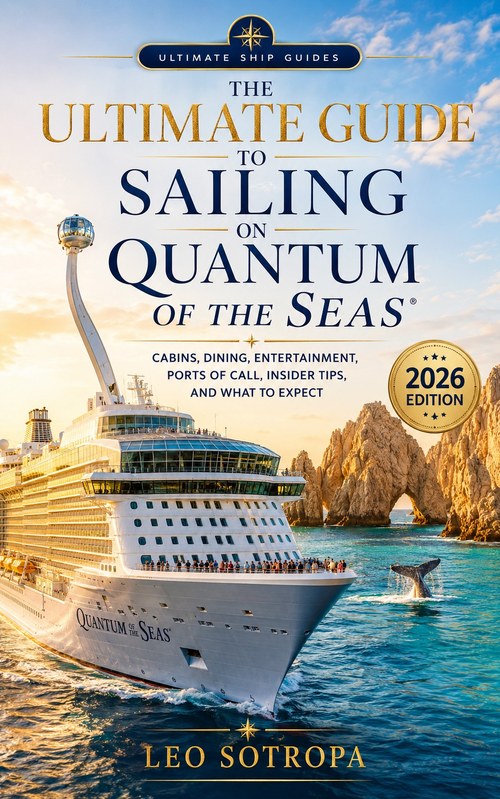
Want every one of these tips organized into a plan you can act on? “The Ultimate Guide to Sailing on Quantum of the Seas,” part of the Ultimate Ship Guides series by Leo Sotropa, turns the whole trip into clear action steps in every chapter, from booking the North Star to timing your last tender back from Cabo.
Frequently asked questions
Where does Quantum of the Seas depart from in Los Angeles?
Quantum of the Seas sails round-trip from the cruise terminal in San Pedro, which is the port serving Los Angeles. There’s parking on site if you drive, and the terminal is within easy reach of LAX, downtown LA, Hollywood and Long Beach. Because LA traffic is heavy and unpredictable, plan extra time for the approach and consider arriving a day early.
Do I need to book the North Star in advance?
Yes. The North Star capsule holds only a small number of guests per ride, so reservations go quickly even though the standard sea-day ride is often complimentary. Book a slot as soon as your Cruise Planner opens, aim for a sea day, and check the app for openings if you miss out at first, since cancellations do free up spots.
Which ports on this itinerary are tender ports?
Cabo San Lucas and Santa Catalina Island (Avalon) are tender ports, where the ship anchors offshore and small boats ferry you to land. Ensenada, Mazatlán and Puerto Vallarta are typically docked ports where you walk off directly. At the tender stops, either book a ship excursion for priority ashore or wait out the first-hour rush, and always watch the last tender time back to the ship.
How early should I fly into LAX before the cruise?
At least one full day early. LA freeway traffic can turn a short transfer into a long one, and a single incident on the 405 or 110 can put a same-day arrival at risk of missing the ship. Spending a night near the airport or the port removes that risk, and it gives you time to see landmarks like the Battleship USS Iowa or downtown LA.
Do I need cash in the Mexican ports?
Bring small bills in US dollars. They’re widely accepted in Cabo, Ensenada and the other cruise ports, and cash is easiest for taxis, tender-town shops, beach vendors and tips. Onboard the ship you don’t need cash at all, since everything runs on your cashless SeaPass account.
Is Wi-Fi included on Quantum of the Seas?
Internet is a paid plan, not included in your fare. The Royal Caribbean app itself works over the ship’s network for schedules, dining and your account balance without a plan, but browsing the wider web requires buying a package. Buying pre-cruise or on the first day is usually cheaper than mid-voyage, and a single-device plan can be shared among your travel party.
What should I pack that’s easy to forget on this route?
A light layer for cool evenings and air-conditioned venues, lace-up closed-toe shoes for RipCord and FlowRider, reef-safe sunscreen, motion-sickness remedies for the open-Pacific stretches, and small US bills for the ports. A day bag for tender stops and a refillable water bottle round out the list. You won’t need formalwear, but pack one smart-casual outfit for the Main Dining Room.
Ready for the whole ship in one place? It is all in The Ultimate Guide to Sailing on Quantum of the Seas.
Get the book →
Meet Leo: The Heartbeat Behind ‘A Country A Month’
Journeying through the pages of A Country A Month, you might often feel the rhythm of a storyteller’s heartbeat, pulsating through each line, each image, and each adventure shared. That heartbeat belongs to none other than our remarkable website editor, Leo.
With a lens in one hand and a pen in the other, Leo seamlessly marries his passions for photography and writing. His eye captures moments that words can barely describe, yet his eloquence brings those images to life, transcending borders and connecting us all through shared stories. An avid traveler, every country he’s visited has added another chapter to his expansive tale, and through our platform, he generously shares these chapters with us.