
If you are cruising with kids, Star of the Seas is about as good as it gets, and sailing from Orlando makes her the rare ship you can pair with the theme parks in a single trip. Royal Caribbean built an entire neighborhood just for families, layered in the largest waterpark at sea, and still left grown-ups places to breathe. This is the second ship in the Icon Class, running seven-night round-trips out of Port Canaveral, and at roughly 248,000 gross tons with up to about 7,600 guests aboard she is a floating town rather than a boat. Here is how to make the ship, and the Orlando add-on, work for every age in your group without anyone getting lost, bored, or overtired.

Everything in this article and far more, deck by deck, in The Ultimate Guide to Sailing on Star of the Seas.
Get the book →The Orlando-plus-cruise game plan
Port Canaveral sits about an hour east of Orlando’s theme parks, which is why so many families treat the two as one vacation. The most common approach is parks first, cruise second, so the ship becomes the restful back half after long days on your feet. There is real logic to that order: park days are exhausting and unpredictable, and you would rather absorb a rope-drop-to-fireworks marathon before you sail than try to recover from it at 30,000 gallons a slide. Whichever order you choose, arrive in Orlando at least a day before the cruise so a delayed flight or a lost bag does not cost you the sailing, and do not schedule a full park day the morning you board.
Be honest about stamina when you count days. A full week of parks bolted onto a full week at sea is more than most young children can take, and the meltdowns will find you around day nine. Many families land on three or four park days followed by the seven-night cruise, and let the ship’s kids’ clubs and pools do the recovering. Two or three parks in three days is plenty; you do not need to see everything. Build one slower morning into the park half, and treat the first sea day of the cruise as a deliberate do-nothing day so everyone resets before the ports begin.
Getting from the parks to Port Canaveral
You have a few realistic ways to cover that last hour to the pier, and the right one depends on your group size and how much gear you are hauling. A rental car is usually cheapest for a family of four or more and gives you freedom on the park days, but you then have to return it near the port and shuttle to the terminal, so build that handoff into your embarkation-day timeline rather than cutting it fine. A rideshare or private car service is simplest on cruise morning if you are not driving, though prices climb on busy Saturdays. Many Cocoa Beach and Orlando hotels sell a port shuttle package, which is the low-stress option if you would rather not think about logistics at all.
Cocoa Beach itself is worth considering as a buffer. Staying near the port the night before the cruise shortens embarkation morning to a 15-minute drive, lets the kids burn energy on a real beach, and takes the airport-day pressure off the whole plan. If you fly out of Orlando after the cruise, a reverse buffer night can be just as useful, since disembarkation gets you off the ship earlier than most morning flights allow anyway.
Why Star is built for families
Star is organized into eight neighborhoods, and the one that matters most to families is Surfside. Royal Caribbean designed this whole zone around parents traveling with young kids: a carousel, a splash area, casual counter-service food, and family staterooms all clustered together so you are never marching a tired toddler across the ship to get to any of it. Put a stroller-height splash zone, a hot dog, and your cabin door within a few steps of each other and the day gets a lot easier. Add the Adventure Ocean kids’ program, a dedicated teen space, and a waterpark that would headline a land resort, and the hardest part becomes choosing what to do first.
The design lets a group split by age without splitting up the trip. Younger kids can spend a morning in Surfside, big kids can chase slides at the Category 6 waterpark, teens can disappear into their own space, and the adults can trade off some quiet, and everyone still meets for dinner with a week of stories. For a broader tour of what is aboard beyond the family zones, our what to expect guide walks the whole ship neighborhood by neighborhood.
Best cabins for families
The most practical family room is the Family Infinite Ocean View Balcony, which sleeps up to six with real bunk beds, each with its own TV, and a split bathroom that separates the toilet from the shower so the morning rush moves twice as fast. The infinite balcony is a drop-down window wall inside the room rather than a separate open-air ledge, which trades a traditional balcony for more usable interior space, a fair swap when you have kids and bags spread everywhere. A step up, the Surfside Family Suite adds a semi-private kids’ area and Sky Class benefits such as priority dining, a private lounge, and included internet, all a short walk from the family neighborhood.
The multi-level Ultimate Family Townhouse is the showpiece splurge, with its own interior slide and enough room to feel like a small apartment, but it is the priciest family option and books far in advance, often selling out for prime sailings. If you are booking on a budget, the Interior Plus rooms give you a bigger walk-in closet for the money, which matters more than you would think when four people are living out of suitcases for a week. Whatever you pick, check the deck plan before you commit: rooms directly under the pool deck, under The Hideaway, or near the AquaDome can carry noise, and a single sofa bed is a tight squeeze for two kids sharing. Our best cabins guide compares every family layout and flags the exact rooms to avoid.
Kids and teens, by age
Star splits youth programming so each age has its own space and its own kind of fun, which is what keeps a five-year-old and a fifteen-year-old both happy on the same ship:
- Toddlers and young children gravitate to Splashaway Bay, a gentle water-play area with shallow spray features, and the Surfside neighborhood’s carousel and casual eatery. This is the low-stress zone where little ones can splash without a slide or a queue in sight.
- School-age kids have the Adventure Ocean club, the supervised kids’ program with games, themed activities, crafts, and organized play run by counselors, so parents get real hours off the clock.
- Teens get their own hangout space away from the little ones, plus the run of the waterpark, the FlowRider surf simulator, the rock wall, and the sports and entertainment venues where they can roam with some independence.
- The whole family shares the pools, the shows, and a beach day at Perfect Day at CocoCay, the private island stop that anchors both itineraries.
Sign kids up for the youth programs on the first day. Registration for Adventure Ocean and the teen space fills quickly on a full ship, and getting your paperwork done during embarkation afternoon secures spots in the most popular sessions before they close. Take the parents’ walkthrough seriously too, because that is when staff explain sign-in and sign-out policy, wristbands, and how they reach you if a child needs you mid-session.
Thrills and pools the whole family can share
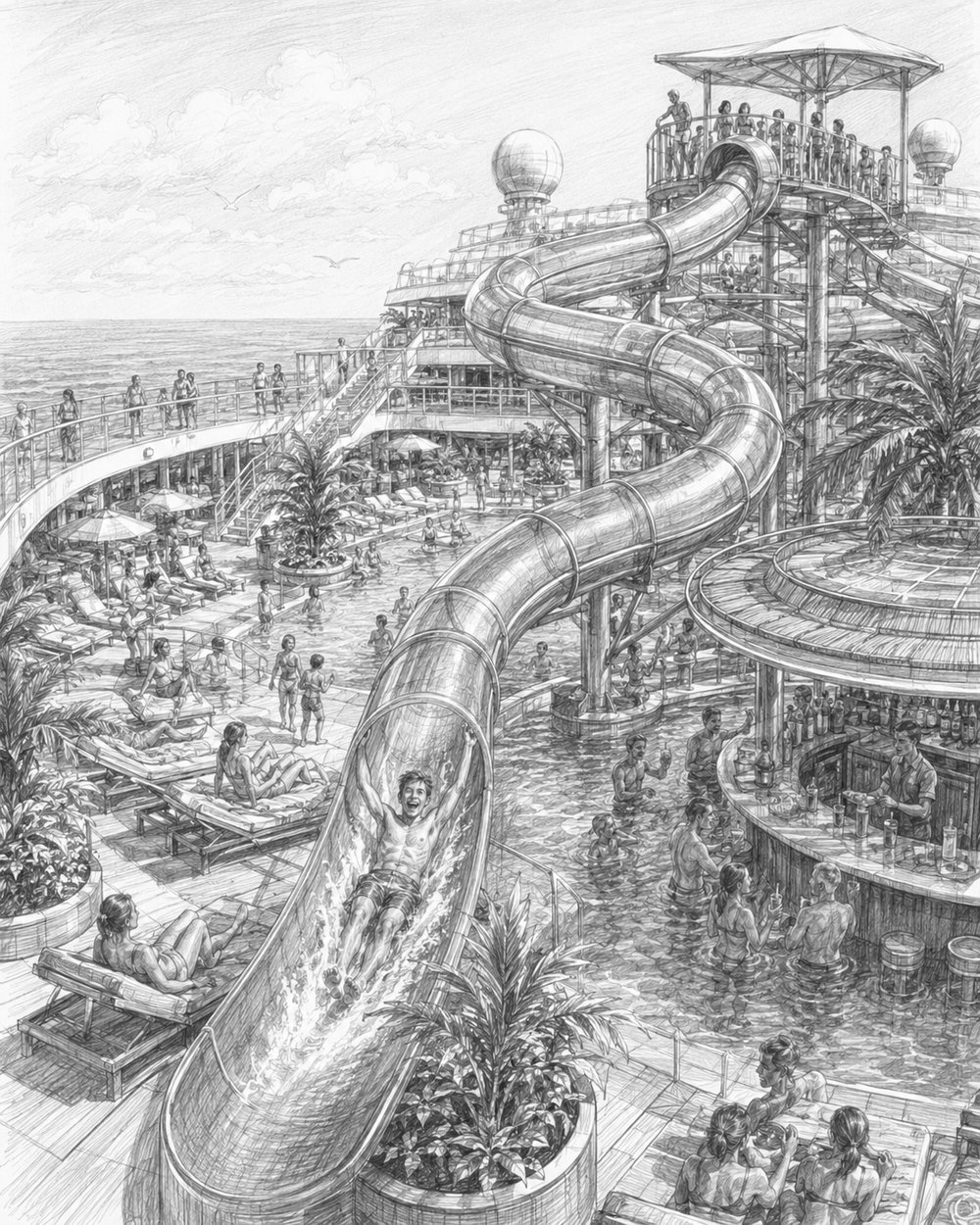
The Category 6 waterpark anchors the fun. It stacks six record-setting slides, from gentler family rides up to the tallest drop at sea and an open free-fall slide for the genuinely brave, into the Thrill Island neighborhood. Beyond the slides, the FlowRider surf simulator, the rock wall, and Crown’s Edge, a skywalk that swings you out over the water’s edge, give older kids and teens a real challenge. For calmer water there are seven pools aboard, including Royal Bay, the largest pool at sea, plus the Chill Island pools and the kid-focused Splashaway Bay.
Two habits make the waterpark work with kids. Ride the big slides early in the morning or during a port stop when most guests are ashore, because the lines stack up fast on sea days. And check every height and age requirement before your child climbs the stairs, so no one gets turned away at the top after a long wait. If you have a mix of ages, split the group: one adult takes the thrill-seekers up top while the other stays with the little ones at Splashaway Bay, then swap. Our Star of the Seas tips go deeper on timing the busiest venues around the daily schedule.
Family-friendly shows and entertainment
The headline production is Back to the Future: The Musical in the main theater, a full-scale staging that lands well with kids old enough to sit through a story show and with the adults who grew up on the films. Beyond it, Star runs an aqua show called Torque, an ice-skating show called SOL in the Absolute Zero ice arena, and a robot-themed production called Create, so there is a different kind of spectacle most nights. Reserve the big shows in the Royal Caribbean app early in the cruise, since the best times book up, and check run times against your dinner plan so you are not sprinting a tired child from table to theater.
Not every night has to be a formal show. The Royal Promenade, the indoor main street running through the ship, hosts parades and character moments, and keep an eye out for Sailor, the ship’s dog mascot, who is a reliable hit with younger kids. Between the ice show, the aqua show, and the waterpark by day, you can fill a week without ever repeating yourself.
Family dining that actually works
Feeding a family here is genuinely easy, and none of the essentials cost extra. The AquaDome Market food hall under the glass dome at the bow is the family workhorse, with stalls like Pig Out BBQ, Mai Thai, La Cocinita, Feta Mediterranean, and Creme de la Crepes, so four people can each get something different without a single argument. The Surfside Eatery is the casual counter-service spot right in the family neighborhood, which means a quick lunch a few steps from the splash area. Both are the kind of grab-a-tray, sit-anywhere meals where nobody has to hold still for long.
When you want a calmer sit-down dinner, the Main Dining Room has a kids’ menu and waitstaff who are used to young diners, wiggling, dropped forks and all. The Windjammer buffet covers the picky-eater emergencies. If you want one grown-up night out, a specialty restaurant like Chops Grille or the jazz-and-supper Lincoln Park Supper Club works well while the kids are in Adventure Ocean, but you never need to spend a dollar extra to keep everyone fed across the week. A quick word on how it all bills: your SeaPass card runs the onboard account cashlessly, daily gratuities are added automatically, and the ship has no free fleet-wide Wi-Fi, so budget for a paid internet plan if you want the kids messaging you.
Grown-up escapes when you need them
A great family cruise also gives the adults a breather, and Star has real ones. While the kids are booked into Adventure Ocean, parents can slip away to The Hideaway, the adults-only suspended infinity pool with a livelier party vibe, or find a quiet bench in Central Park, the open-air garden neighborhood planted with real greenery in the middle of the ship. There is also a spa and the swim-up Swim & Tonic bar for a slower afternoon. The trick is to trade off supervision so each adult gets a genuine stretch of downtime rather than both of you hovering at the pool at once. After a run of theme-park days, that hour of quiet is what turns the trip back into a vacation.
Budgeting a cruise-plus-parks trip
The combined trip has more moving costs than a straight cruise, so map them before you book. On the parks side you are paying for hotel nights, multi-day park tickets, and Orlando food, all of which add up faster than the cruise fare per day. On the cruise side, the fare covers your cabin, the included restaurants, the pools, the waterpark, the shows, and the kids’ clubs, which is a lot of value once you are aboard. The extras that catch families out are the paid internet plan, specialty dining, drinks packages, gratuities, and shore excursions in the ports.
A few decisions move the budget most. Sailing outside the busiest school-holiday weeks lowers both the fare and the park crowds. Picking an interior or the value Interior Plus room instead of a suite frees up real money for the parks half. And you can skip the drinks package entirely if your family are mostly water and soda drinkers, since so much food and entertainment is already included. Keep prices flexible in your planning and confirm the current numbers in the Royal Caribbean app, because fares and add-on costs shift constantly. If it is your first sailing, our first-time cruise guide breaks down what is included versus extra so nothing surprises you on the final bill.
Packing for a family cruise
Pack a carry-on you keep with you, because cabins usually open in the early afternoon and your checked bags may not arrive at the door until dinnertime. Load it with swimwear, sunscreen, and anything a child needs before the room is ready, so the kids can hit Splashaway Bay while you wait. Beyond that, a family cruise rewards a few specific items over generic overpacking:
- Swimsuits for each day plus a rash guard, since kids live in the water and wet suits never fully dry overnight.
- Water shoes for the waterpark stairs and the CocoCay beach, which spare small feet on hot decks and rocky patches.
- Motion-sickness remedies for anyone prone to it, plus any prescription medication in your carry-on, never in checked bags.
- A power strip or extra charger, refillable water bottles, and a small day bag for port stops and the pool.
- A few familiar snacks and any comfort items for young kids, plus sun hats and reef-safe sunscreen for the Caribbean sun.
Keeping track of kids and staying organized
A ship this size can swallow a wandering child, so set the systems up on day one. Agree on a daily family meeting spot, somewhere obvious like your neighborhood or a Surfside landmark, and a check-in time so older kids know when to surface. Use the Royal Caribbean app’s onboard messaging to reach roaming teens without paying for full internet, and make sure every phone in the family has it installed and logged in before you sail. Younger children should carry their SeaPass card or a wristband and know their cabin number and neighborhood name.
Lean on the youth programs for structure. Adventure Ocean staff sign children in and out and will not release a child to anyone off your authorized list, which is both a safety net and a scheduled break for you. Point out crew members and their uniforms to little kids as the people to find if they get lost, and take five minutes early in the cruise to walk the family to the key spots, your muster station, the nearest elevators, the kids’ club, so the ship feels smaller by day two. In the ports, keep the group together and note the all-aboard time, and our ports and excursions guide covers which stops are easiest with kids in tow.
Get the complete Star of the Seas playbook

For a full family playbook, from kids’ clubs to quiet corners and every port, read The Ultimate Guide to Sailing on Star of the Seas. It is part of the Ultimate Ship Guides series by Leo Sotropa, with clear action steps in every chapter so you board knowing the ship like a regular.
Frequently asked questions
Can I combine Star of the Seas with the Orlando theme parks?
Yes, and it is one of the ship’s biggest draws. Port Canaveral is about an hour from the Orlando parks, so many families do a few park days and a seven-night cruise in one trip. Arrive a day early and build in downtime so neither half becomes a marathon.
How do I get from Orlando to Port Canaveral?
A rental car is usually cheapest for a larger family and gives you freedom on park days, though you return it near the port and shuttle over. A rideshare or private car is simplest on cruise morning, and many Orlando and Cocoa Beach hotels sell a port shuttle package. Staying near the port the night before shortens embarkation morning considerably.
Is Star of the Seas good for families?
Exceptionally so. Between the family-only Surfside neighborhood, the Adventure Ocean and teen programs, and the largest waterpark at sea, it is one of the best family ships afloat for a wide range of ages, from toddlers to teenagers.
What is the best cabin for a family on Star of the Seas?
The Family Infinite Ocean View Balcony is the practical favorite, sleeping up to six with real bunk beds and a split bathroom. The Surfside Family Suite adds Sky Class perks near the kids’ zone, and the multi-level Ultimate Family Townhouse is the premium option that sells out early.
What is there for teenagers on Star of the Seas?
Teens have a dedicated hangout space plus the Category 6 waterpark, the FlowRider, the rock wall, Crown’s Edge, and the sports and entertainment venues. There is enough independence and activity to keep older kids happily busy without shadowing them all day.
How much should I budget beyond the cruise fare?
The fare covers cabins, included restaurants, pools, the waterpark, shows, and kids’ clubs. Budget separately for park tickets and hotels, plus onboard extras like a paid internet plan, specialty dining, drinks packages, automatic gratuities, and shore excursions. Confirm current prices in the Royal Caribbean app, as they change often.
How do I keep track of my kids on such a big ship?
Set a daily meeting spot, use the Royal Caribbean app’s onboard messaging, and lean on the youth programs, whose staff sign children in and out. Agreeing on check-in times keeps older kids safe while giving them freedom, and a quick day-one walk to the key spots helps everyone learn the ship.
Ready for the whole ship in one place? It is all in The Ultimate Guide to Sailing on Star of the Seas.
Get the book →
Meet Leo: The Heartbeat Behind ‘A Country A Month’
Journeying through the pages of A Country A Month, you might often feel the rhythm of a storyteller’s heartbeat, pulsating through each line, each image, and each adventure shared. That heartbeat belongs to none other than our remarkable website editor, Leo.
With a lens in one hand and a pen in the other, Leo seamlessly marries his passions for photography and writing. His eye captures moments that words can barely describe, yet his eloquence brings those images to life, transcending borders and connecting us all through shared stories. An avid traveler, every country he’s visited has added another chapter to his expansive tale, and through our platform, he generously shares these chapters with us.