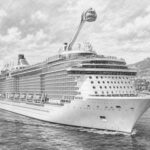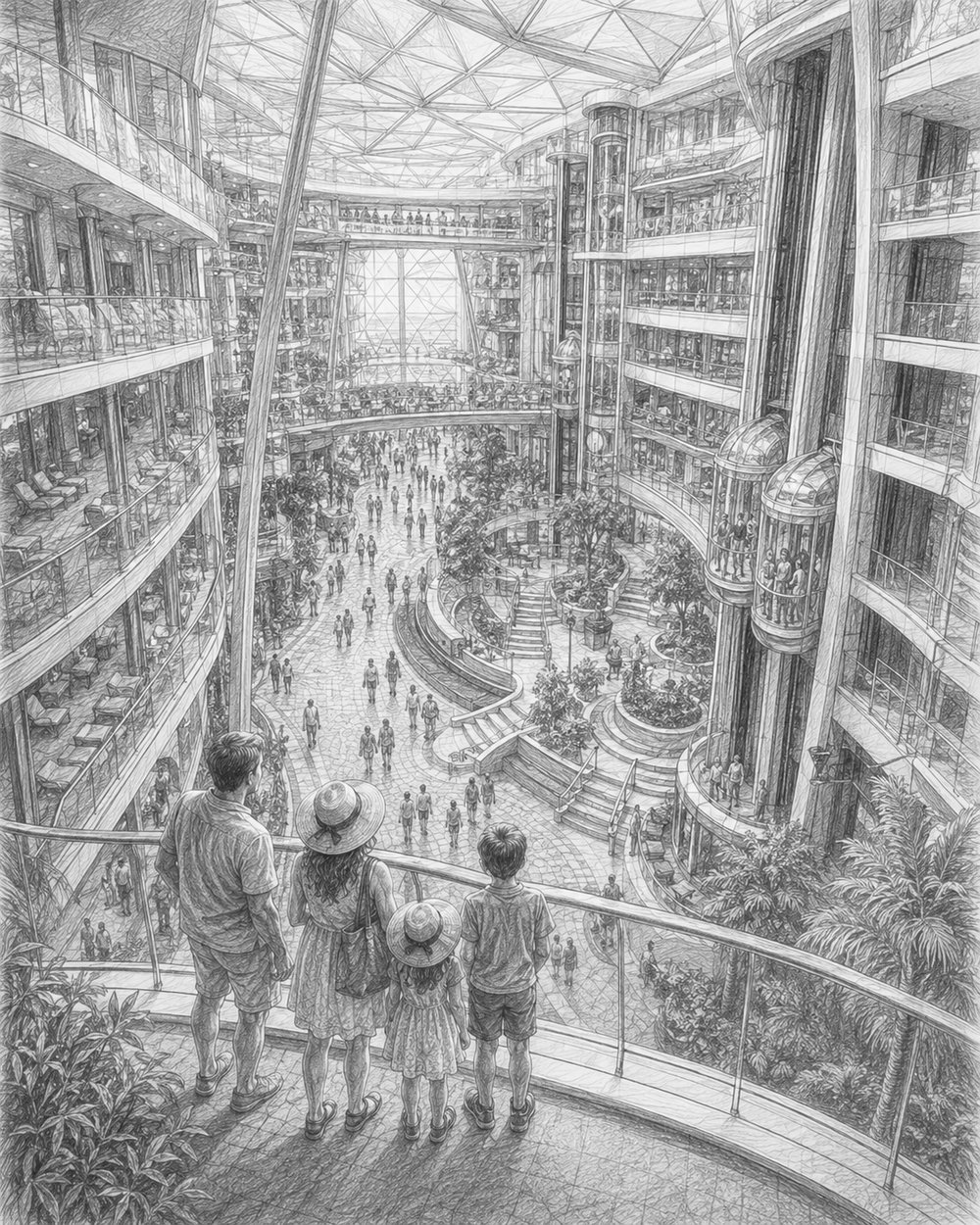
So what should you actually expect on Spectrum of the Seas? Expect a ship that feels more like a small futuristic city than a boat: a glass capsule that lifts you 300 feet above the sea, robot bartenders mixing your drink, a skydiving wind tunnel, bumper cars in an indoor sports hall, and some of the best Asian specialty dining afloat. She is Royal Caribbean’s first Quantum Ultra-Class ship, purpose-built for Asia and based year-round in Singapore, and for a long stretch she has been the largest and most advanced cruise ship in the region. This walk-through takes you through the headline attractions, the dining, the one area you may not be able to enter, and how the ship actually feels on your first day aboard.

Everything in this article and far more, deck by deck, in The Ultimate Guide to Sailing on Spectrum of the Seas.
Get the book →The short version: she carries roughly 4,200 guests at double occupancy (up to about 4,900 when completely full) across around 16 guest decks and some 169,000 gross tons, yet she rarely feels that crowded because Royal Caribbean spread the crowd-pullers across the whole ship. The trick to enjoying her is knowing where the standout venues are, which ones need booking before you sail, and how the exclusive Suite Class complex changes what’s open to you. Let’s start where most people start: looking up.
The North Star: the view that defines the ship
The single image most people carry off Spectrum of the Seas is the North Star. It’s a jewel-shaped glass observation capsule mounted on a mechanical arm, and it swings you gently up and out over the side of the ship to about 300 feet above the sea. From up there you get uninterrupted 360-degree views: the full length of the ship below, the wake trailing behind, and on a clear day a horizon that seems to curve. Coming into Singapore or easing toward the coast off Phuket, it turns an ordinary arrival into something you remember.
Two practical notes decide whether you get the experience you want. First, it’s often complimentary on sea days but may carry a charge at premium times such as sailaway or scenic cruising, so check the app for which slots are free. Second, it books up. Reserve your ride early in the cruise, ideally on embarkation day, because the best times fill fast and short getaways give you fewer sea days to catch a free slot. Go up on a calm, clear stretch rather than a grey one, and if you can, time it for late afternoon when the light is kinder for photos.
RipCord by iFly, the SkyPad and the thrill deck
Spectrum stacks her active attractions up top so you can graze between them. RipCord by iFly is a skydiving simulator: a vertical wind tunnel that lets you float on a column of air with an instructor beside you, so you get the freefall sensation without the plane or the parachute. It’s genuinely accessible for first-timers and for kids who meet the height and age requirements, and the flights are short, so the line moves. Book a session slot rather than assuming you can walk up, especially on sea days.
Right nearby is the SkyPad, and this one is a Spectrum signature you won’t find on older ships. It’s a bungee-trampoline setup: you’re clipped into a harness that helps you bounce far higher than you could on your own, and you can pull on a virtual-reality headset that drops you into a game while you jump. It looks alarming and plays as pure fun, and it’s a favourite with teens and anyone young at heart. Do it before a big meal, not after.
Rounding out the outdoor thrills are the FlowRider surf simulator, where you can bodyboard or attempt to stand on a wave that’s pumped up onto a sloped surface, and a rock climbing wall for anyone who wants a view with their workout. None of these carry the intimidation of extreme sports; they’re built so a nervous beginner can try once and a confident guest can keep coming back. If you’re weighing which cabin puts you closest to all this, our guide to the best cabins on Spectrum of the Seas breaks down the trade-off between being near the action and being far enough away to sleep.
SeaPlex: the biggest indoor active space at sea
When the weather turns, or the tropical sun gets too fierce, SeaPlex is where the ship’s energy moves indoors. It’s the largest indoor active space at sea, and it earns the title by changing character throughout the day. In one session it’s a bumper-car track; later it’s a roller-skating rink or a basketball half-court; other times it’s set up for events. Around the edges you’ll find an arcade and Xbox stations, so there’s something for the kids who’d rather sit and something for the kids who can’t sit still.
SeaPlex is one of the reasons Spectrum works so well for families and multi-generational groups on the short Southeast Asia getaways: it gives teenagers a place to be independent and burn energy without anyone hovering. Check the daily schedule in the app, because the bumper cars and skating run in timed sessions rather than all day, and the popular slots can need a quick sign-up.
Two70: the shape-shifting room
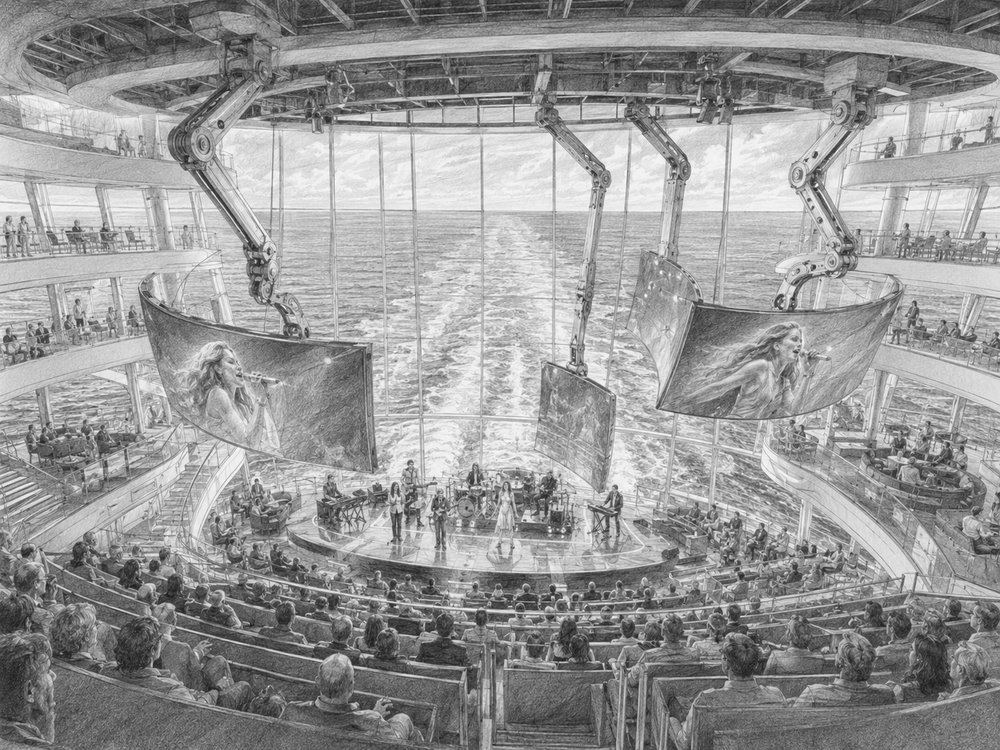
Two70 is the cleverest room on the ship and the one most guests underestimate on day one. By day it’s a calm, light-filled lounge at the stern with a two-story glass wall framing the sea and the wake, a good spot for a coffee, a casual lunch or just a quiet read. By night the glass becomes a canvas: the Vistarama projection wraps the wall in moving imagery, and a set of Roboscreens, screens mounted on robotic arms, move and tilt in time with live performers to create an immersive show that’s part concert, part theatre, part technology demonstration.
Because the space does double duty, it’s easy to wander through in the afternoon and never realise there’s an evening show. Look at the app schedule and plan to come back after dark at least once. It’s one of the experiences that separates a Quantum Ultra ship from a standard cruise, and it’s included, so there’s no reason to skip it.
The Bionic Bar and the Royal Esplanade
The Bionic Bar is exactly what it sounds like: a bar where two robotic arms mix and shake your drink. You order from a tablet, watch the arms select bottles, pour, and slide your glass across, and it’s genuinely fun to watch even if you’re only ordering a soft drink. It’s more novelty than substitute for a good bartender’s conversation, but it’s a reliable crowd-pleaser and a favourite photo stop. Note that drinks come off your account or a beverage package like anywhere else on board.
The Bionic Bar sits on the Royal Esplanade, the ship’s indoor promenade and social spine. This is where you’ll pass the shops, grab a slice at Sorrento’s or a snack at Café Promenade, and find yourself repeatedly during the cruise because so many venues open off it. On a ship this size, learning the Esplanade early is the fastest way to get your bearings; once you know it, you know how to get almost anywhere. For a full deck-by-deck orientation and the other systems worth learning before you board, our complete Spectrum of the Seas cruise guide lays it out.
Dining: from included favourites to the Asian specialties
Food is where Spectrum quietly outclasses a lot of the fleet, partly because her menus reflect the Asia market she sails. Your fare already covers a lot: the Main Dining Room for sit-down dinners, the sprawling Windjammer buffet for graze-anytime meals, Café Promenade for coffee and light bites, and Sorrento’s for pizza. On a 3- or 4-night getaway you could eat well the whole cruise without spending an extra cent.
But the specialty restaurants (extra charge) are a real draw, and this is where the ship’s Asian identity shows. Alongside the fleet favourites, Spectrum offers standout Asian venues:
- Sichuan Red and Hot Pot — the Asian specialties that make sense of where this ship sails, from bold Sichuan flavours to a communal hot pot experience you cook at the table.
- Izumi — Japanese dining, sushi and hot-rock plates.
- Teppanyaki — the theatrical grill where the chef cooks and performs in front of you.
- Wonderland — an imaginative, playful menu that leans on presentation and surprise as much as taste.
- Jamie’s Italian — rustic Italian in a relaxed setting.
- Chops Grille — the classic steakhouse.
- Chef’s Table — an intimate multi-course dinner with wine pairing.
Two tips make specialty dining pay off. First, if you know you want a particular restaurant, book it before you sail or on the first day; the best times go quickly, and on a short cruise there are only so many evenings. Second, look for a dining package if you plan to eat at more than one specialty venue, since it usually works out cheaper than paying à la carte. Prices and the exact line-up can shift, so confirm everything in the Royal Caribbean app, which also shows menus, hours and availability.
A few housekeeping details worth knowing on your first day: your SeaPass card is your cashless account for everything on board, gratuities may be added daily or prepaid, and Wi-Fi is a paid plan you buy as a package. Onboard currency and menus reflect the Asia market, so if something looks unfamiliar, the app clears it up.
The Suite Class complex: what non-suite guests can and can’t access
Here’s the part that genuinely differs from most ships, and the thing to understand before you book. Spectrum introduced a private, keycard-access suite complex reserved for suite guests, and it’s split into tiers: Golden, Silver and Star Suite Class. Perks scale up as you climb the tiers and can include a private restaurant, a private lounge and sundeck, priority for just about everything, and, for the top Star Class, a dedicated Royal Genie who acts as a personal concierge for your whole trip.
The blunt truth: if you don’t book a suite, you cannot enter these areas. The private restaurant, the exclusive lounge and the reserved sundeck are behind a keycard barrier, and no amount of asking nicely gets a standard-cabin guest in. This isn’t a criticism of the ship, it’s simply how Quantum Ultra is designed, and it’s worth knowing so you’re not surprised on board.
So how does it affect you if you’re not in a suite? Barely, in day-to-day terms. Every headline attraction covered above, the North Star, RipCord, the SkyPad, SeaPlex, Two70, the Bionic Bar, the whole Esplanade, and all the included dining, is open to every guest on board. The Suite Class complex adds an exclusive layer on top for those who pay for it; it doesn’t remove anything from the standard experience. The decision is simply whether the private restaurant, lounge, sundeck and priority access are worth the step up in fare for your trip. If you’re a family who’ll spend the day at the pool and SeaPlex anyway, a good balcony often makes more sense; if you value quiet, space and personal service, the suite tiers deliver it. Weighing the whole booking is easier with our rundown of Royal Caribbean Spectrum of the Seas tips.
How the ship feels, and your first-day plan
For all her technology, Spectrum doesn’t feel cold. The design leans bright and contemporary rather than the ornate look of older ships, and the flow keeps the crowd moving so the public spaces rarely feel jammed even near capacity. She strikes a balance: thrilling and modern enough for teenagers, comfortable and calm enough for grandparents, with the pool decks, the Solarium (an adults-oriented, quieter sun retreat), the Vitality Spa and plenty of lounges for anyone who just wants to relax.
Because so many of her voyages are 3-, 4- or 5-night getaways round-trip from Singapore, the pace is different from a week-long cruise, and time management matters more. With fewer days, the reservations you make in the first hour shape how much you get to do. Here’s a sane first-day plan:
- Open the Royal Caribbean app the moment you board and book your North Star ride, any RipCord and SkyPad sessions, and your specialty dinners before they fill.
- Walk the Royal Esplanade end to end so you know where the shops, Sorrento’s and Café Promenade are; it’s your reference point for the rest of the trip.
- Find Two70 and note the evening show times so you come back after dark.
- Check the SeaPlex schedule for bumper-car and skating sessions and sign up for the slots you want.
- Sort the practical stuff early: link a card to your SeaPass account, buy a Wi-Fi package if you need one, and confirm your dining times.
- If you have kids, register them at Adventure Ocean on the first afternoon so they’re set for the whole cruise.
Do that, and the rest of the cruise unspools with almost no friction. The ship rewards a little planning at the start and then lets you drift. One more piece of orientation worth doing before you fly out: read up on the embarkation city, because Singapore deserves a day or two of its own. Gardens by the Bay, Marina Bay Sands, Sentosa, the Merlion and the hawker-centre food are all worth arriving early for, and our guide to Spectrum of the Seas and Singapore covers how to fold the city into your trip.
The ports, briefly
The onboard experience is the headline, but the itinerary shapes your days too. Round-trip from Singapore, typical ports include Penang (George Town) with its UNESCO old town, street-art murals and famous char kway teow and laksa; Port Klang, the gateway to Kuala Lumpur and the Petronas Twin Towers, Batu Caves and Merdeka Square (allow for a 1 to 1.5 hour transfer each way); and Phuket, Thailand, with Patong Beach, the Big Buddha and boat trips out to Phang Nga Bay. Longer sailings may add Ko Samui, Melaka, or push further toward Vietnam and the South China Sea, and some seasons include Japan repositioning voyages. A few getaways are cruises-to-nowhere with no port call at all, which changes how you’d plan your days.
Ports, lengths and the season all vary by sailing, so always confirm your exact itinerary in the app, and book any tours early because the popular ones sell out. For a fuller look at the stops and how to make the most of each, see our guide to the Spectrum of the Seas Southeast Asia ports.
Get the complete Spectrum of the Seas playbook

Everything above is just the overview, and “The Ultimate Guide to Sailing on Spectrum of the Seas” takes it deck by deck, with the booking timings, dining strategy and cabin picks that turn a good cruise into a great one. Part of the Ultimate Ship Guides series by Leo Sotropa, it gives you clear action steps in every chapter so you board knowing exactly what to do first.
Frequently asked questions
Is the North Star free on Spectrum of the Seas?
It’s often complimentary on sea days, but premium times such as sailaway or scenic cruising may carry a charge. Either way it books up, so reserve your ride early in the cruise, ideally on embarkation day, and check the app to see which slots are free.
What is the SkyPad and is it worth trying?
The SkyPad is a bungee-trampoline experience with an optional virtual-reality headset, and it’s a Spectrum signature you won’t find on older ships. A harness lets you bounce far higher than you could unaided while the VR game plays around you. It’s pure fun and a hit with teens; just do it before a big meal rather than after.
Can I use the Suite Class areas if I don’t book a suite?
No. The Golden, Silver and Star Suite Class complex, including the private restaurant, lounge and sundeck, is keycard-access and reserved for suite guests only. A standard-cabin guest cannot enter. Every other attraction on the ship, though, from the North Star to SeaPlex to the included dining, is open to everyone aboard.
What Asian restaurants does Spectrum of the Seas have?
Because she’s purpose-built for Asia, Spectrum carries standout Asian specialty venues: Sichuan Red and Hot Pot, plus Izumi for Japanese dining and Teppanyaki for the theatrical grill. These are extra-charge restaurants, so book the times you want early and check the app for menus and availability.
Is Spectrum of the Seas good for families?
Very. SeaPlex gives teens bumper cars, skating and an arcade to burn energy independently, RipCord and the SkyPad add safe thrills, and Adventure Ocean handles younger kids. Combined with the short Southeast Asia getaways, she suits multi-generational groups especially well. Register kids at Adventure Ocean on the first afternoon.
How long are Spectrum of the Seas cruises?
Many are 3-, 4- or 5-night getaways round-trip from Singapore, though longer voyages run too and some seasons include Japan repositioning sailings. Some short cruises are sea-day getaways with no port call. Lengths and ports vary by sailing, so always confirm your exact itinerary in the Royal Caribbean app.
What should I do first when I board Spectrum of the Seas?
Open the app and lock in the reservations that fill fastest: your North Star ride, any RipCord and SkyPad sessions, and your specialty dinners. Then walk the Royal Esplanade to get your bearings, note Two70’s evening show times, and sort your SeaPass card and Wi-Fi. On short cruises, that first hour of planning shapes the whole trip. First-timers new to the region may also want our tips for a first-time Asia cruise on Spectrum.
Ready for the whole ship in one place? It is all in The Ultimate Guide to Sailing on Spectrum of the Seas.
Get the book →
Meet Leo: The Heartbeat Behind ‘A Country A Month’
Journeying through the pages of A Country A Month, you might often feel the rhythm of a storyteller’s heartbeat, pulsating through each line, each image, and each adventure shared. That heartbeat belongs to none other than our remarkable website editor, Leo.
With a lens in one hand and a pen in the other, Leo seamlessly marries his passions for photography and writing. His eye captures moments that words can barely describe, yet his eloquence brings those images to life, transcending borders and connecting us all through shared stories. An avid traveler, every country he’s visited has added another chapter to his expansive tale, and through our platform, he generously shares these chapters with us.